

Literature review
10
3. Source of chitosan
Chitosan can be found in similar sources as chitin, such as aquatic organisms, insects, terrestrial
crustaceans, mushrooms, and some fungi. However, from a production point of view,
production of chitin typically involves marine crustaceans due to the abundance of low-cost by
products from the seafood processing industry. The shells of these crustaceans contain 15-40%
chitin, with proteins (20-40%) and calcium carbonate (20-50%) as other major components.
(CRINI and LICHTFOUSE, 2019).
4. Chitosan production
To extract chitosan, the chitin must first undergo deacetylation, which is typically achieved by
chemical means. Chitin can be extracted from various sources, including crustaceans and
shellfish waste, through demineralization, deproteination, and decolorization as already
mentioned above. Once the chitin has been decolorized, deacetylation can be performed to
obtain chitosan. Different methods can be used to achieve deacetylation (AHMED and
IKRAM, 2017).
A- Deacetylation of Chitin by Chemical Method
Currently, there exist several techniques for the deacetylation of chitin, with the hot alkali
treatment being the prominent method used in commercial and extensive applications. This
method involves the utilization of sodium hydroxide (NaOH) for the deacetylation process
(THOMAS et al., 2020).
The extent of deacetylation is influenced by various factors, such as the concentration of NaOH,
reaction time, temperature, chitin or chitosan concentration, and molecular weight of the initial
polymer.(JENNINGS and BUMGARDNER, n.d.)
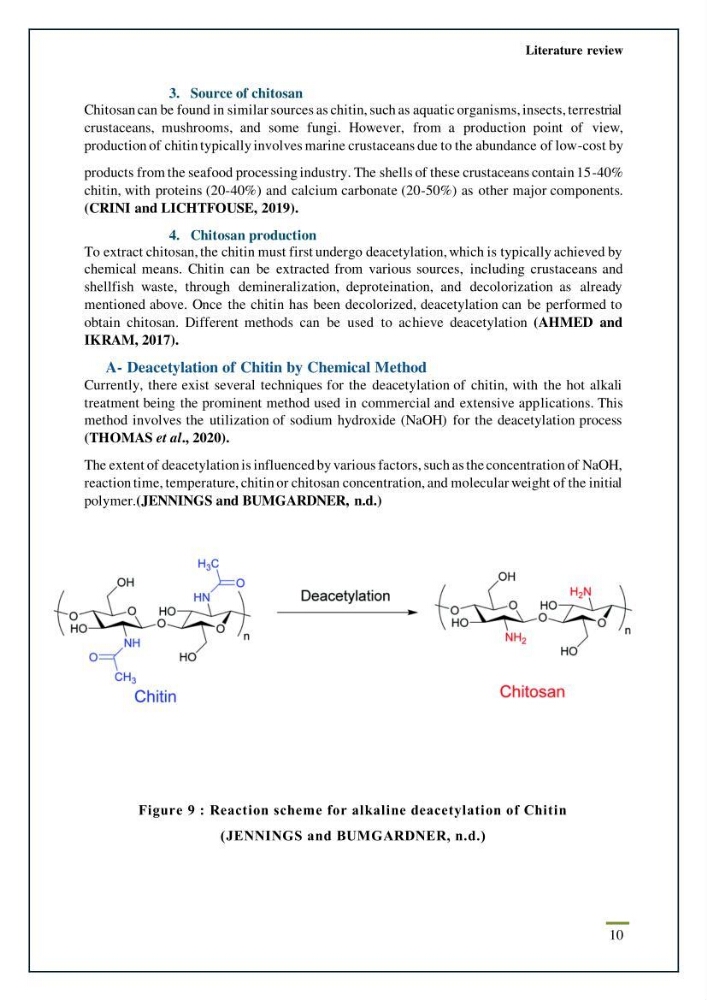
Figure 9 : Reaction scheme for alkaline deacetylation of Chitin
(JENNINGS and BUMGARDNER, n.d.)
10
3. Source of chitosan
Chitosan can be found in similar sources as chitin, such as aquatic organisms, insects, terrestrial
crustaceans, mushrooms, and some fungi. However, from a production point of view,
production of chitin typically involves marine crustaceans due to the abundance of low-cost by
products from the seafood processing industry. The shells of these crustaceans contain 15-40%
chitin, with proteins (20-40%) and calcium carbonate (20-50%) as other major components.
(CRINI and LICHTFOUSE, 2019).
4. Chitosan production
To extract chitosan, the chitin must first undergo deacetylation, which is typically achieved by
chemical means. Chitin can be extracted from various sources, including crustaceans and
shellfish waste, through demineralization, deproteination, and decolorization as already
mentioned above. Once the chitin has been decolorized, deacetylation can be performed to
obtain chitosan. Different methods can be used to achieve deacetylation (AHMED and
IKRAM, 2017).
A- Deacetylation of Chitin by Chemical Method
Currently, there exist several techniques for the deacetylation of chitin, with the hot alkali
treatment being the prominent method used in commercial and extensive applications. This
method involves the utilization of sodium hydroxide (NaOH) for the deacetylation process
(THOMAS et al., 2020).
The extent of deacetylation is influenced by various factors, such as the concentration of NaOH,
reaction time, temperature, chitin or chitosan concentration, and molecular weight of the initial
polymer.(JENNINGS and BUMGARDNER, n.d.)
Figure 9 : Reaction scheme for alkaline deacetylation of Chitin
(JENNINGS and BUMGARDNER, n.d.)