

Chapter IV
Design of rubble mounds breakwater
55
• No description of damage level: The formula focuses solely on estimating wave forces
and does not provide information about the potential level of damage caused by waves.
• Limited to specific structures: It is designed for non-overtopped and permeable structures
only, excluding overtopping waves and impermeable structures like breakwaters.
Given these limitations, caution must be exercised when using the Hudson formula, especially in
complex coastal engineering situations. More advanced methods that consider specific wave
characteristics, storm duration, structure type, and potential damage levels are recommended for
accurate assessments.
Van der Meer formulae
The Van der Meer approach, introduced in 1988, is a formula widely used for determining the
diameter of armour stones in coastal structures. This approach takes into account multiple
parameters such as wave characteristics, wave breaking type, permeability, and other factors. By
considering these variables, the Van der Meer formula provides a comprehensive method for
selecting armour stone sizes that can effectively withstand the powerful forces generated by
ocean waves. A crucial component of the approach is the surf similarity parameter í µí», which plays
a significant role in determining the type of wave breaking present in the coastal area. By
accurately assessing wave breaking, the formula ensures that the calculated armour stone
diameter is appropriate for the specific conditions.
Deep water conditions
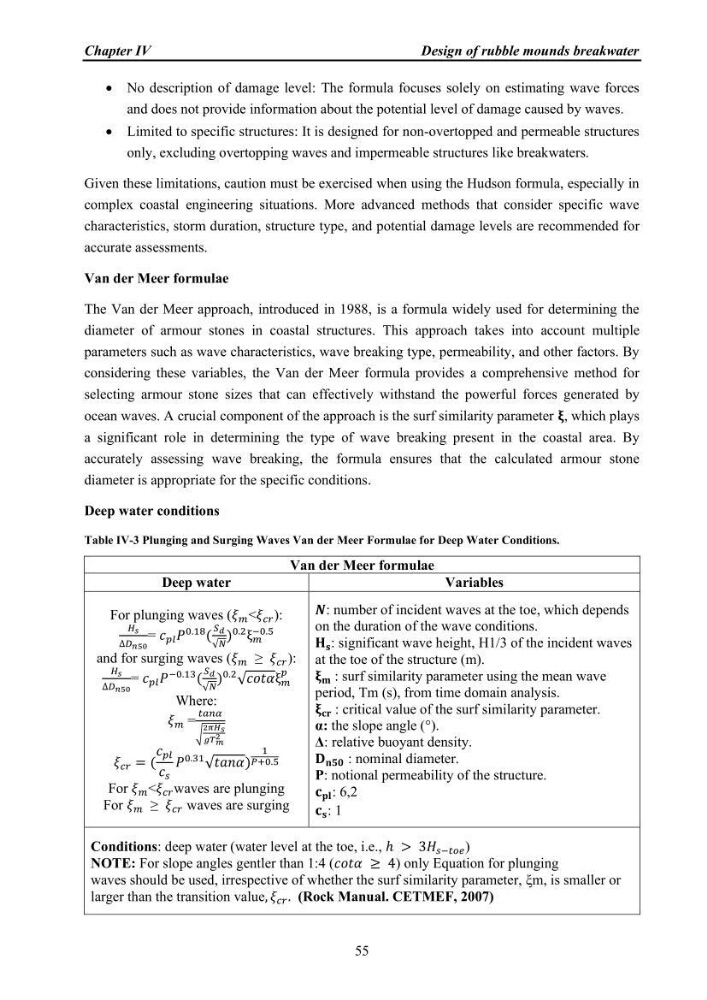
Table IV-3 Plunging and Surging Waves Van der Meer Formulae for Deep Water Conditions.
Van der Meer formulae
Deep water
Variables
For plunging waves (í µí¼ í µí± <í µí¼ í µí±í µí± ):
í µí°» í µí±
∆í µí°· í µí±50
= í µí± í µí±í µí± í µí±
0.18 (
í µí± í µí±
√í µí±
)
0.2 ξ í µí±
−0.5
and for surging waves (í µí¼ í µí± ≥ í µí¼ í µí±í µí± ):
í µí°» í µí±
∆í µí°· í µí±50
= í µí± í µí±í µí± í µí±
−0.13 (
í µí± í µí±
√í µí±
)
0.2 √í µí±í µí±í µí±¡í µí»¼ξ í µí±
í µí±
Where:
í µí¼ í µí± =
í µí±¡í µí±í µí±í µí»¼
√
2í µí¼í µí°» í µí±
í µí±í µí± í µí±
2
í µí¼ í µí±í µí± = (
í µí± í µí±í µí±
í µí± í µí±
í µí±
0.31 √í µí±¡í µí±í µí±í µí»¼)
1
í µí±+0.5
For í µí¼ í µí± <í µí¼ í µí±í µí± waves are plunging
For í µí¼ í µí± ≥ í µí¼ í µí±í µí± waves are surging
í µí±µ: number of incident waves at the toe, which depends
on the duration of the wave conditions.
í µí° í µí°¬ : significant wave height, H1/3 of the incident waves
at the toe of the structure (m).
í µí» í µí°¦ : surf similarity parameter using the mean wave
period, Tm (s), from time domain analysis.
í µí» í µí°í µí°« : critical value of the surf similarity parameter.
α: the slope angle (°).
Δ: relative buoyant density.
í µí° í µí°§í µí¿í µí¿ : nominal diameter.
P: notional permeability of the structure.
í µí° í µí°©í µí°¥ : 6,2
í µí° í µí°¬ : 1
Conditions: deep water (water level at the toe, i.e., ℎ > 3í µí°» í µí± −í µí±¡í µí±í µí± )
NOTE: For slope angles gentler than 1:4 (í µí±í µí±í µí±¡í µí»¼ ≥ 4) only Equation for plunging
waves should be used, irrespective of whether the surf similarity parameter, ξm, is smaller or
larger than the transition value, í µí¼ í µí±í µí± . (Rock Manual. CETMEF, 2007)
Design of rubble mounds breakwater
55
• No description of damage level: The formula focuses solely on estimating wave forces
and does not provide information about the potential level of damage caused by waves.
• Limited to specific structures: It is designed for non-overtopped and permeable structures
only, excluding overtopping waves and impermeable structures like breakwaters.
Given these limitations, caution must be exercised when using the Hudson formula, especially in
complex coastal engineering situations. More advanced methods that consider specific wave
characteristics, storm duration, structure type, and potential damage levels are recommended for
accurate assessments.
Van der Meer formulae
The Van der Meer approach, introduced in 1988, is a formula widely used for determining the
diameter of armour stones in coastal structures. This approach takes into account multiple
parameters such as wave characteristics, wave breaking type, permeability, and other factors. By
considering these variables, the Van der Meer formula provides a comprehensive method for
selecting armour stone sizes that can effectively withstand the powerful forces generated by
ocean waves. A crucial component of the approach is the surf similarity parameter í µí», which plays
a significant role in determining the type of wave breaking present in the coastal area. By
accurately assessing wave breaking, the formula ensures that the calculated armour stone
diameter is appropriate for the specific conditions.
Deep water conditions
Table IV-3 Plunging and Surging Waves Van der Meer Formulae for Deep Water Conditions.
Van der Meer formulae
Deep water
Variables
For plunging waves (í µí¼ í µí± <í µí¼ í µí±í µí± ):
í µí°» í µí±
∆í µí°· í µí±50
= í µí± í µí±í µí± í µí±
0.18 (
í µí± í µí±
√í µí±
)
0.2 ξ í µí±
−0.5
and for surging waves (í µí¼ í µí± ≥ í µí¼ í µí±í µí± ):
í µí°» í µí±
∆í µí°· í µí±50
= í µí± í µí±í µí± í µí±
−0.13 (
í µí± í µí±
√í µí±
)
0.2 √í µí±í µí±í µí±¡í µí»¼ξ í µí±
í µí±
Where:
í µí¼ í µí± =
í µí±¡í µí±í µí±í µí»¼
√
2í µí¼í µí°» í µí±
í µí±í µí± í µí±
2
í µí¼ í µí±í µí± = (
í µí± í µí±í µí±
í µí± í µí±
í µí±
0.31 √í µí±¡í µí±í µí±í µí»¼)
1
í µí±+0.5
For í µí¼ í µí± <í µí¼ í µí±í µí± waves are plunging
For í µí¼ í µí± ≥ í µí¼ í µí±í µí± waves are surging
í µí±µ: number of incident waves at the toe, which depends
on the duration of the wave conditions.
í µí° í µí°¬ : significant wave height, H1/3 of the incident waves
at the toe of the structure (m).
í µí» í µí°¦ : surf similarity parameter using the mean wave
period, Tm (s), from time domain analysis.
í µí» í µí°í µí°« : critical value of the surf similarity parameter.
α: the slope angle (°).
Δ: relative buoyant density.
í µí° í µí°§í µí¿í µí¿ : nominal diameter.
P: notional permeability of the structure.
í µí° í µí°©í µí°¥ : 6,2
í µí° í µí°¬ : 1
Conditions: deep water (water level at the toe, i.e., ℎ > 3í µí°» í µí± −í µí±¡í µí±í µí± )
NOTE: For slope angles gentler than 1:4 (í µí±í µí±í µí±¡í µí»¼ ≥ 4) only Equation for plunging
waves should be used, irrespective of whether the surf similarity parameter, ξm, is smaller or
larger than the transition value, í µí¼ í µí±í µí± . (Rock Manual. CETMEF, 2007)