

Chapter VII
Wave flume
88
í µí¼í µí¼
í µí¼í µí+
í µí¼í µí¼
í µí¼í µí±¥
í µí¼í µí¼
í µí¼í µí±¥
−
í µí¼í µí¼
í µí¼í µí±§
= 0, í µí±í µí±¡ í µí±§ = í µí¼
Equation VII-4
í µí¼í µí¼
í µí¼í µí+
1
2
[ (
í µí¼í µí¼
í µí¼í µí±¥
)
2
+ (
í µí¼í µí¼
í µí¼í µí±§
)
2
] + í µí±í µí¼ = 0, í µí±í µí±¡ í µí±§ = í µí¼
Equation VII-5
í µí¼í µí¼
í µí¼í µí±¥
= (1 +
í µí±§
ℎ
)
í µí¼í µí±¥ 0 (í µí±¡)
í µí¼í µí,
í µí±í µí±¡ í µí±¥ = í µí±(í µí±§, í µí±¡)
Equation VII-6
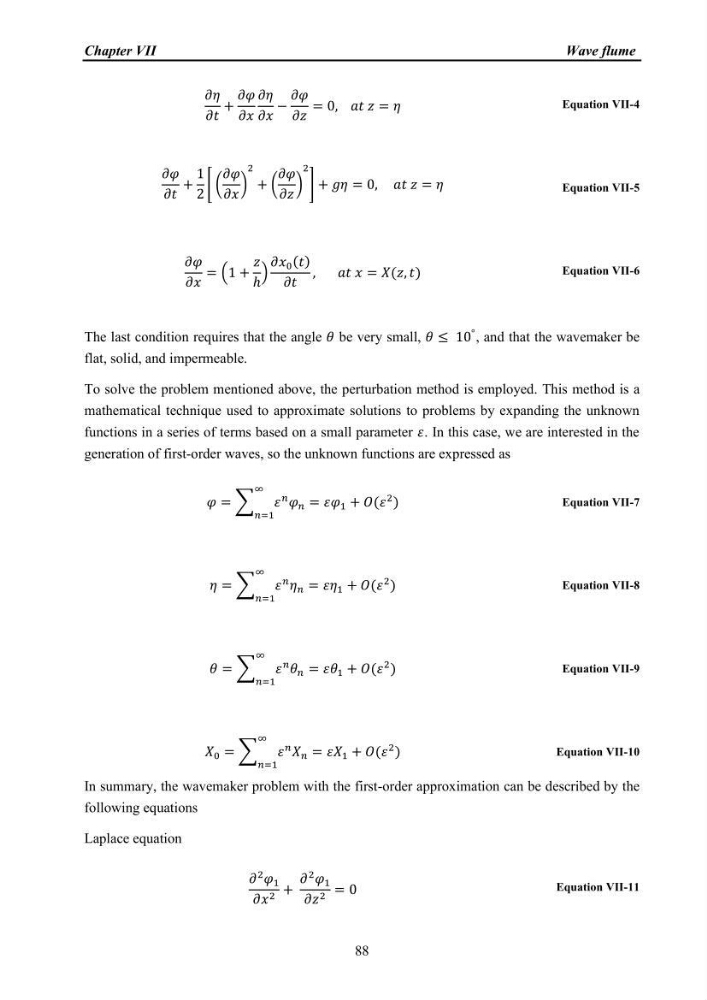
The last condition requires that the angle í µí¼ be very small, í µí¼ ≤ 10
°
, and that the wavemaker be
flat, solid, and impermeable.
To solve the problem mentioned above, the perturbation method is employed. This method is a
mathematical technique used to approximate solutions to problems by expanding the unknown
functions in a series of terms based on a small parameter í µí¼. In this case, we are interested in the
generation of first-order waves, so the unknown functions are expressed as
í µí¼ = ∑ í µí¼
í µí± í µí¼ í µí± = í µí¼í µí¼ 1 + í µí±(í µí¼
2 )
∞
í µí±=1
Equation VII-7
í µí¼ = ∑ í µí¼
í µí± í µí¼ í µí± = í µí¼í µí¼ 1 + í µí±(í µí¼
2 )
∞
í µí±=1
Equation VII-8
í µí¼ = ∑ í µí¼
í µí± í µí¼ í µí± = í µí¼í µí¼ 1 + í µí±(í µí¼
2 )
∞
í µí±=1
Equation VII-9
í µí± 0 = ∑ í µí¼
í µí± í µí± í µí± = í µí¼í µí± 1 + í µí±(í µí¼
2 )
∞
í µí±=1
Equation VII-10
In summary, the wavemaker problem with the first-order approximation can be described by the
following equations
Laplace equation
í µí¼
2 í µí¼ 1
í µí¼í µí±¥ 2 +
í µí¼
2 í µí¼ 1
í µí¼í µí±§ 2 = 0
Equation VII-11
Wave flume
88
í µí¼í µí¼
í µí¼í µí+
í µí¼í µí¼
í µí¼í µí±¥
í µí¼í µí¼
í µí¼í µí±¥
−
í µí¼í µí¼
í µí¼í µí±§
= 0, í µí±í µí±¡ í µí±§ = í µí¼
Equation VII-4
í µí¼í µí¼
í µí¼í µí+
1
2
[ (
í µí¼í µí¼
í µí¼í µí±¥
)
2
+ (
í µí¼í µí¼
í µí¼í µí±§
)
2
] + í µí±í µí¼ = 0, í µí±í µí±¡ í µí±§ = í µí¼
Equation VII-5
í µí¼í µí¼
í µí¼í µí±¥
= (1 +
í µí±§
ℎ
)
í µí¼í µí±¥ 0 (í µí±¡)
í µí¼í µí,
í µí±í µí±¡ í µí±¥ = í µí±(í µí±§, í µí±¡)
Equation VII-6
The last condition requires that the angle í µí¼ be very small, í µí¼ ≤ 10
°
, and that the wavemaker be
flat, solid, and impermeable.
To solve the problem mentioned above, the perturbation method is employed. This method is a
mathematical technique used to approximate solutions to problems by expanding the unknown
functions in a series of terms based on a small parameter í µí¼. In this case, we are interested in the
generation of first-order waves, so the unknown functions are expressed as
í µí¼ = ∑ í µí¼
í µí± í µí¼ í µí± = í µí¼í µí¼ 1 + í µí±(í µí¼
2 )
∞
í µí±=1
Equation VII-7
í µí¼ = ∑ í µí¼
í µí± í µí¼ í µí± = í µí¼í µí¼ 1 + í µí±(í µí¼
2 )
∞
í µí±=1
Equation VII-8
í µí¼ = ∑ í µí¼
í µí± í µí¼ í µí± = í µí¼í µí¼ 1 + í µí±(í µí¼
2 )
∞
í µí±=1
Equation VII-9
í µí± 0 = ∑ í µí¼
í µí± í µí± í µí± = í µí¼í µí± 1 + í µí±(í µí¼
2 )
∞
í µí±=1
Equation VII-10
In summary, the wavemaker problem with the first-order approximation can be described by the
following equations
Laplace equation
í µí¼
2 í µí¼ 1
í µí¼í µí±¥ 2 +
í µí¼
2 í µí¼ 1
í µí¼í µí±§ 2 = 0
Equation VII-11