

60 A Parameterization of Heterogeneous Hydrolysis of N 2 O 5 …
381
Delta Nitrat [µg/m ]
3.6
2.4
1.2
0.0
4.5
6.0
3.0
1.5
0.0
2.1
2.8
1.4
0.7
0.0
0.6
0.8
0.4
0.2
0.0
6.5
8.0
Nitrate [µg/m ]
5.0
3.5
2.0
0.9
1.2
N2O5 impact: Del_Nitrat [µg/m3]
0.7
0.4
0.2
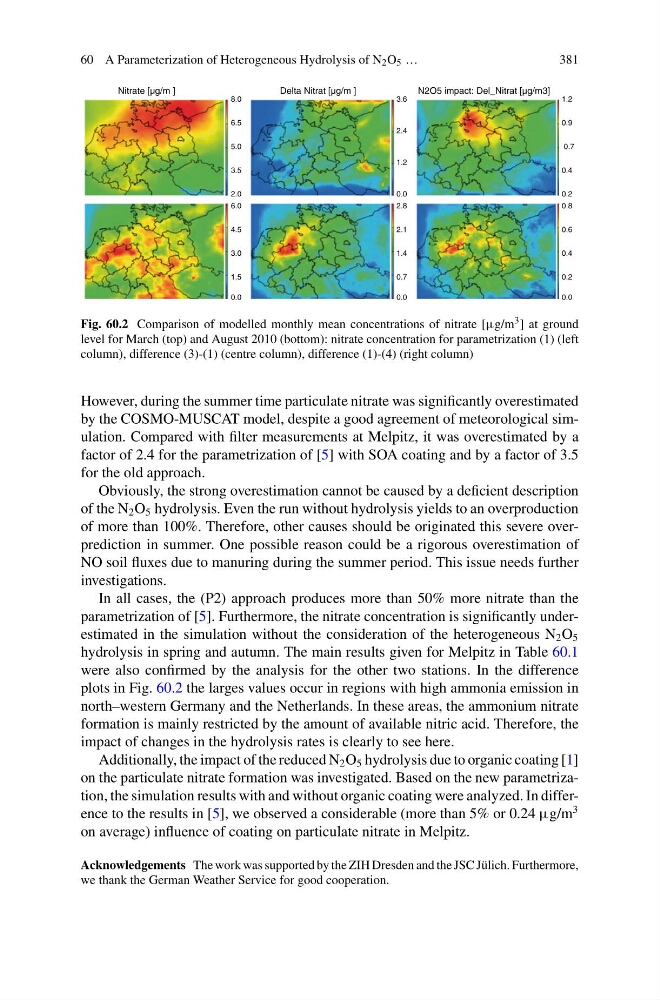
Fig. 60.2 Comparison of modelled monthly mean concentrations of nitrate [μg/m 3 ] at ground
level for March (top) and August 2010 (bottom): nitrate concentration for parametrization (1) (left
column), difference (3)-(1) (centre column), difference (1)-(4) (right column)
However, during the summer time particulate nitrate was significantly overestimated
by the COSMO-MUSCAT model, despite a good agreement of meteorological simulation. Compared with filter measurements at Melpitz, it was overestimated by a
factor of 2.4 for the parametrization of [5] with SOA coating and by a factor of 3.5
for the old approach.
Obviously, the strong overestimation cannot be caused by a deficient description
of the N 2 O 5 hydrolysis. Even the run without hydrolysis yields to an overproduction
of more than 100%. Therefore, other causes should be originated this severe overprediction in summer. One possible reason could be a rigorous overestimation of
NO soil fluxes due to manuring during the summer period. This issue needs further
investigations.
In all cases, the (P2) approach produces more than 50% more nitrate than the
parametrization of [5]. Furthermore, the nitrate concentration is significantly underestimated in the simulation without the consideration of the heterogeneous N 2 O 5
hydrolysis in spring and autumn. The main results given for Melpitz in Table 60.1
were also confirmed by the analysis for the other two stations. In the difference
plots in Fig. 60.2 the larges values occur in regions with high ammonia emission in
north–western Germany and the Netherlands. In these areas, the ammonium nitrate
formation is mainly restricted by the amount of available nitric acid. Therefore, the
impact of changes in the hydrolysis rates is clearly to see here.
Additionally, the impact of the reduced N 2 O 5 hydrolysis due to organic coating [1]
on the particulate nitrate formation was investigated. Based on the new parametrization, the simulation results with and without organic coating were analyzed. In difference to the results in [5], we observed a considerable (more than 5% or 0.24 μg/m
3
on average) influence of coating on particulate nitrate in Melpitz.
Acknowledgements The work was supported by the ZIH Dresden and the JSC Jülich. Furthermore,
we thank the German Weather Service for good cooperation.
381
Delta Nitrat [µg/m ]
3.6
2.4
1.2
0.0
4.5
6.0
3.0
1.5
0.0
2.1
2.8
1.4
0.7
0.0
0.6
0.8
0.4
0.2
0.0
6.5
8.0
Nitrate [µg/m ]
5.0
3.5
2.0
0.9
1.2
N2O5 impact: Del_Nitrat [µg/m3]
0.7
0.4
0.2
Fig. 60.2 Comparison of modelled monthly mean concentrations of nitrate [μg/m 3 ] at ground
level for March (top) and August 2010 (bottom): nitrate concentration for parametrization (1) (left
column), difference (3)-(1) (centre column), difference (1)-(4) (right column)
However, during the summer time particulate nitrate was significantly overestimated
by the COSMO-MUSCAT model, despite a good agreement of meteorological simulation. Compared with filter measurements at Melpitz, it was overestimated by a
factor of 2.4 for the parametrization of [5] with SOA coating and by a factor of 3.5
for the old approach.
Obviously, the strong overestimation cannot be caused by a deficient description
of the N 2 O 5 hydrolysis. Even the run without hydrolysis yields to an overproduction
of more than 100%. Therefore, other causes should be originated this severe overprediction in summer. One possible reason could be a rigorous overestimation of
NO soil fluxes due to manuring during the summer period. This issue needs further
investigations.
In all cases, the (P2) approach produces more than 50% more nitrate than the
parametrization of [5]. Furthermore, the nitrate concentration is significantly underestimated in the simulation without the consideration of the heterogeneous N 2 O 5
hydrolysis in spring and autumn. The main results given for Melpitz in Table 60.1
were also confirmed by the analysis for the other two stations. In the difference
plots in Fig. 60.2 the larges values occur in regions with high ammonia emission in
north–western Germany and the Netherlands. In these areas, the ammonium nitrate
formation is mainly restricted by the amount of available nitric acid. Therefore, the
impact of changes in the hydrolysis rates is clearly to see here.
Additionally, the impact of the reduced N 2 O 5 hydrolysis due to organic coating [1]
on the particulate nitrate formation was investigated. Based on the new parametrization, the simulation results with and without organic coating were analyzed. In difference to the results in [5], we observed a considerable (more than 5% or 0.24 μg/m
3
on average) influence of coating on particulate nitrate in Melpitz.
Acknowledgements The work was supported by the ZIH Dresden and the JSC Jülich. Furthermore,
we thank the German Weather Service for good cooperation.