

372
V. L. Kondarattsev et al.
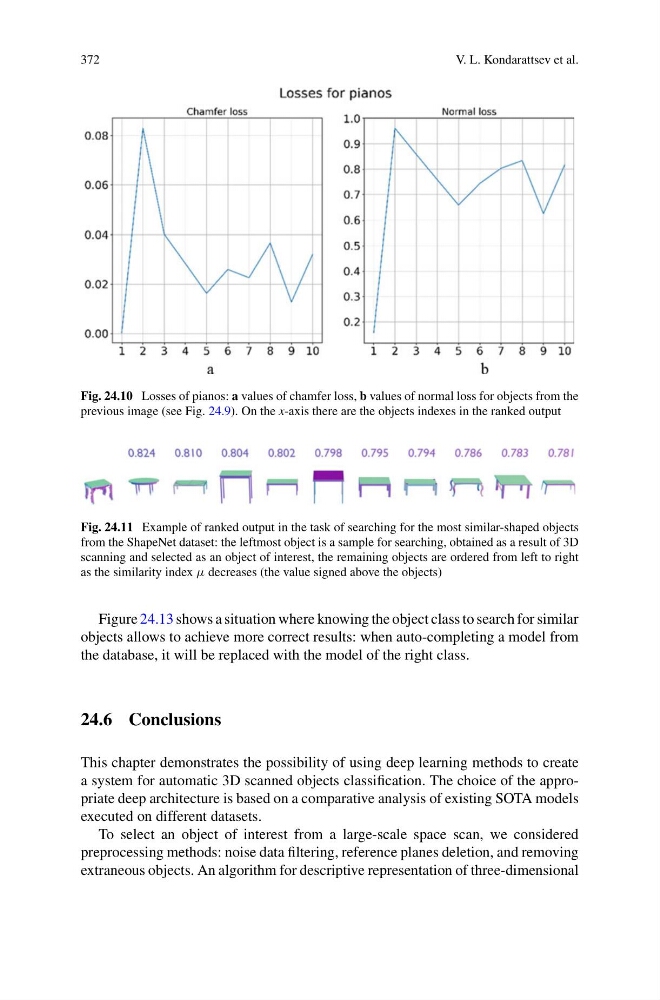
Fig. 24.10 Losses of pianos: a values of chamfer loss, b values of normal loss for objects from the
previous image (see Fig. 24.9). On the x-axis there are the objects indexes in the ranked output
Fig. 24.11 Example of ranked output in the task of searching for the most similar-shaped objects
from the ShapeNet dataset: the leftmost object is a sample for searching, obtained as a result of 3D
scanning and selected as an object of interest, the remaining objects are ordered from left to right
as the similarity index μ decreases (the value signed above the objects)
Figure 24.13 shows a situation where knowing the object class to search for similar
objects allows to achieve more correct results: when auto-completing a model from
the database, it will be replaced with the model of the right class.
24.6 Conclusions
This chapter demonstrates the possibility of using deep learning methods to create
a system for automatic 3D scanned objects classification. The choice of the appropriate deep architecture is based on a comparative analysis of existing SOTA models
executed on different datasets.
To select an object of interest from a large-scale space scan, we considered
preprocessing methods: noise data filtering, reference planes deletion, and removing
extraneous objects. An algorithm for descriptive representation of three-dimensional
V. L. Kondarattsev et al.
Fig. 24.10 Losses of pianos: a values of chamfer loss, b values of normal loss for objects from the
previous image (see Fig. 24.9). On the x-axis there are the objects indexes in the ranked output
Fig. 24.11 Example of ranked output in the task of searching for the most similar-shaped objects
from the ShapeNet dataset: the leftmost object is a sample for searching, obtained as a result of 3D
scanning and selected as an object of interest, the remaining objects are ordered from left to right
as the similarity index μ decreases (the value signed above the objects)
Figure 24.13 shows a situation where knowing the object class to search for similar
objects allows to achieve more correct results: when auto-completing a model from
the database, it will be replaced with the model of the right class.
24.6 Conclusions
This chapter demonstrates the possibility of using deep learning methods to create
a system for automatic 3D scanned objects classification. The choice of the appropriate deep architecture is based on a comparative analysis of existing SOTA models
executed on different datasets.
To select an object of interest from a large-scale space scan, we considered
preprocessing methods: noise data filtering, reference planes deletion, and removing
extraneous objects. An algorithm for descriptive representation of three-dimensional