

18
N. G. Syzranova and V. A. Andrushchenko
The flight range of the meteoroid L for these entry angles is shown in Table
2.1 for flight paths, the range is calculated along the surface of the planet from the
projection of the body’s entry point into the atmosphere to the projection of its exit
point at altitude z = 100 km, for the rest trajectories it is calculated from the projection
of the body’s entry point into the atmosphere to the point of falling off the body.
If the velocity of entry of a meteor body into the Earth’s atmosphere is significantly
lower than in the cases of data in Figs. 2.1, 2.2 and 2.3 (V e = 30 km/s), then even
a small entry angles it can reach the dense layers of the atmosphere, slow down to a
speed less than the 2nd space velocity and eventually fall to the Earth. The parameters
calculating such the movement of a body with mass M = 1 × 10
6 t and angle of
entry into the atmosphere θ e = 7
◦ at the initial velocity V e = 12 km/s are shown in
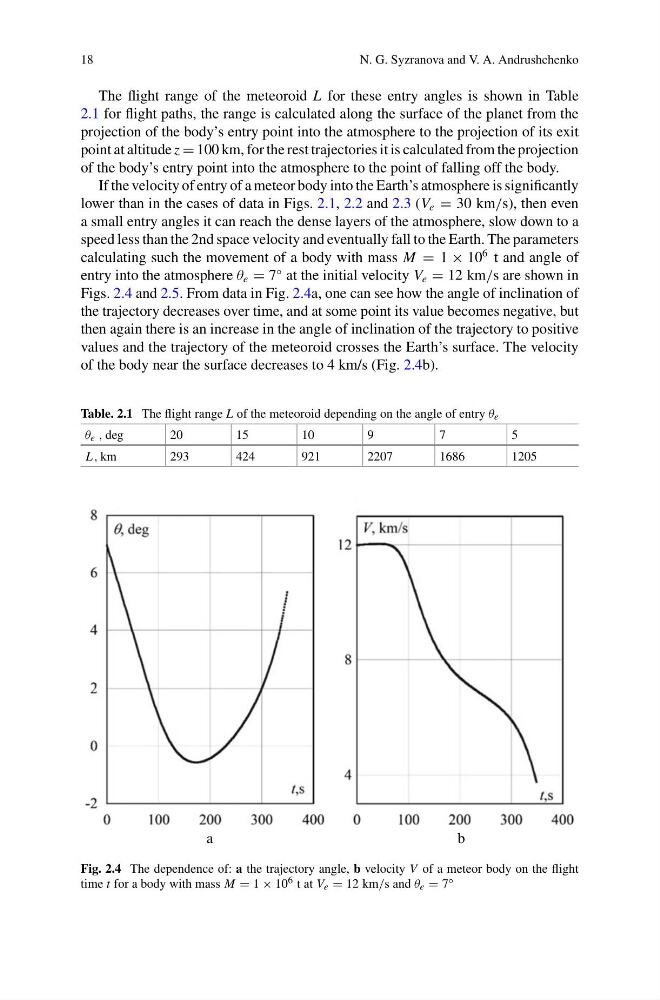
Figs. 2.4 and 2.5. From data in Fig. 2.4a, one can see how the angle of inclination of
the trajectory decreases over time, and at some point its value becomes negative, but
then again there is an increase in the angle of inclination of the trajectory to positive
values and the trajectory of the meteoroid crosses the Earth’s surface. The velocity
of the body near the surface decreases to 4 km/s (Fig. 2.4b).
Table. 2.1 The flight range L of the meteoroid depending on the angle of entry θ e
θ e , deg
20
15
10
9
7
5
L , km
293
424
921
2207
1686
1205
a
b
Fig. 2.4 The dependence of: a the trajectory angle, b velocity V of a meteor body on the flight
time t for a body with mass M = 1 × 10 6 t at V e = 12 km/s and θ e = 7 ◦
N. G. Syzranova and V. A. Andrushchenko
The flight range of the meteoroid L for these entry angles is shown in Table
2.1 for flight paths, the range is calculated along the surface of the planet from the
projection of the body’s entry point into the atmosphere to the projection of its exit
point at altitude z = 100 km, for the rest trajectories it is calculated from the projection
of the body’s entry point into the atmosphere to the point of falling off the body.
If the velocity of entry of a meteor body into the Earth’s atmosphere is significantly
lower than in the cases of data in Figs. 2.1, 2.2 and 2.3 (V e = 30 km/s), then even
a small entry angles it can reach the dense layers of the atmosphere, slow down to a
speed less than the 2nd space velocity and eventually fall to the Earth. The parameters
calculating such the movement of a body with mass M = 1 × 10
6 t and angle of
entry into the atmosphere θ e = 7
◦ at the initial velocity V e = 12 km/s are shown in
Figs. 2.4 and 2.5. From data in Fig. 2.4a, one can see how the angle of inclination of
the trajectory decreases over time, and at some point its value becomes negative, but
then again there is an increase in the angle of inclination of the trajectory to positive
values and the trajectory of the meteoroid crosses the Earth’s surface. The velocity
of the body near the surface decreases to 4 km/s (Fig. 2.4b).
Table. 2.1 The flight range L of the meteoroid depending on the angle of entry θ e
θ e , deg
20
15
10
9
7
5
L , km
293
424
921
2207
1686
1205
a
b
Fig. 2.4 The dependence of: a the trajectory angle, b velocity V of a meteor body on the flight
time t for a body with mass M = 1 × 10 6 t at V e = 12 km/s and θ e = 7 ◦