

Water Climate Food Nexus for Green Sustainability
591
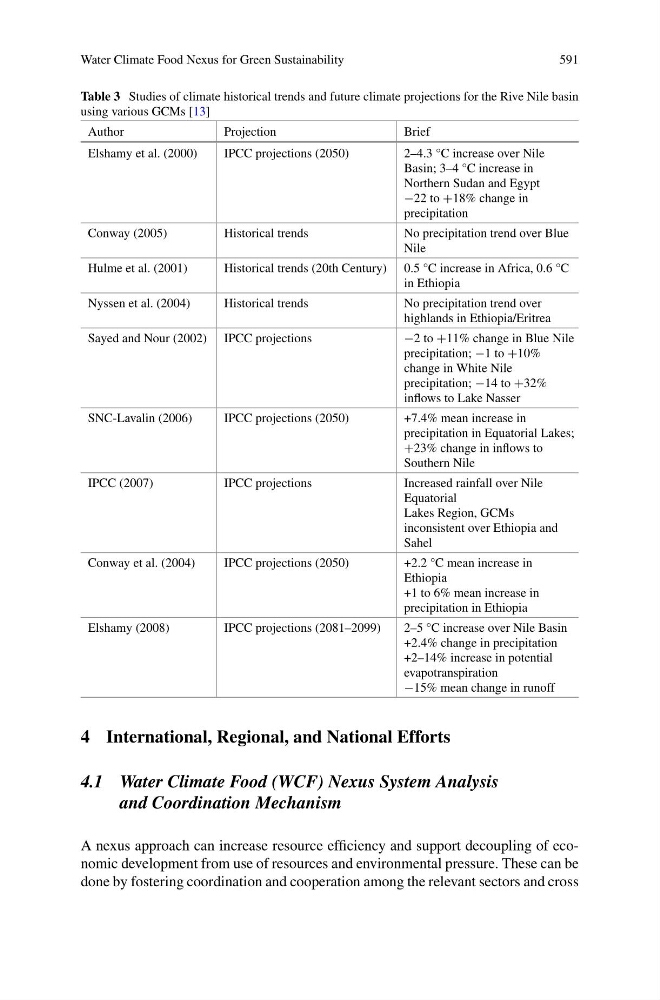
Table 3 Studies of climate historical trends and future climate projections for the Rive Nile basin
using various GCMs [13]
Author
Projection
Brief
Elshamy et al. (2000)
IPCC projections (2050)
2–4.3 °C increase over Nile
Basin; 3–4 °C increase in
Northern Sudan and Egypt
−22 to +18% change in
precipitation
Conway (2005)
Historical trends
No precipitation trend over Blue
Nile
Hulme et al. (2001)
Historical trends (20th Century) 0.5 °C increase in Africa, 0.6 °C
in Ethiopia
Nyssen et al. (2004)
Historical trends
No precipitation trend over
highlands in Ethiopia/Eritrea
Sayed and Nour (2002) IPCC projections
−2 to +11% change in Blue Nile
precipitation; −1 to +10%
change in White Nile
precipitation; −14 to +32%
inflows to Lake Nasser
SNC-Lavalin (2006)
IPCC projections (2050)
+7.4% mean increase in
precipitation in Equatorial Lakes;
+23% change in inflows to
Southern Nile
IPCC (2007)
IPCC projections
Increased rainfall over Nile
Equatorial
Lakes Region, GCMs
inconsistent over Ethiopia and
Sahel
Conway et al. (2004)
IPCC projections (2050)
+2.2 °C mean increase in
Ethiopia
+1 to 6% mean increase in
precipitation in Ethiopia
Elshamy (2008)
IPCC projections (2081–2099)
2–5 °C increase over Nile Basin
+2.4% change in precipitation
+2–14% increase in potential
evapotranspiration
−15% mean change in runoff
4 International, Regional, and National Efforts
4.1 Water Climate Food (WCF) Nexus System Analysis
and Coordination Mechanism
A nexus approach can increase resource efficiency and support decoupling of economic development from use of resources and environmental pressure. These can be
done by fostering coordination and cooperation among the relevant sectors and cross
591
Table 3 Studies of climate historical trends and future climate projections for the Rive Nile basin
using various GCMs [13]
Author
Projection
Brief
Elshamy et al. (2000)
IPCC projections (2050)
2–4.3 °C increase over Nile
Basin; 3–4 °C increase in
Northern Sudan and Egypt
−22 to +18% change in
precipitation
Conway (2005)
Historical trends
No precipitation trend over Blue
Nile
Hulme et al. (2001)
Historical trends (20th Century) 0.5 °C increase in Africa, 0.6 °C
in Ethiopia
Nyssen et al. (2004)
Historical trends
No precipitation trend over
highlands in Ethiopia/Eritrea
Sayed and Nour (2002) IPCC projections
−2 to +11% change in Blue Nile
precipitation; −1 to +10%
change in White Nile
precipitation; −14 to +32%
inflows to Lake Nasser
SNC-Lavalin (2006)
IPCC projections (2050)
+7.4% mean increase in
precipitation in Equatorial Lakes;
+23% change in inflows to
Southern Nile
IPCC (2007)
IPCC projections
Increased rainfall over Nile
Equatorial
Lakes Region, GCMs
inconsistent over Ethiopia and
Sahel
Conway et al. (2004)
IPCC projections (2050)
+2.2 °C mean increase in
Ethiopia
+1 to 6% mean increase in
precipitation in Ethiopia
Elshamy (2008)
IPCC projections (2081–2099)
2–5 °C increase over Nile Basin
+2.4% change in precipitation
+2–14% increase in potential
evapotranspiration
−15% mean change in runoff
4 International, Regional, and National Efforts
4.1 Water Climate Food (WCF) Nexus System Analysis
and Coordination Mechanism
A nexus approach can increase resource efficiency and support decoupling of economic development from use of resources and environmental pressure. These can be
done by fostering coordination and cooperation among the relevant sectors and cross