

Climate Change, Agriculture and Rural Communities’ …
539
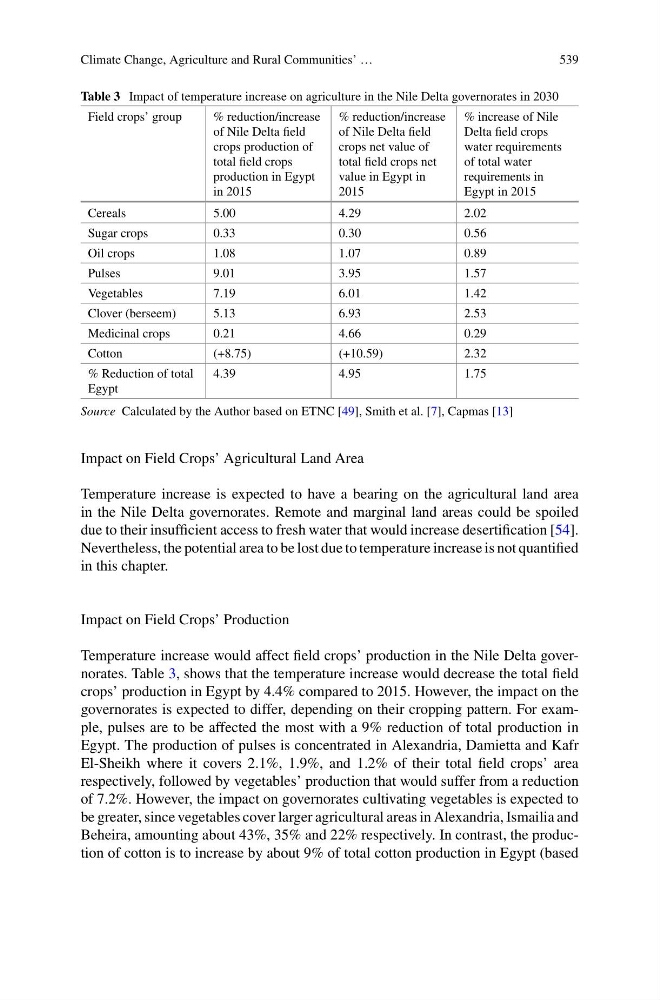
Table 3 Impact of temperature increase on agriculture in the Nile Delta governorates in 2030
Field crops’ group
% reduction/increase
of Nile Delta field
crops production of
total field crops
production in Egypt
in 2015
% reduction/increase
of Nile Delta field
crops net value of
total field crops net
value in Egypt in
2015
% increase of Nile
Delta field crops
water requirements
of total water
requirements in
Egypt in 2015
Cereals
5.00
4.29
2.02
Sugar crops
0.33
0.30
0.56
Oil crops
1.08
1.07
0.89
Pulses
9.01
3.95
1.57
Vegetables
7.19
6.01
1.42
Clover (berseem)
5.13
6.93
2.53
Medicinal crops
0.21
4.66
0.29
Cotton
(+8.75)
(+10.59)
2.32
% Reduction of total
Egypt
4.39
4.95
1.75
Source Calculated by the Author based on ETNC [49], Smith et al. [7], Capmas [13]
Impact on Field Crops’ Agricultural Land Area
Temperature increase is expected to have a bearing on the agricultural land area
in the Nile Delta governorates. Remote and marginal land areas could be spoiled
due to their insufficient access to fresh water that would increase desertification [54].
Nevertheless, the potential area to be lost due to temperature increase is not quantified
in this chapter.
Impact on Field Crops’ Production
Temperature increase would affect field crops’ production in the Nile Delta governorates. Table 3, shows that the temperature increase would decrease the total field
crops’ production in Egypt by 4.4% compared to 2015. However, the impact on the
governorates is expected to differ, depending on their cropping pattern. For example, pulses are to be affected the most with a 9% reduction of total production in
Egypt. The production of pulses is concentrated in Alexandria, Damietta and Kafr
El-Sheikh where it covers 2.1%, 1.9%, and 1.2% of their total field crops’ area
respectively, followed by vegetables’ production that would suffer from a reduction
of 7.2%. However, the impact on governorates cultivating vegetables is expected to
be greater, since vegetables cover larger agricultural areas in Alexandria, Ismailia and
Beheira, amounting about 43%, 35% and 22% respectively. In contrast, the production of cotton is to increase by about 9% of total cotton production in Egypt (based
539
Table 3 Impact of temperature increase on agriculture in the Nile Delta governorates in 2030
Field crops’ group
% reduction/increase
of Nile Delta field
crops production of
total field crops
production in Egypt
in 2015
% reduction/increase
of Nile Delta field
crops net value of
total field crops net
value in Egypt in
2015
% increase of Nile
Delta field crops
water requirements
of total water
requirements in
Egypt in 2015
Cereals
5.00
4.29
2.02
Sugar crops
0.33
0.30
0.56
Oil crops
1.08
1.07
0.89
Pulses
9.01
3.95
1.57
Vegetables
7.19
6.01
1.42
Clover (berseem)
5.13
6.93
2.53
Medicinal crops
0.21
4.66
0.29
Cotton
(+8.75)
(+10.59)
2.32
% Reduction of total
Egypt
4.39
4.95
1.75
Source Calculated by the Author based on ETNC [49], Smith et al. [7], Capmas [13]
Impact on Field Crops’ Agricultural Land Area
Temperature increase is expected to have a bearing on the agricultural land area
in the Nile Delta governorates. Remote and marginal land areas could be spoiled
due to their insufficient access to fresh water that would increase desertification [54].
Nevertheless, the potential area to be lost due to temperature increase is not quantified
in this chapter.
Impact on Field Crops’ Production
Temperature increase would affect field crops’ production in the Nile Delta governorates. Table 3, shows that the temperature increase would decrease the total field
crops’ production in Egypt by 4.4% compared to 2015. However, the impact on the
governorates is expected to differ, depending on their cropping pattern. For example, pulses are to be affected the most with a 9% reduction of total production in
Egypt. The production of pulses is concentrated in Alexandria, Damietta and Kafr
El-Sheikh where it covers 2.1%, 1.9%, and 1.2% of their total field crops’ area
respectively, followed by vegetables’ production that would suffer from a reduction
of 7.2%. However, the impact on governorates cultivating vegetables is expected to
be greater, since vegetables cover larger agricultural areas in Alexandria, Ismailia and
Beheira, amounting about 43%, 35% and 22% respectively. In contrast, the production of cotton is to increase by about 9% of total cotton production in Egypt (based