

426
T. S. K. M. Rabie
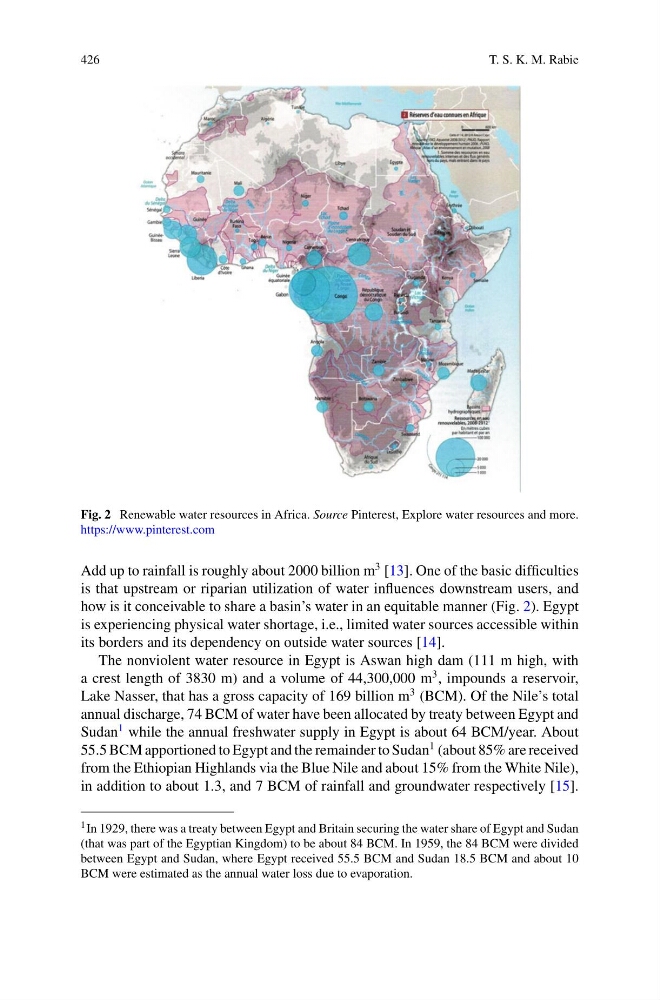
Fig. 2 Renewable water resources in Africa. Source Pinterest, Explore water resources and more.
https://www.pinterest.com
Add up to rainfall is roughly about 2000 billion m
3 [13]. One of the basic difficulties
is that upstream or riparian utilization of water influences downstream users, and
how is it conceivable to share a basin’s water in an equitable manner (Fig. 2). Egypt
is experiencing physical water shortage, i.e., limited water sources accessible within
its borders and its dependency on outside water sources [14].
The nonviolent water resource in Egypt is Aswan high dam (111 m high, with
a crest length of 3830 m) and a volume of 44,300,000 m
3 , impounds a reservoir,
Lake Nasser, that has a gross capacity of 169 billion m
3 (BCM). Of the Nile’s total
annual discharge, 74 BCM of water have been allocated by treaty between Egypt and
Sudan
1 while the annual freshwater supply in Egypt is about 64 BCM/year. About
55.5 BCM apportioned to Egypt and the remainder to Sudan
1 (about 85% are received
from the Ethiopian Highlands via the Blue Nile and about 15% from the White Nile),
in addition to about 1.3, and 7 BCM of rainfall and groundwater respectively [15].
1 In 1929, there was a treaty between Egypt and Britain securing the water share of Egypt and Sudan
(that was part of the Egyptian Kingdom) to be about 84 BCM. In 1959, the 84 BCM were divided
between Egypt and Sudan, where Egypt received 55.5 BCM and Sudan 18.5 BCM and about 10
BCM were estimated as the annual water loss due to evaporation.
T. S. K. M. Rabie
Fig. 2 Renewable water resources in Africa. Source Pinterest, Explore water resources and more.
https://www.pinterest.com
Add up to rainfall is roughly about 2000 billion m
3 [13]. One of the basic difficulties
is that upstream or riparian utilization of water influences downstream users, and
how is it conceivable to share a basin’s water in an equitable manner (Fig. 2). Egypt
is experiencing physical water shortage, i.e., limited water sources accessible within
its borders and its dependency on outside water sources [14].
The nonviolent water resource in Egypt is Aswan high dam (111 m high, with
a crest length of 3830 m) and a volume of 44,300,000 m
3 , impounds a reservoir,
Lake Nasser, that has a gross capacity of 169 billion m
3 (BCM). Of the Nile’s total
annual discharge, 74 BCM of water have been allocated by treaty between Egypt and
Sudan
1 while the annual freshwater supply in Egypt is about 64 BCM/year. About
55.5 BCM apportioned to Egypt and the remainder to Sudan
1 (about 85% are received
from the Ethiopian Highlands via the Blue Nile and about 15% from the White Nile),
in addition to about 1.3, and 7 BCM of rainfall and groundwater respectively [15].
1 In 1929, there was a treaty between Egypt and Britain securing the water share of Egypt and Sudan
(that was part of the Egyptian Kingdom) to be about 84 BCM. In 1959, the 84 BCM were divided
between Egypt and Sudan, where Egypt received 55.5 BCM and Sudan 18.5 BCM and about 10
BCM were estimated as the annual water loss due to evaporation.