

Soils as Driver and Victim of Climate Change in Egypt
125
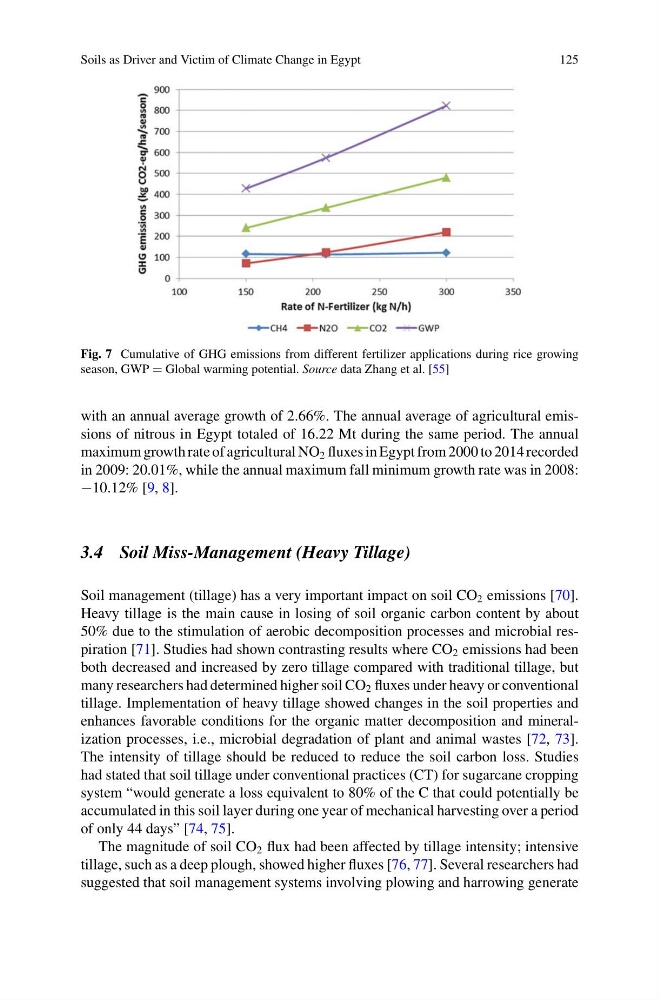
Fig. 7 Cumulative of GHG emissions from different fertilizer applications during rice growing
season, GWP = Global warming potential. Source data Zhang et al. [55]
with an annual average growth of 2.66%. The annual average of agricultural emissions of nitrous in Egypt totaled of 16.22 Mt during the same period. The annual
maximum growth rate of agricultural NO 2 fluxes in Egypt from 2000 to 2014 recorded
in 2009: 20.01%, while the annual maximum fall minimum growth rate was in 2008:
−10.12% [9, 8].
3.4 Soil Miss-Management (Heavy Tillage)
Soil management (tillage) has a very important impact on soil CO 2 emissions [70].
Heavy tillage is the main cause in losing of soil organic carbon content by about
50% due to the stimulation of aerobic decomposition processes and microbial respiration [71]. Studies had shown contrasting results where CO 2 emissions had been
both decreased and increased by zero tillage compared with traditional tillage, but
many researchers had determined higher soil CO 2 fluxes under heavy or conventional
tillage. Implementation of heavy tillage showed changes in the soil properties and
enhances favorable conditions for the organic matter decomposition and mineralization processes, i.e., microbial degradation of plant and animal wastes [72, 73].
The intensity of tillage should be reduced to reduce the soil carbon loss. Studies
had stated that soil tillage under conventional practices (CT) for sugarcane cropping
system “would generate a loss equivalent to 80% of the C that could potentially be
accumulated in this soil layer during one year of mechanical harvesting over a period
of only 44 days” [74, 75].
The magnitude of soil CO 2 flux had been affected by tillage intensity; intensive
tillage, such as a deep plough, showed higher fluxes [76, 77]. Several researchers had
suggested that soil management systems involving plowing and harrowing generate
125
Fig. 7 Cumulative of GHG emissions from different fertilizer applications during rice growing
season, GWP = Global warming potential. Source data Zhang et al. [55]
with an annual average growth of 2.66%. The annual average of agricultural emissions of nitrous in Egypt totaled of 16.22 Mt during the same period. The annual
maximum growth rate of agricultural NO 2 fluxes in Egypt from 2000 to 2014 recorded
in 2009: 20.01%, while the annual maximum fall minimum growth rate was in 2008:
−10.12% [9, 8].
3.4 Soil Miss-Management (Heavy Tillage)
Soil management (tillage) has a very important impact on soil CO 2 emissions [70].
Heavy tillage is the main cause in losing of soil organic carbon content by about
50% due to the stimulation of aerobic decomposition processes and microbial respiration [71]. Studies had shown contrasting results where CO 2 emissions had been
both decreased and increased by zero tillage compared with traditional tillage, but
many researchers had determined higher soil CO 2 fluxes under heavy or conventional
tillage. Implementation of heavy tillage showed changes in the soil properties and
enhances favorable conditions for the organic matter decomposition and mineralization processes, i.e., microbial degradation of plant and animal wastes [72, 73].
The intensity of tillage should be reduced to reduce the soil carbon loss. Studies
had stated that soil tillage under conventional practices (CT) for sugarcane cropping
system “would generate a loss equivalent to 80% of the C that could potentially be
accumulated in this soil layer during one year of mechanical harvesting over a period
of only 44 days” [74, 75].
The magnitude of soil CO 2 flux had been affected by tillage intensity; intensive
tillage, such as a deep plough, showed higher fluxes [76, 77]. Several researchers had
suggested that soil management systems involving plowing and harrowing generate