

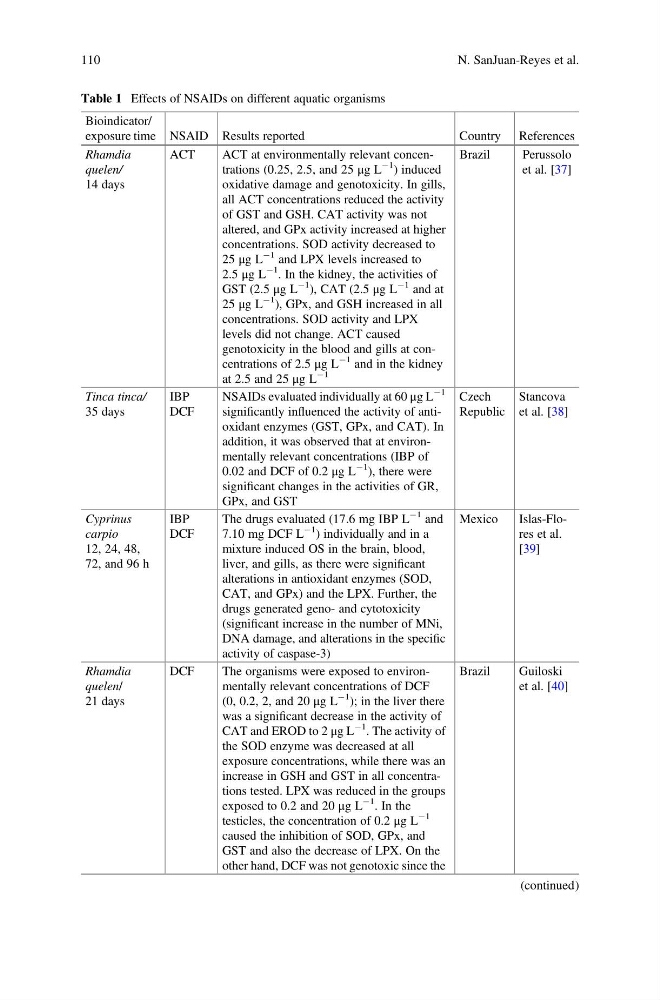
Table 1 Effects of NSAIDs on different aquatic organisms
Bioindicator/
exposure time NSAID Results reported
Country References
Rhamdia
quelen/
14 days
ACT
ACT at environmentally relevant concentrations (0.25, 2.5, and 25 μg L
À1
) induced
oxidative damage and genotoxicity. In gills,
all ACT concentrations reduced the activity
of GST and GSH. CAT activity was not
altered, and GPx activity increased at higher
concentrations. SOD activity decreased to
25 μg L
À1 and LPX levels increased to
2.5 μg L
À1
. In the kidney, the activities of
GST (2.5 μg L
À1
), CAT (2.5 μg L
À1 and at
25 μg L
À1
), GPx, and GSH increased in all
concentrations. SOD activity and LPX
levels did not change. ACT caused
genotoxicity in the blood and gills at concentrations of 2.5 μg L
À1 and in the kidney
at 2.5 and 25 μg L
À1
Brazil
Perussolo
et al. [37]
Tinca tinca/
35 days
IBP
DCF
NSAIDs evaluated individually at 60 μg L
À1
significantly influenced the activity of antioxidant enzymes (GST, GPx, and CAT). In
addition, it was observed that at environmentally relevant concentrations (IBP of
0.02 and DCF of 0.2 μg L
À1
), there were
significant changes in the activities of GR,
GPx, and GST
Czech
Republic
Stancova
et al. [38]
Cyprinus
carpio
12, 24, 48,
72, and 96 h
IBP
DCF
The drugs evaluated (17.6 mg IBP L
À1 and
7.10 mg DCF L
À1
) individually and in a
mixture induced OS in the brain, blood,
liver, and gills, as there were significant
alterations in antioxidant enzymes (SOD,
CAT, and GPx) and the LPX. Further, the
drugs generated geno- and cytotoxicity
(significant increase in the number of MNi,
DNA damage, and alterations in the specific
activity of caspase-3)
Mexico
Islas-Flores et al.
[39]
Rhamdia
quelen/
21 days
DCF
The organisms were exposed to environmentally relevant concentrations of DCF
(0, 0.2, 2, and 20 μg L
À1
); in the liver there
was a significant decrease in the activity of
CAT and EROD to 2 μg L
À1
. The activity of
the SOD enzyme was decreased at all
exposure concentrations, while there was an
increase in GSH and GST in all concentrations tested. LPX was reduced in the groups
exposed to 0.2 and 20 μg L
À1
. In the
testicles, the concentration of 0.2 μg L
À1
caused the inhibition of SOD, GPx, and
GST and also the decrease of LPX. On the
other hand, DCF was not genotoxic since the
Brazil
Guiloski
et al. [40]
(continued)
110
N. SanJuan-Reyes et al.
Bioindicator/
exposure time NSAID Results reported
Country References
Rhamdia
quelen/
14 days
ACT
ACT at environmentally relevant concentrations (0.25, 2.5, and 25 μg L
À1
) induced
oxidative damage and genotoxicity. In gills,
all ACT concentrations reduced the activity
of GST and GSH. CAT activity was not
altered, and GPx activity increased at higher
concentrations. SOD activity decreased to
25 μg L
À1 and LPX levels increased to
2.5 μg L
À1
. In the kidney, the activities of
GST (2.5 μg L
À1
), CAT (2.5 μg L
À1 and at
25 μg L
À1
), GPx, and GSH increased in all
concentrations. SOD activity and LPX
levels did not change. ACT caused
genotoxicity in the blood and gills at concentrations of 2.5 μg L
À1 and in the kidney
at 2.5 and 25 μg L
À1
Brazil
Perussolo
et al. [37]
Tinca tinca/
35 days
IBP
DCF
NSAIDs evaluated individually at 60 μg L
À1
significantly influenced the activity of antioxidant enzymes (GST, GPx, and CAT). In
addition, it was observed that at environmentally relevant concentrations (IBP of
0.02 and DCF of 0.2 μg L
À1
), there were
significant changes in the activities of GR,
GPx, and GST
Czech
Republic
Stancova
et al. [38]
Cyprinus
carpio
12, 24, 48,
72, and 96 h
IBP
DCF
The drugs evaluated (17.6 mg IBP L
À1 and
7.10 mg DCF L
À1
) individually and in a
mixture induced OS in the brain, blood,
liver, and gills, as there were significant
alterations in antioxidant enzymes (SOD,
CAT, and GPx) and the LPX. Further, the
drugs generated geno- and cytotoxicity
(significant increase in the number of MNi,
DNA damage, and alterations in the specific
activity of caspase-3)
Mexico
Islas-Flores et al.
[39]
Rhamdia
quelen/
21 days
DCF
The organisms were exposed to environmentally relevant concentrations of DCF
(0, 0.2, 2, and 20 μg L
À1
); in the liver there
was a significant decrease in the activity of
CAT and EROD to 2 μg L
À1
. The activity of
the SOD enzyme was decreased at all
exposure concentrations, while there was an
increase in GSH and GST in all concentrations tested. LPX was reduced in the groups
exposed to 0.2 and 20 μg L
À1
. In the
testicles, the concentration of 0.2 μg L
À1
caused the inhibition of SOD, GPx, and
GST and also the decrease of LPX. On the
other hand, DCF was not genotoxic since the
Brazil
Guiloski
et al. [40]
(continued)
110
N. SanJuan-Reyes et al.