

50
2 Environmental Conditions in the Mine
• Inhalable: Particles that can enter the respiratory system through the nose and
mouth (30–100 µm) and that may continue deeper into the respiratory tract,
precipitate or leave it (e.g. pollen).
• Thoracic: These are particles that reach beyond the larynx getting into the thorax
(trachea, bronchi, bronchioles) (<30 µm) (e.g. coal dust).
• Respirable: These particles penetrate to the unciliated airways (alveoli)
(<10 µm) (e.g. bacteria and cigarette smoke).
The most common occupational diseases suffered by miners is pneumoconiosis.
This is a chronic lung condition caused by the accumulation of dust in the lung,
which causes a tissue reaction. There are several types of pneumoconiosis:
• Silicosis: Crystalline silica;
• Coal workers’ pneumoconiosis: Carbon, graphite;
• Silicatosis: If the minerals contain other elements besides silica (that is, they are
mixed powders):
• Kaolinosis: Kaolin,
• Talcosis: Talcum,
• Asbestosis: Asbestos,
• Berylliosis: Beryllium, and
• Siderosis (welders’ pneumoconiosis): Iron.
Among the different types of pneumoconiosis, silicosis is the main one that affects
miners’ respiratory systems. The main polymorphs of silica (which in regulations is
referred to as free silica) are quartz, tridymite and cristobalite. Of the three, quartz is
Air pollutants
inside the mine
Aerosols
Solids
Dusts
Smokes
Liquids
Fogs
Mists
Molecular
Gases
Vapours
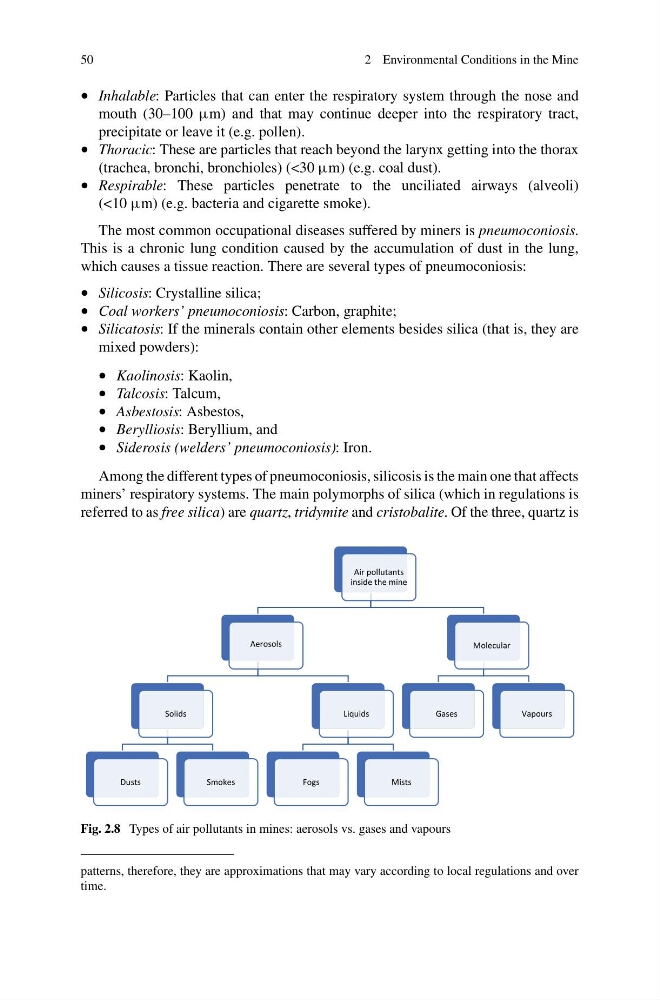
Fig. 2.8 Types of air pollutants in mines: aerosols vs. gases and vapours
patterns, therefore, they are approximations that may vary according to local regulations and over
time.
2 Environmental Conditions in the Mine
• Inhalable: Particles that can enter the respiratory system through the nose and
mouth (30–100 µm) and that may continue deeper into the respiratory tract,
precipitate or leave it (e.g. pollen).
• Thoracic: These are particles that reach beyond the larynx getting into the thorax
(trachea, bronchi, bronchioles) (<30 µm) (e.g. coal dust).
• Respirable: These particles penetrate to the unciliated airways (alveoli)
(<10 µm) (e.g. bacteria and cigarette smoke).
The most common occupational diseases suffered by miners is pneumoconiosis.
This is a chronic lung condition caused by the accumulation of dust in the lung,
which causes a tissue reaction. There are several types of pneumoconiosis:
• Silicosis: Crystalline silica;
• Coal workers’ pneumoconiosis: Carbon, graphite;
• Silicatosis: If the minerals contain other elements besides silica (that is, they are
mixed powders):
• Kaolinosis: Kaolin,
• Talcosis: Talcum,
• Asbestosis: Asbestos,
• Berylliosis: Beryllium, and
• Siderosis (welders’ pneumoconiosis): Iron.
Among the different types of pneumoconiosis, silicosis is the main one that affects
miners’ respiratory systems. The main polymorphs of silica (which in regulations is
referred to as free silica) are quartz, tridymite and cristobalite. Of the three, quartz is
Air pollutants
inside the mine
Aerosols
Solids
Dusts
Smokes
Liquids
Fogs
Mists
Molecular
Gases
Vapours
Fig. 2.8 Types of air pollutants in mines: aerosols vs. gases and vapours
patterns, therefore, they are approximations that may vary according to local regulations and over
time.