

36
2 Environmental Conditions in the Mine
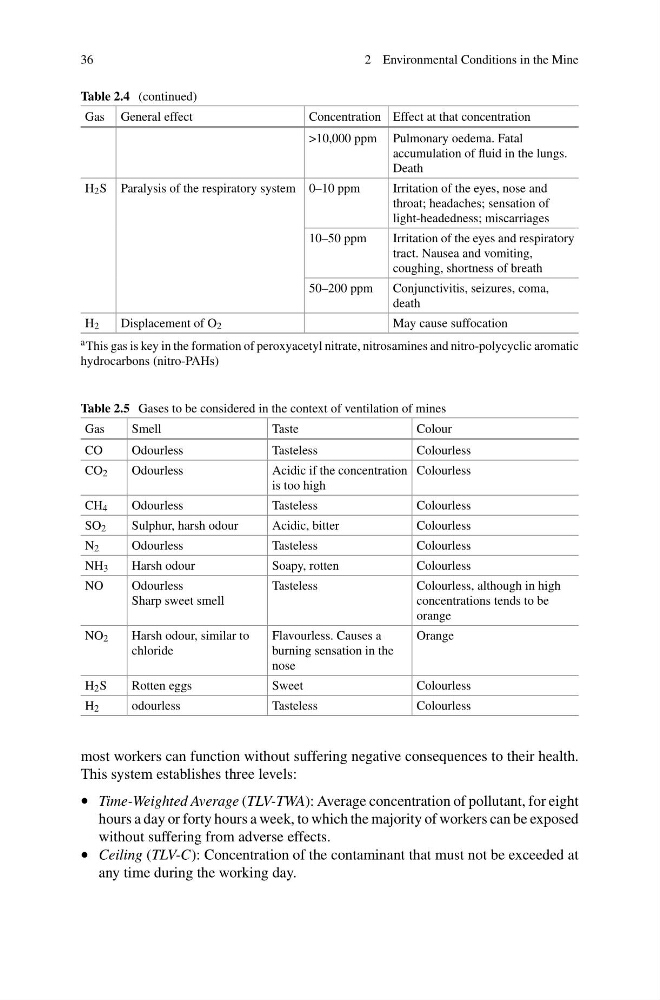
Table 2.4 (continued)
Gas General effect
Concentration Effect at that concentration
>10,000 ppm Pulmonary oedema. Fatal
accumulation of fluid in the lungs.
Death
H 2 S Paralysis of the respiratory system 0–10 ppm
Irritation of the eyes, nose and
throat; headaches; sensation of
light-headedness; miscarriages
10–50 ppm
Irritation of the eyes and respiratory
tract. Nausea and vomiting,
coughing, shortness of breath
50–200 ppm
Conjunctivitis, seizures, coma,
death
H 2
Displacement of O 2
May cause suffocation
a This gas is key in the formation of peroxyacetyl nitrate, nitrosamines and nitro-polycyclic aromatic
hydrocarbons (nitro-PAHs)
Table 2.5 Gases to be considered in the context of ventilation of mines
Gas
Smell
Taste
Colour
CO
Odourless
Tasteless
Colourless
CO 2
Odourless
Acidic if the concentration
is too high
Colourless
CH 4
Odourless
Tasteless
Colourless
SO 2
Sulphur, harsh odour
Acidic, bitter
Colourless
N 2
Odourless
Tasteless
Colourless
NH 3
Harsh odour
Soapy, rotten
Colourless
NO
Odourless
Sharp sweet smell
Tasteless
Colourless, although in high
concentrations tends to be
orange
NO 2
Harsh odour, similar to
chloride
Flavourless. Causes a
burning sensation in the
nose
Orange
H 2 S
Rotten eggs
Sweet
Colourless
H 2
odourless
Tasteless
Colourless
most workers can function without suffering negative consequences to their health.
This system establishes three levels:
• Time-Weighted Average (TLV-TWA): Average concentration of pollutant, for eight
hours a day or forty hours a week, to which the majority of workers can be exposed
without suffering from adverse effects.
• Ceiling (TLV-C): Concentration of the contaminant that must not be exceeded at
any time during the working day.
2 Environmental Conditions in the Mine
Table 2.4 (continued)
Gas General effect
Concentration Effect at that concentration
>10,000 ppm Pulmonary oedema. Fatal
accumulation of fluid in the lungs.
Death
H 2 S Paralysis of the respiratory system 0–10 ppm
Irritation of the eyes, nose and
throat; headaches; sensation of
light-headedness; miscarriages
10–50 ppm
Irritation of the eyes and respiratory
tract. Nausea and vomiting,
coughing, shortness of breath
50–200 ppm
Conjunctivitis, seizures, coma,
death
H 2
Displacement of O 2
May cause suffocation
a This gas is key in the formation of peroxyacetyl nitrate, nitrosamines and nitro-polycyclic aromatic
hydrocarbons (nitro-PAHs)
Table 2.5 Gases to be considered in the context of ventilation of mines
Gas
Smell
Taste
Colour
CO
Odourless
Tasteless
Colourless
CO 2
Odourless
Acidic if the concentration
is too high
Colourless
CH 4
Odourless
Tasteless
Colourless
SO 2
Sulphur, harsh odour
Acidic, bitter
Colourless
N 2
Odourless
Tasteless
Colourless
NH 3
Harsh odour
Soapy, rotten
Colourless
NO
Odourless
Sharp sweet smell
Tasteless
Colourless, although in high
concentrations tends to be
orange
NO 2
Harsh odour, similar to
chloride
Flavourless. Causes a
burning sensation in the
nose
Orange
H 2 S
Rotten eggs
Sweet
Colourless
H 2
odourless
Tasteless
Colourless
most workers can function without suffering negative consequences to their health.
This system establishes three levels:
• Time-Weighted Average (TLV-TWA): Average concentration of pollutant, for eight
hours a day or forty hours a week, to which the majority of workers can be exposed
without suffering from adverse effects.
• Ceiling (TLV-C): Concentration of the contaminant that must not be exceeded at
any time during the working day.