

2.2 Gases and Hygiene
35
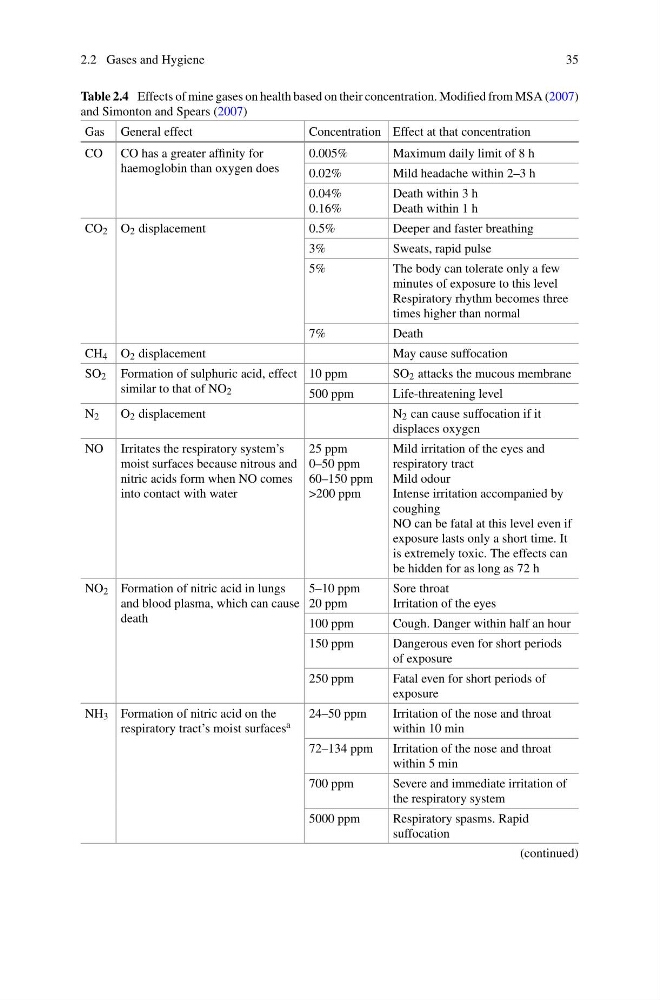
Table 2.4 Effects of mine gases on health based on their concentration. Modified from MSA (2007)
and Simonton and Spears (2007)
Gas General effect
Concentration Effect at that concentration
CO CO has a greater affinity for
haemoglobin than oxygen does
0.005%
Maximum daily limit of 8 h
0.02%
Mild headache within 2–3 h
0.04%
0.16%
Death within 3 h
Death within 1 h
CO 2 O 2 displacement
0.5%
Deeper and faster breathing
3%
Sweats, rapid pulse
5%
The body can tolerate only a few
minutes of exposure to this level
Respiratory rhythm becomes three
times higher than normal
7%
Death
CH 4 O 2 displacement
May cause suffocation
SO 2 Formation of sulphuric acid, effect
similar to that of NO 2
10 ppm
SO 2 attacks the mucous membrane
500 ppm
Life-threatening level
N 2
O 2 displacement
N 2 can cause suffocation if it
displaces oxygen
NO Irritates the respiratory system’s
moist surfaces because nitrous and
nitric acids form when NO comes
into contact with water
25 ppm
0–50 ppm
60–150 ppm
>200 ppm
Mild irritation of the eyes and
respiratory tract
Mild odour
Intense irritation accompanied by
coughing
NO can be fatal at this level even if
exposure lasts only a short time. It
is extremely toxic. The effects can
be hidden for as long as 72 h
NO 2 Formation of nitric acid in lungs
and blood plasma, which can cause
death
5–10 ppm
20 ppm
Sore throat
Irritation of the eyes
100 ppm
Cough. Danger within half an hour
150 ppm
Dangerous even for short periods
of exposure
250 ppm
Fatal even for short periods of
exposure
NH 3 Formation of nitric acid on the
respiratory tract’s moist surfaces a
24–50 ppm
Irritation of the nose and throat
within 10 min
72–134 ppm
Irritation of the nose and throat
within 5 min
700 ppm
Severe and immediate irritation of
the respiratory system
5000 ppm
Respiratory spasms. Rapid
suffocation
(continued)
35
Table 2.4 Effects of mine gases on health based on their concentration. Modified from MSA (2007)
and Simonton and Spears (2007)
Gas General effect
Concentration Effect at that concentration
CO CO has a greater affinity for
haemoglobin than oxygen does
0.005%
Maximum daily limit of 8 h
0.02%
Mild headache within 2–3 h
0.04%
0.16%
Death within 3 h
Death within 1 h
CO 2 O 2 displacement
0.5%
Deeper and faster breathing
3%
Sweats, rapid pulse
5%
The body can tolerate only a few
minutes of exposure to this level
Respiratory rhythm becomes three
times higher than normal
7%
Death
CH 4 O 2 displacement
May cause suffocation
SO 2 Formation of sulphuric acid, effect
similar to that of NO 2
10 ppm
SO 2 attacks the mucous membrane
500 ppm
Life-threatening level
N 2
O 2 displacement
N 2 can cause suffocation if it
displaces oxygen
NO Irritates the respiratory system’s
moist surfaces because nitrous and
nitric acids form when NO comes
into contact with water
25 ppm
0–50 ppm
60–150 ppm
>200 ppm
Mild irritation of the eyes and
respiratory tract
Mild odour
Intense irritation accompanied by
coughing
NO can be fatal at this level even if
exposure lasts only a short time. It
is extremely toxic. The effects can
be hidden for as long as 72 h
NO 2 Formation of nitric acid in lungs
and blood plasma, which can cause
death
5–10 ppm
20 ppm
Sore throat
Irritation of the eyes
100 ppm
Cough. Danger within half an hour
150 ppm
Dangerous even for short periods
of exposure
250 ppm
Fatal even for short periods of
exposure
NH 3 Formation of nitric acid on the
respiratory tract’s moist surfaces a
24–50 ppm
Irritation of the nose and throat
within 10 min
72–134 ppm
Irritation of the nose and throat
within 5 min
700 ppm
Severe and immediate irritation of
the respiratory system
5000 ppm
Respiratory spasms. Rapid
suffocation
(continued)