

430
12 Thrust Gas Turbines
turbofan engine is mounted under the wings, which requires sufficient distance between the wings and the ground. So, further increase of the bypass ratio and thus the
fan diameter becomes problematic. Manufacturers develop now turbofan engines
with bypass ratios above 10 (Rolls Royce Trent1000 series, General Electric GEnx
series), with fan diameter around 3.25 m and sea level thrust around 500 kN. A
cruise flight Mach number 0.85 is typical for airliners, as with this flight Mach
number shocks in the flow over the suction side of the wings remain rather weak.
The flight speed is around 900 km/h at speed of sound about 300 m/s ( T = 225 K at
10 km height). But fuel saving might be realised with a somewhat lower flight Mach
number (0.70–0.75). Then, shock losses disappear and a larger part of the wings can
be operated with laminar boundary layers (shocks create the risk of separation of a
laminar boundary layer). The optimum bypass ratio then increases and the diameter
of a turbofan for a large airliner may become impractically large. On the other hand,
conventional turbo-propellers are limited in flight speed to about 550–600 km/h.
The reason is the necessary limitation of the Mach number of the relative flow attacking the propeller tip. For example, with flight speed 150 m/s (540 km/h) and tip
speed 250 m/s, the oncoming flow speed at the propeller tip is, based on the velocity
triangle with these speeds, about 290 m/s (the actual speed is somewhat larger due
to acceleration of the flow). The corresponding Mach number at sea level (velocity
of sound 340 m/s) is about 0.85. So, a larger flight speed requires a lower tip speed
of the propeller. For the same velocity increase through the propeller, the solidity
then has to be larger. This means a higher number of blades. Further, the optimum
bypass ratio at flight speed around 750 km/h may be around 25. The corresponding
velocity increase in the flow through the propeller is then larger than in a conventional propeller, but smaller than in a conventional turbofan. Contra-rotating propellers might be a solution. The tip speed is lower than with a conventional propeller
and the work done per propeller is larger. The solidity is larger and so is the number
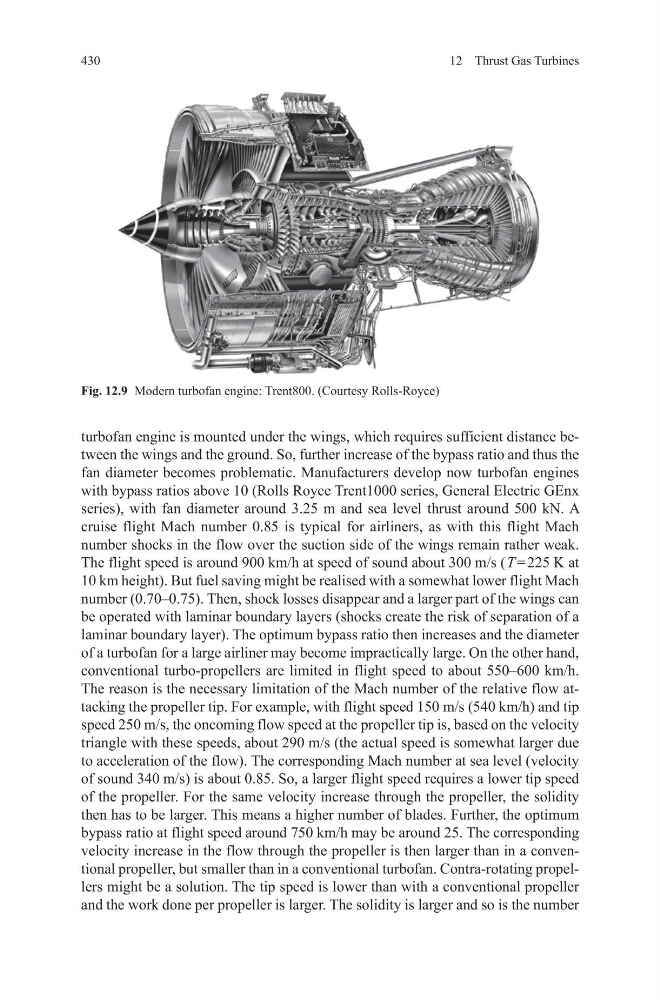
Fig. 12.9 Modern turbofan engine: Trent800. (Courtesy Rolls-Royce)
12 Thrust Gas Turbines
turbofan engine is mounted under the wings, which requires sufficient distance between the wings and the ground. So, further increase of the bypass ratio and thus the
fan diameter becomes problematic. Manufacturers develop now turbofan engines
with bypass ratios above 10 (Rolls Royce Trent1000 series, General Electric GEnx
series), with fan diameter around 3.25 m and sea level thrust around 500 kN. A
cruise flight Mach number 0.85 is typical for airliners, as with this flight Mach
number shocks in the flow over the suction side of the wings remain rather weak.
The flight speed is around 900 km/h at speed of sound about 300 m/s ( T = 225 K at
10 km height). But fuel saving might be realised with a somewhat lower flight Mach
number (0.70–0.75). Then, shock losses disappear and a larger part of the wings can
be operated with laminar boundary layers (shocks create the risk of separation of a
laminar boundary layer). The optimum bypass ratio then increases and the diameter
of a turbofan for a large airliner may become impractically large. On the other hand,
conventional turbo-propellers are limited in flight speed to about 550–600 km/h.
The reason is the necessary limitation of the Mach number of the relative flow attacking the propeller tip. For example, with flight speed 150 m/s (540 km/h) and tip
speed 250 m/s, the oncoming flow speed at the propeller tip is, based on the velocity
triangle with these speeds, about 290 m/s (the actual speed is somewhat larger due
to acceleration of the flow). The corresponding Mach number at sea level (velocity
of sound 340 m/s) is about 0.85. So, a larger flight speed requires a lower tip speed
of the propeller. For the same velocity increase through the propeller, the solidity
then has to be larger. This means a higher number of blades. Further, the optimum
bypass ratio at flight speed around 750 km/h may be around 25. The corresponding
velocity increase in the flow through the propeller is then larger than in a conventional propeller, but smaller than in a conventional turbofan. Contra-rotating propellers might be a solution. The tip speed is lower than with a conventional propeller
and the work done per propeller is larger. The solidity is larger and so is the number
Fig. 12.9 Modern turbofan engine: Trent800. (Courtesy Rolls-Royce)