

231
6.9 Blade Shaping
lower efficiency of a Curtis stage compared to a Laval stage. Normally, it is
more efficient to feed a steam turbine at a somewhat lower pressure. This reduces cycle efficiency, but allows higher turbine efficiency. The optimum of the
product must be aimed at.
6.9 Blade Shaping
6.9.1 HP and IP Blades
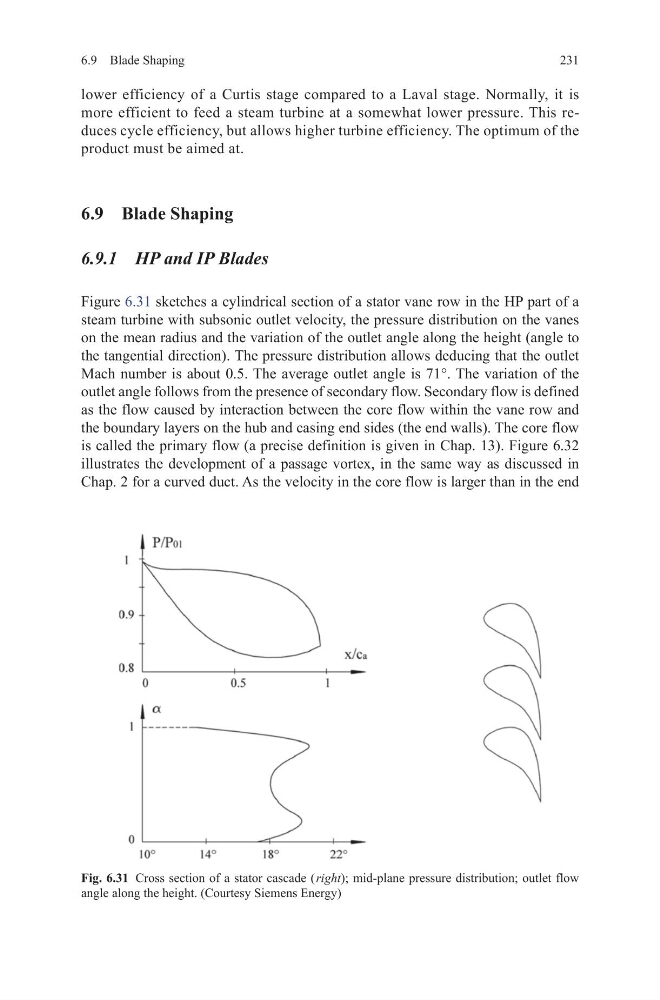
Figure 6.31 sketches a cylindrical section of a stator vane row in the HP part of a
steam turbine with subsonic outlet velocity, the pressure distribution on the vanes
on the mean radius and the variation of the outlet angle along the height (angle to
the tangential direction). The pressure distribution allows deducing that the outlet
Mach number is about 0.5. The average outlet angle is 71°. The variation of the
outlet angle follows from the presence of secondary flow. Secondary flow is defined
as the flow caused by interaction between the core flow within the vane row and
the boundary layers on the hub and casing end sides (the end walls). The core flow
is called the primary flow (a precise definition is given in Chap. 13). Figure 6.32
illustrates the development of a passage vortex, in the same way as discussed in
Chap. 2 for a curved duct. As the velocity in the core flow is larger than in the end
Fig. 6.31 Cross section of a stator cascade ( right); mid-plane pressure distribution; outlet flow
angle along the height. (Courtesy Siemens Energy)
6.9 Blade Shaping
lower efficiency of a Curtis stage compared to a Laval stage. Normally, it is
more efficient to feed a steam turbine at a somewhat lower pressure. This reduces cycle efficiency, but allows higher turbine efficiency. The optimum of the
product must be aimed at.
6.9 Blade Shaping
6.9.1 HP and IP Blades
Figure 6.31 sketches a cylindrical section of a stator vane row in the HP part of a
steam turbine with subsonic outlet velocity, the pressure distribution on the vanes
on the mean radius and the variation of the outlet angle along the height (angle to
the tangential direction). The pressure distribution allows deducing that the outlet
Mach number is about 0.5. The average outlet angle is 71°. The variation of the
outlet angle follows from the presence of secondary flow. Secondary flow is defined
as the flow caused by interaction between the core flow within the vane row and
the boundary layers on the hub and casing end sides (the end walls). The core flow
is called the primary flow (a precise definition is given in Chap. 13). Figure 6.32
illustrates the development of a passage vortex, in the same way as discussed in
Chap. 2 for a curved duct. As the velocity in the core flow is larger than in the end
Fig. 6.31 Cross section of a stator cascade ( right); mid-plane pressure distribution; outlet flow
angle along the height. (Courtesy Siemens Energy)