

230
6 Steam Turbines
(feed-water pumps in power plants) and combined steam-and-gas turbine power
stations (as condenser turbines and for power of the 100–200 MW order).
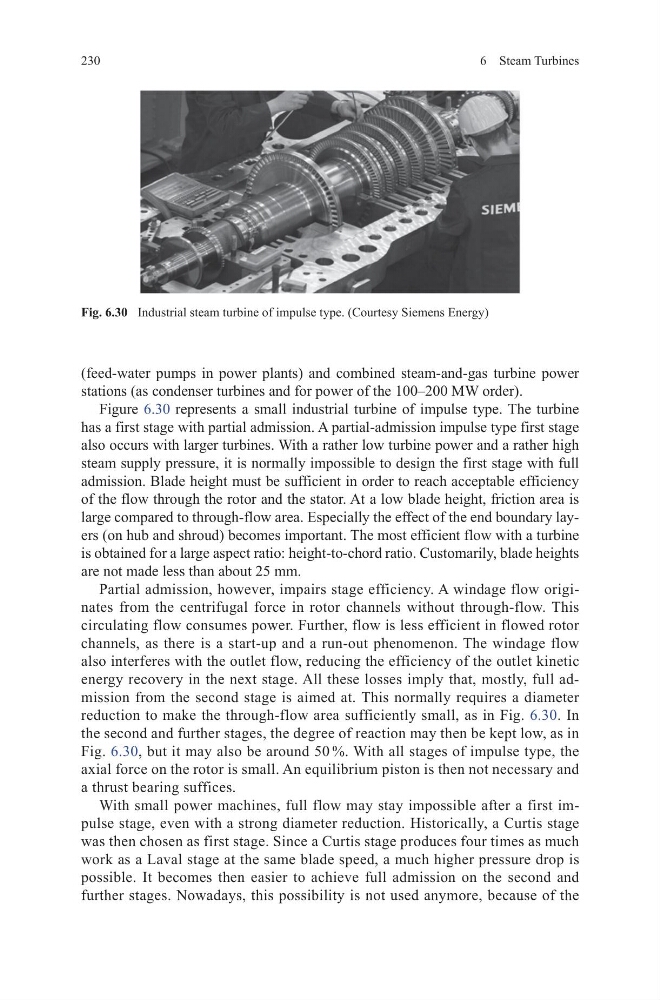
Figure 6.30 represents a small industrial turbine of impulse type. The turbine
has a first stage with partial admission. A partial-admission impulse type first stage
also occurs with larger turbines. With a rather low turbine power and a rather high
steam supply pressure, it is normally impossible to design the first stage with full
admission. Blade height must be sufficient in order to reach acceptable efficiency
of the flow through the rotor and the stator. At a low blade height, friction area is
large compared to through-flow area. Especially the effect of the end boundary layers (on hub and shroud) becomes important. The most efficient flow with a turbine
is obtained for a large aspect ratio: height-to-chord ratio. Customarily, blade heights
are not made less than about 25 mm.
Partial admission, however, impairs stage efficiency. A windage flow originates from the centrifugal force in rotor channels without through-flow. This
circulating flow consumes power. Further, flow is less efficient in flowed rotor
channels, as there is a start-up and a run-out phenomenon. The windage flow
also interferes with the outlet flow, reducing the efficiency of the outlet kinetic
energy recovery in the next stage. All these losses imply that, mostly, full admission from the second stage is aimed at. This normally requires a diameter
reduction to make the through-flow area sufficiently small, as in Fig. 6.30. In
the second and further stages, the degree of reaction may then be kept low, as in
Fig. 6.30, but it may also be around 50 %. With all stages of impulse type, the
axial force on the rotor is small. An equilibrium piston is then not necessary and
a thrust bearing suffices.
With small power machines, full flow may stay impossible after a first impulse stage, even with a strong diameter reduction. Historically, a Curtis stage
was then chosen as first stage. Since a Curtis stage produces four times as much
work as a Laval stage at the same blade speed, a much higher pressure drop is
possible. It becomes then easier to achieve full admission on the second and
further stages. Nowadays, this possibility is not used anymore, because of the
Fig. 6.30 Industrial steam turbine of impulse type. (Courtesy Siemens Energy)
6 Steam Turbines
(feed-water pumps in power plants) and combined steam-and-gas turbine power
stations (as condenser turbines and for power of the 100–200 MW order).
Figure 6.30 represents a small industrial turbine of impulse type. The turbine
has a first stage with partial admission. A partial-admission impulse type first stage
also occurs with larger turbines. With a rather low turbine power and a rather high
steam supply pressure, it is normally impossible to design the first stage with full
admission. Blade height must be sufficient in order to reach acceptable efficiency
of the flow through the rotor and the stator. At a low blade height, friction area is
large compared to through-flow area. Especially the effect of the end boundary layers (on hub and shroud) becomes important. The most efficient flow with a turbine
is obtained for a large aspect ratio: height-to-chord ratio. Customarily, blade heights
are not made less than about 25 mm.
Partial admission, however, impairs stage efficiency. A windage flow originates from the centrifugal force in rotor channels without through-flow. This
circulating flow consumes power. Further, flow is less efficient in flowed rotor
channels, as there is a start-up and a run-out phenomenon. The windage flow
also interferes with the outlet flow, reducing the efficiency of the outlet kinetic
energy recovery in the next stage. All these losses imply that, mostly, full admission from the second stage is aimed at. This normally requires a diameter
reduction to make the through-flow area sufficiently small, as in Fig. 6.30. In
the second and further stages, the degree of reaction may then be kept low, as in
Fig. 6.30, but it may also be around 50 %. With all stages of impulse type, the
axial force on the rotor is small. An equilibrium piston is then not necessary and
a thrust bearing suffices.
With small power machines, full flow may stay impossible after a first impulse stage, even with a strong diameter reduction. Historically, a Curtis stage
was then chosen as first stage. Since a Curtis stage produces four times as much
work as a Laval stage at the same blade speed, a much higher pressure drop is
possible. It becomes then easier to achieve full admission on the second and
further stages. Nowadays, this possibility is not used anymore, because of the
Fig. 6.30 Industrial steam turbine of impulse type. (Courtesy Siemens Energy)