

microbes has been and will remain critical for the development and interpretation of
molecular analyses in microbial ecology. However, before the utility of molecular
techniques to bioremediation, it was not sure whether the isolated microbes had been
critical in bioremediation under natural conditions, or whether they grew as “weeds”
unexpectedly in the laboratory, but were now not the expected organisms responsible for bioremediation.
6.2 Transcriptomics
The transcriptome is the subset of genes transcribed in any given organism, a
dynamic link among genome, proteome, and cellular phenotype. The control of
gene expression is the key in modifying changes in environmental situations and
hence for survival. Transcriptomics describes this expression procedure in a
genome-extensive manner. DNA microarrays allow detection of RNA expression
of each gene of an organism (Diaz 2004; Golyshin et al. 2003; Gao et al. 2004;
Muffler et al. 2002; Schut et al. 2003). One important challenge in this method is
elucidation of the huge amounts of data recorded (Dharmadi and Gonzalez 2004). A
global gene expression pattern analysis revealed the numerous to-date-unknown
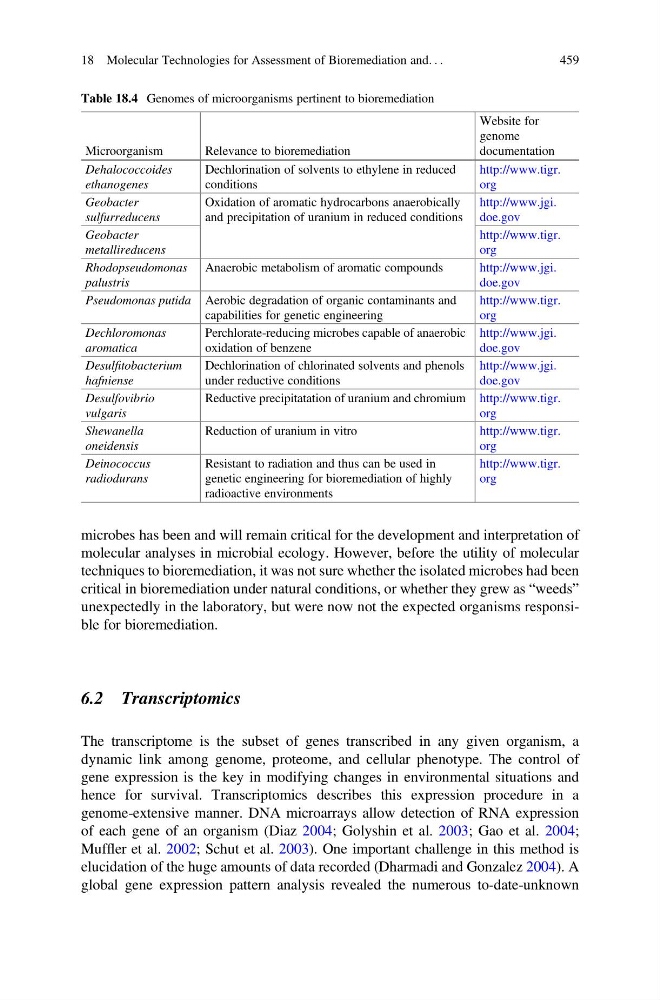
Table 18.4 Genomes of microorganisms pertinent to bioremediation
Microorganism
Relevance to bioremediation
Website for
genome
documentation
Dehalococcoides
ethanogenes
Dechlorination of solvents to ethylene in reduced
conditions
http://www.tigr.
org
Geobacter
sulfurreducens
Oxidation of aromatic hydrocarbons anaerobically
and precipitation of uranium in reduced conditions
http://www.jgi.
doe.gov
Geobacter
metallireducens
http://www.tigr.
org
Rhodopseudomonas
palustris
Anaerobic metabolism of aromatic compounds
http://www.jgi.
doe.gov
Pseudomonas putida Aerobic degradation of organic contaminants and
capabilities for genetic engineering
http://www.tigr.
org
Dechloromonas
aromatica
Perchlorate-reducing microbes capable of anaerobic
oxidation of benzene
http://www.jgi.
doe.gov
Desulfitobacterium
hafniense
Dechlorination of chlorinated solvents and phenols
under reductive conditions
http://www.jgi.
doe.gov
Desulfovibrio
vulgaris
Reductive precipitatation of uranium and chromium http://www.tigr.
org
Shewanella
oneidensis
Reduction of uranium in vitro
http://www.tigr.
org
Deinococcus
radiodurans
Resistant to radiation and thus can be used in
genetic engineering for bioremediation of highly
radioactive environments
http://www.tigr.
org
18 Molecular Technologies for Assessment of Bioremediation and. . .
459
molecular analyses in microbial ecology. However, before the utility of molecular
techniques to bioremediation, it was not sure whether the isolated microbes had been
critical in bioremediation under natural conditions, or whether they grew as “weeds”
unexpectedly in the laboratory, but were now not the expected organisms responsible for bioremediation.
6.2 Transcriptomics
The transcriptome is the subset of genes transcribed in any given organism, a
dynamic link among genome, proteome, and cellular phenotype. The control of
gene expression is the key in modifying changes in environmental situations and
hence for survival. Transcriptomics describes this expression procedure in a
genome-extensive manner. DNA microarrays allow detection of RNA expression
of each gene of an organism (Diaz 2004; Golyshin et al. 2003; Gao et al. 2004;
Muffler et al. 2002; Schut et al. 2003). One important challenge in this method is
elucidation of the huge amounts of data recorded (Dharmadi and Gonzalez 2004). A
global gene expression pattern analysis revealed the numerous to-date-unknown
Table 18.4 Genomes of microorganisms pertinent to bioremediation
Microorganism
Relevance to bioremediation
Website for
genome
documentation
Dehalococcoides
ethanogenes
Dechlorination of solvents to ethylene in reduced
conditions
http://www.tigr.
org
Geobacter
sulfurreducens
Oxidation of aromatic hydrocarbons anaerobically
and precipitation of uranium in reduced conditions
http://www.jgi.
doe.gov
Geobacter
metallireducens
http://www.tigr.
org
Rhodopseudomonas
palustris
Anaerobic metabolism of aromatic compounds
http://www.jgi.
doe.gov
Pseudomonas putida Aerobic degradation of organic contaminants and
capabilities for genetic engineering
http://www.tigr.
org
Dechloromonas
aromatica
Perchlorate-reducing microbes capable of anaerobic
oxidation of benzene
http://www.jgi.
doe.gov
Desulfitobacterium
hafniense
Dechlorination of chlorinated solvents and phenols
under reductive conditions
http://www.jgi.
doe.gov
Desulfovibrio
vulgaris
Reductive precipitatation of uranium and chromium http://www.tigr.
org
Shewanella
oneidensis
Reduction of uranium in vitro
http://www.tigr.
org
Deinococcus
radiodurans
Resistant to radiation and thus can be used in
genetic engineering for bioremediation of highly
radioactive environments
http://www.tigr.
org
18 Molecular Technologies for Assessment of Bioremediation and. . .
459