

microorganisms applicable to bioremediation. Complete genome sequences should
be known for such microbes, which can be important in bioremediation (Table 18.4).
The views of researchers changed after observing the utility of bioremediation to
the advanced sciences such as genomics, which have given exclusive results to many
questions. For instance, molecular analyses have indicated that Geobacter species
are crucial for the bioremediation of organic and metal contaminants in subsurface
environments. This realization led to the sequencing of several species of the genus
Geobacter, in addition to other related organisms, which has altered the concept of
how Geobacter species help in reducing the contaminants in subsurface environments. Earlier it was thought that Geobacter species were nonmotile, but genes
encoding flagella were subsequently determined in the Geobacter genomes (Childers et al. 2002). Later it was found that Geobacter metallireducens in particular
produces flagella only when the microbe is growing on insoluble ferrous and
manganese oxides. Pili genes were also found to be expressed during culture on
insoluble oxides (Childers et al. 2002).
Similarly, other microbes with bioremediation capability have been screened for
complete genome sequencing. With the completed genome sequences, it is better to
design whole-genome DNA microarrays to analyse the expression of all the genes
under various environmental situations. When bioremediation approaches are
researched in detail, trials are commonly made to isolate the concerned microorganisms (Rogers and McClure 2003). The isolation and characterization of such
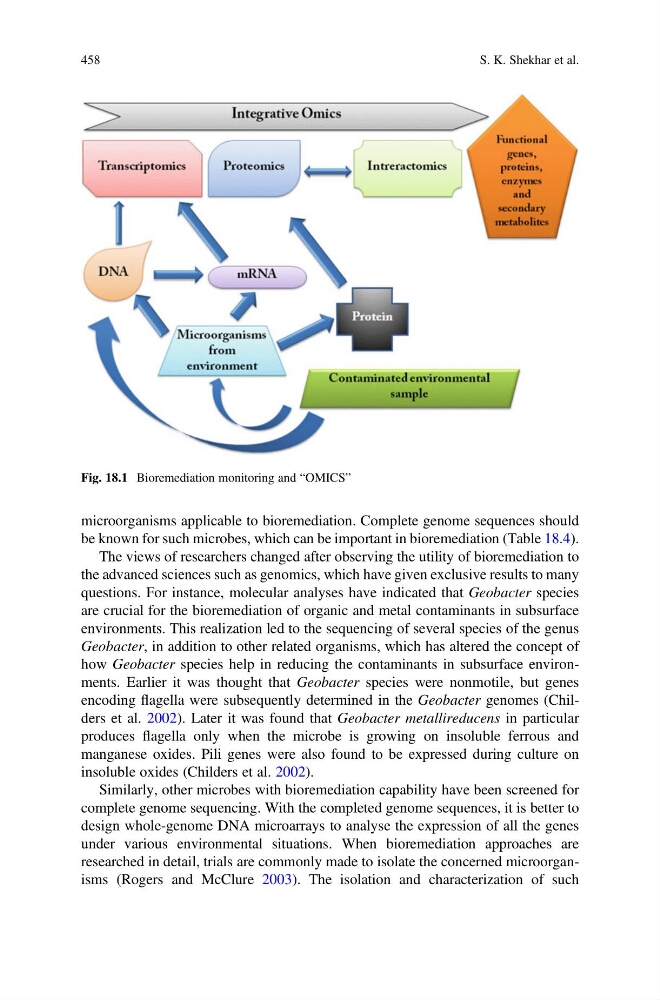
Fig. 18.1 Bioremediation monitoring and “OMICS”
458
S. K. Shekhar et al.
be known for such microbes, which can be important in bioremediation (Table 18.4).
The views of researchers changed after observing the utility of bioremediation to
the advanced sciences such as genomics, which have given exclusive results to many
questions. For instance, molecular analyses have indicated that Geobacter species
are crucial for the bioremediation of organic and metal contaminants in subsurface
environments. This realization led to the sequencing of several species of the genus
Geobacter, in addition to other related organisms, which has altered the concept of
how Geobacter species help in reducing the contaminants in subsurface environments. Earlier it was thought that Geobacter species were nonmotile, but genes
encoding flagella were subsequently determined in the Geobacter genomes (Childers et al. 2002). Later it was found that Geobacter metallireducens in particular
produces flagella only when the microbe is growing on insoluble ferrous and
manganese oxides. Pili genes were also found to be expressed during culture on
insoluble oxides (Childers et al. 2002).
Similarly, other microbes with bioremediation capability have been screened for
complete genome sequencing. With the completed genome sequences, it is better to
design whole-genome DNA microarrays to analyse the expression of all the genes
under various environmental situations. When bioremediation approaches are
researched in detail, trials are commonly made to isolate the concerned microorganisms (Rogers and McClure 2003). The isolation and characterization of such
Fig. 18.1 Bioremediation monitoring and “OMICS”
458
S. K. Shekhar et al.