

minimal. The main disadvantage of this technique is less efficiency in pollutant
removal than ex situ.
Generally, the cost of ex situ treatment process is very high, but the time
requirement for this process makes it more applicable than in situ method. The soil
treated by ex situ method can be further used for landscape purposes (Kuppusamy
et al. 2016).
3.1 Physicochemical Remediation
Pollutant removal from water and soil can be achieved by several physical and
chemical means which are as follows:
3.1.1 Incineration
It is the process which involves disposal of hazardous waste through exposing them
to a very high temperature (750–1200
C). Burning can be achieved in different
types of experimental setup such as infrared combustors (infrared energy as heat
source), fluidized bed combustors, circulating bed combustors, and rotary kilns,
Remediation
Technologies
Biological
Bioremediation
Biosparging
Bioventing
Bioaugmentation
Land farming
Composting
Biopiles
Bioreactors
Phytoextraction
Phytotransformation
Phytostabilization
Rhizodegradation
Rhizofiltration
Phytovolatilization
Phytoremediation
Physicochemical
Incineration
Advanced oxidation
processes(AOPs)
Dehalogenation
Chemical Reduction/Oxidation
Solidification
Chemival extraction
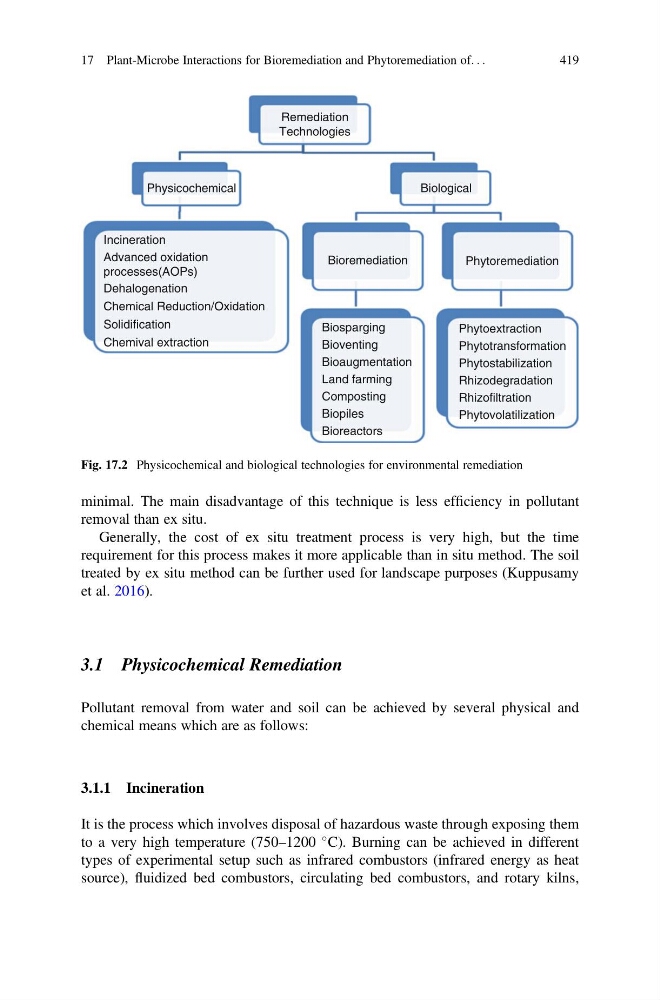
Fig. 17.2 Physicochemical and biological technologies for environmental remediation
17 Plant-Microbe Interactions for Bioremediation and Phytoremediation of. . .
419
removal than ex situ.
Generally, the cost of ex situ treatment process is very high, but the time
requirement for this process makes it more applicable than in situ method. The soil
treated by ex situ method can be further used for landscape purposes (Kuppusamy
et al. 2016).
3.1 Physicochemical Remediation
Pollutant removal from water and soil can be achieved by several physical and
chemical means which are as follows:
3.1.1 Incineration
It is the process which involves disposal of hazardous waste through exposing them
to a very high temperature (750–1200
C). Burning can be achieved in different
types of experimental setup such as infrared combustors (infrared energy as heat
source), fluidized bed combustors, circulating bed combustors, and rotary kilns,
Remediation
Technologies
Biological
Bioremediation
Biosparging
Bioventing
Bioaugmentation
Land farming
Composting
Biopiles
Bioreactors
Phytoextraction
Phytotransformation
Phytostabilization
Rhizodegradation
Rhizofiltration
Phytovolatilization
Phytoremediation
Physicochemical
Incineration
Advanced oxidation
processes(AOPs)
Dehalogenation
Chemical Reduction/Oxidation
Solidification
Chemival extraction
Fig. 17.2 Physicochemical and biological technologies for environmental remediation
17 Plant-Microbe Interactions for Bioremediation and Phytoremediation of. . .
419