

A study was conducted on the effectiveness of a mixed culture of green algae
(Chlorella, Chlorococcum, Chlamydomonas, Pandorina, Eudorina) and a few diatoms (Nitzschia, Cyclotella), flagellates (Euglena), and some blue-green algae
(Microcystis, Anabaena) in treating pulp and paper industry wastewater with the
wood source. The maximum removal percentage of 58%, 84%, and 80% were
attained for COD, color and absorbable organic xenobiotics (AOX) respectively.
Upon the variation in lighting and initial strength of wastewater, no significant
differences have been identified in COD, and color whereas AOX removal was
strongly affected (Tarlan et al. 2002).
3.5 Textile and Dye Industries
The textile and dye industries can be very complex activities, involving many
processes based on the raw materials used and the products manufactured. Annually,
about 7 Â 10
5 tons of dyestuffs are produced worldwide with the aid of more than
100,000 available dyes (Robinson et al. 2001). Pathak et al. (2014) investigated the
efficiency of Chlorella pyrenoidosa for decolorization as well as removal of pollutants from textile wastewater. Comparisons of autoclaved and unautoclaved textile
wastewater for 15 days are presented in Fig. 13.5.
3.6 Others
3.6.1 Tanneries
Tannery effluent is characterized by high biochemical oxygen demand (BOD),
chemical oxygen demand (COD), total dissolved solids (TDS), and a variety of
organic and inorganic pollutants (Goutam et al. 2018; Bharagava et al. 2017c;
Gautam et al. 2017; Saxena et al. 2016; Saxena and Bharagava 2015). Researches
have investigated untreated raw combined tannery effluent was studied for its
suitability as a growth medium for microalgae Spirulina. Their results suggested
the incompatibility of raw effluent, even when utilizing diluted raw effluent mixed
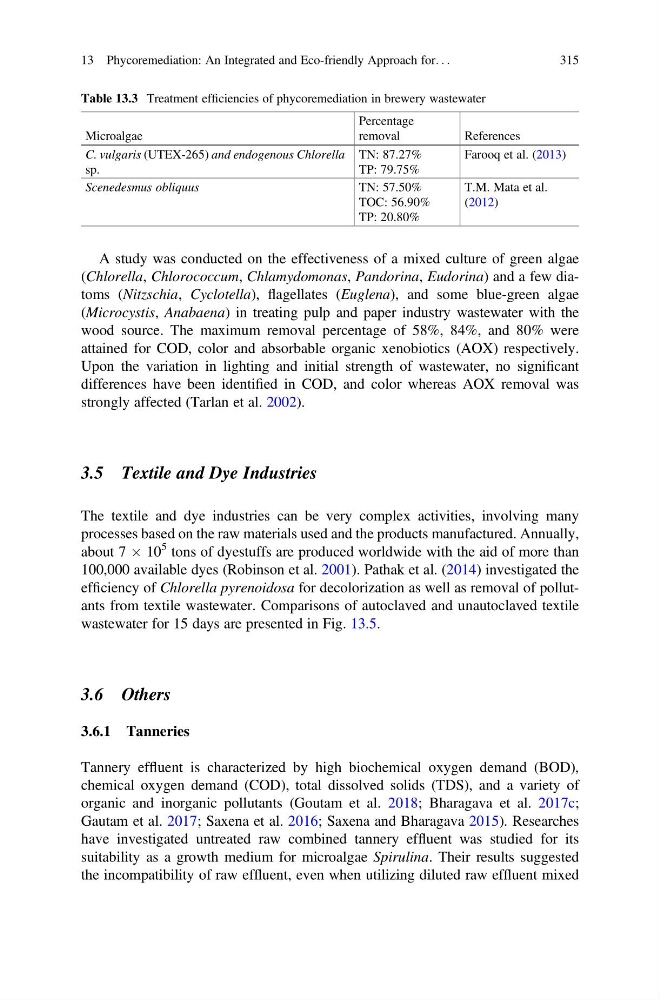
Table 13.3 Treatment efficiencies of phycoremediation in brewery wastewater
Microalgae
Percentage
removal
References
C. vulgaris (UTEX-265) and endogenous Chlorella
sp.
TN: 87.27%
TP: 79.75%
Farooq et al. (2013)
Scenedesmus obliquus
TN: 57.50%
TOC: 56.90%
TP: 20.80%
T.M. Mata et al.
(2012)
13 Phycoremediation: An Integrated and Eco-friendly Approach for. . .
315
(Chlorella, Chlorococcum, Chlamydomonas, Pandorina, Eudorina) and a few diatoms (Nitzschia, Cyclotella), flagellates (Euglena), and some blue-green algae
(Microcystis, Anabaena) in treating pulp and paper industry wastewater with the
wood source. The maximum removal percentage of 58%, 84%, and 80% were
attained for COD, color and absorbable organic xenobiotics (AOX) respectively.
Upon the variation in lighting and initial strength of wastewater, no significant
differences have been identified in COD, and color whereas AOX removal was
strongly affected (Tarlan et al. 2002).
3.5 Textile and Dye Industries
The textile and dye industries can be very complex activities, involving many
processes based on the raw materials used and the products manufactured. Annually,
about 7 Â 10
5 tons of dyestuffs are produced worldwide with the aid of more than
100,000 available dyes (Robinson et al. 2001). Pathak et al. (2014) investigated the
efficiency of Chlorella pyrenoidosa for decolorization as well as removal of pollutants from textile wastewater. Comparisons of autoclaved and unautoclaved textile
wastewater for 15 days are presented in Fig. 13.5.
3.6 Others
3.6.1 Tanneries
Tannery effluent is characterized by high biochemical oxygen demand (BOD),
chemical oxygen demand (COD), total dissolved solids (TDS), and a variety of
organic and inorganic pollutants (Goutam et al. 2018; Bharagava et al. 2017c;
Gautam et al. 2017; Saxena et al. 2016; Saxena and Bharagava 2015). Researches
have investigated untreated raw combined tannery effluent was studied for its
suitability as a growth medium for microalgae Spirulina. Their results suggested
the incompatibility of raw effluent, even when utilizing diluted raw effluent mixed
Table 13.3 Treatment efficiencies of phycoremediation in brewery wastewater
Microalgae
Percentage
removal
References
C. vulgaris (UTEX-265) and endogenous Chlorella
sp.
TN: 87.27%
TP: 79.75%
Farooq et al. (2013)
Scenedesmus obliquus
TN: 57.50%
TOC: 56.90%
TP: 20.80%
T.M. Mata et al.
(2012)
13 Phycoremediation: An Integrated and Eco-friendly Approach for. . .
315