

strains (C. vulgaris (UTEX-265)) and endogenous Chlorella sp. in brewery effluent.
A maximum biomass production of 1.5 g L
À1 and lipid content of 18% were attained
in single-stage photoautotrophic cultivation of C. vulgaris (UTEX-265) in brewery
wastewater. In contrast, there were 2-fold increase in biomass and 3.5-fold increase
in lipid productivity in case of two-stage photoautotrophic–photoheterotrophic cultivation in another study (Farooq et al. 2013). Table 13.3 shows the treatment
efficiencies of phycoremediation in brewery wastewater.
3.4 Pulp and Paper Industries
The pulp and paper industries contain plenty of wood wastes in the form of enzymatic
hydrolysates which could be used to produce algal biomass. Southern hardwood chips
(SHC), southern pine bleached kraft (SPBK), southern pine finer chips (SPFC), and
bleached southern pine (BSP) hydrolysates were tested for the growth of various
Chlorella and Scenedesmus sp. (Hawaiian). The growth profile of the selected species
varies based on the pentose and hexose composition and residuals from the process
(alcohols and organic acids). In this study, both species could utilize the pentose sugars
with greater biomass productivity (2.87 g L
À1
day
À1
) of BSP with the growth medium.
Moreover, biomass yield per gram of sugar consumed in the system ranged from
0.45:1, whereas it was 1.15:1 in hardwood (like Southern Hardwood Chips) hydrolysate when ethanol was present (Perez et al. 2015).
0.00%
10.00%
20.00%
30.00%
40.00%
50.00%
60.00%
70.00%
80.00%
90.00%
100.00%
Nitrate
Phosphate
TOC
sulphate
Novel Chlorella sorokiniana (Solovchenko et al. 2014)
Removal efficiency
Alcohol distillery wastewater
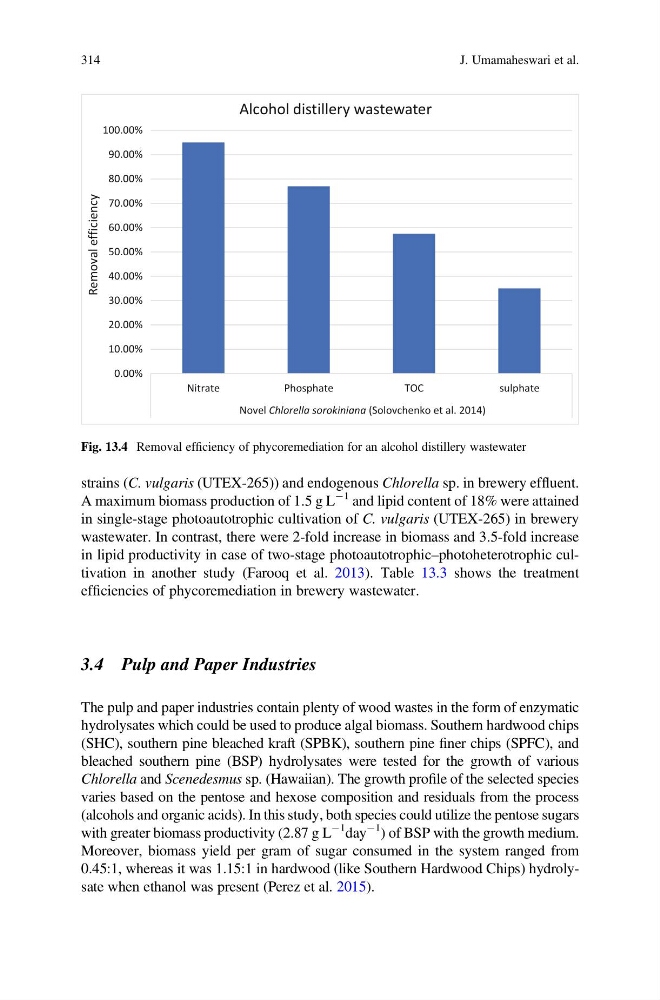
Fig. 13.4 Removal efficiency of phycoremediation for an alcohol distillery wastewater
314
J. Umamaheswari et al.
A maximum biomass production of 1.5 g L
À1 and lipid content of 18% were attained
in single-stage photoautotrophic cultivation of C. vulgaris (UTEX-265) in brewery
wastewater. In contrast, there were 2-fold increase in biomass and 3.5-fold increase
in lipid productivity in case of two-stage photoautotrophic–photoheterotrophic cultivation in another study (Farooq et al. 2013). Table 13.3 shows the treatment
efficiencies of phycoremediation in brewery wastewater.
3.4 Pulp and Paper Industries
The pulp and paper industries contain plenty of wood wastes in the form of enzymatic
hydrolysates which could be used to produce algal biomass. Southern hardwood chips
(SHC), southern pine bleached kraft (SPBK), southern pine finer chips (SPFC), and
bleached southern pine (BSP) hydrolysates were tested for the growth of various
Chlorella and Scenedesmus sp. (Hawaiian). The growth profile of the selected species
varies based on the pentose and hexose composition and residuals from the process
(alcohols and organic acids). In this study, both species could utilize the pentose sugars
with greater biomass productivity (2.87 g L
À1
day
À1
) of BSP with the growth medium.
Moreover, biomass yield per gram of sugar consumed in the system ranged from
0.45:1, whereas it was 1.15:1 in hardwood (like Southern Hardwood Chips) hydrolysate when ethanol was present (Perez et al. 2015).
0.00%
10.00%
20.00%
30.00%
40.00%
50.00%
60.00%
70.00%
80.00%
90.00%
100.00%
Nitrate
Phosphate
TOC
sulphate
Novel Chlorella sorokiniana (Solovchenko et al. 2014)
Removal efficiency
Alcohol distillery wastewater
Fig. 13.4 Removal efficiency of phycoremediation for an alcohol distillery wastewater
314
J. Umamaheswari et al.