

(97%), total nitrogen (69%), total phosphorus (90%), and total suspended solids
(100%) (Perez et al. 2015). Phenolic compounds are the primary source of pollutants
from olive oil mill wastewater especially in Mediterranean countries (RamosCormenzana et al. 1995). A 5-day treatment of olive mill wastewater with two algal
resistant microalgae, namely, Ankistrodesmus braunii and Scenedesmus quadricauda,
resulted in the limited reduction of phenolic compounds (Table 13.2). The experiments
were conducted both in light and dark conditions, and both algae grown in the dark
utilized 50% more phenols with low molecular weight. They then biotransformed into
unknown aromatic compounds (Pinto et al. 2003).
Wastewater from an olive oil extraction was utilized for the biomass production
of Scenedesmus obliquus. The maximum specific rate of protein synthesis of 3.7 mg/
g was achieved with 50% rinse water. Also, the microalgae cultivation with 25% of
rinse water reduced the BOD 5 by 67.5% (Hodaifa et al. 2008).
3.3.2 Distilleries
Distilleries produce 7–9% of alcohol through yeast fermentation, and the rest
(91–93%) of the things (spent lees and spent wash) are discharged as wastewater.
This accounts for the vast quantity that needs to be treated by phycoremediation to
achieve a dual benefit (Sankaran et al. 2014). An attempt was made by Kalavathi
et al. (2011) to treat the distillery effluent with a marine cyanobacterium
Oscillatoria boryana BDU 92181 for the decolorization of melanoidin (75%)
and crude pigment (60%).
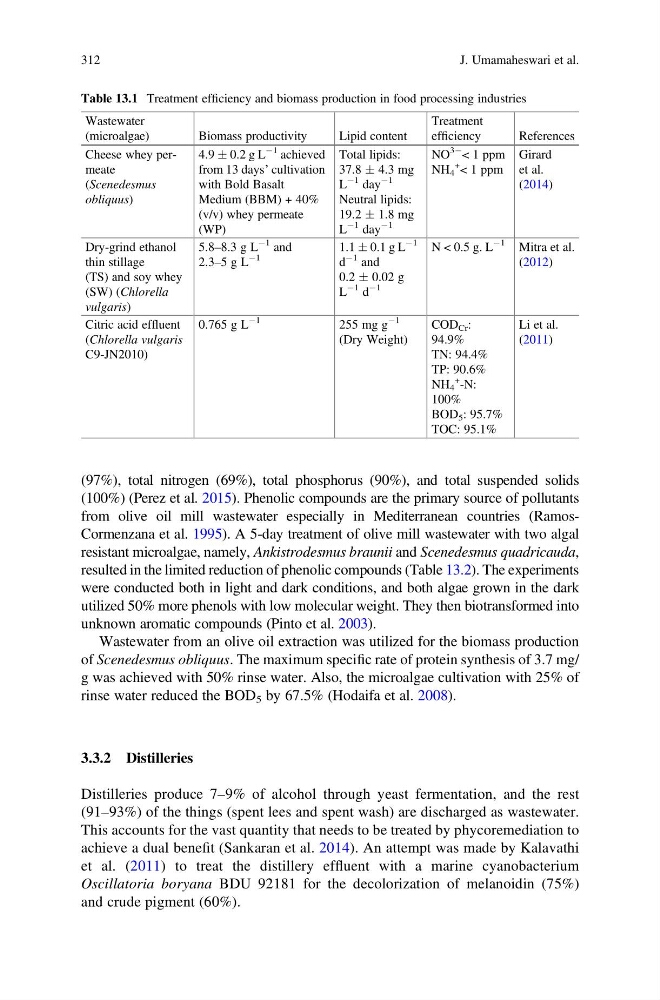
Table 13.1 Treatment efficiency and biomass production in food processing industries
Wastewater
(microalgae)
Biomass productivity
Lipid content
Treatment
efficiency
References
Cheese whey permeate
(Scenedesmus
obliquus)
4.9 Æ 0.2 g L
À1 achieved
from 13 days’ cultivation
with Bold Basalt
Medium (BBM) + 40%
(v/v) whey permeate
(WP)
Total lipids:
37.8 Æ 4.3 mg
L
À1 day
À1
Neutral lipids:
19.2 Æ 1.8 mg
L
À1 day
À1
NO
3À < 1 ppm
NH 4
+ < 1 ppm
Girard
et al.
(2014)
Dry-grind ethanol
thin stillage
(TS) and soy whey
(SW) (Chlorella
vulgaris)
5.8–8.3 g L
À1 and
2.3–5 g L
À1
1.1 Æ 0.1 g L
À1
d
À1 and
0.2 Æ 0.02 g
L
À1 d
À1
N < 0.5 g. L
À1
Mitra et al.
(2012)
Citric acid effluent
(Chlorella vulgaris
C9-JN2010)
0.765 g L
À1
255 mg g
À1
(Dry Weight)
COD Cr :
94.9%
TN: 94.4%
TP: 90.6%
NH 4
+ -N:
100%
BOD 5 : 95.7%
TOC: 95.1%
Li et al.
(2011)
312
J. Umamaheswari et al.
(100%) (Perez et al. 2015). Phenolic compounds are the primary source of pollutants
from olive oil mill wastewater especially in Mediterranean countries (RamosCormenzana et al. 1995). A 5-day treatment of olive mill wastewater with two algal
resistant microalgae, namely, Ankistrodesmus braunii and Scenedesmus quadricauda,
resulted in the limited reduction of phenolic compounds (Table 13.2). The experiments
were conducted both in light and dark conditions, and both algae grown in the dark
utilized 50% more phenols with low molecular weight. They then biotransformed into
unknown aromatic compounds (Pinto et al. 2003).
Wastewater from an olive oil extraction was utilized for the biomass production
of Scenedesmus obliquus. The maximum specific rate of protein synthesis of 3.7 mg/
g was achieved with 50% rinse water. Also, the microalgae cultivation with 25% of
rinse water reduced the BOD 5 by 67.5% (Hodaifa et al. 2008).
3.3.2 Distilleries
Distilleries produce 7–9% of alcohol through yeast fermentation, and the rest
(91–93%) of the things (spent lees and spent wash) are discharged as wastewater.
This accounts for the vast quantity that needs to be treated by phycoremediation to
achieve a dual benefit (Sankaran et al. 2014). An attempt was made by Kalavathi
et al. (2011) to treat the distillery effluent with a marine cyanobacterium
Oscillatoria boryana BDU 92181 for the decolorization of melanoidin (75%)
and crude pigment (60%).
Table 13.1 Treatment efficiency and biomass production in food processing industries
Wastewater
(microalgae)
Biomass productivity
Lipid content
Treatment
efficiency
References
Cheese whey permeate
(Scenedesmus
obliquus)
4.9 Æ 0.2 g L
À1 achieved
from 13 days’ cultivation
with Bold Basalt
Medium (BBM) + 40%
(v/v) whey permeate
(WP)
Total lipids:
37.8 Æ 4.3 mg
L
À1 day
À1
Neutral lipids:
19.2 Æ 1.8 mg
L
À1 day
À1
NO
3À < 1 ppm
NH 4
+ < 1 ppm
Girard
et al.
(2014)
Dry-grind ethanol
thin stillage
(TS) and soy whey
(SW) (Chlorella
vulgaris)
5.8–8.3 g L
À1 and
2.3–5 g L
À1
1.1 Æ 0.1 g L
À1
d
À1 and
0.2 Æ 0.02 g
L
À1 d
À1
N < 0.5 g. L
À1
Mitra et al.
(2012)
Citric acid effluent
(Chlorella vulgaris
C9-JN2010)
0.765 g L
À1
255 mg g
À1
(Dry Weight)
COD Cr :
94.9%
TN: 94.4%
TP: 90.6%
NH 4
+ -N:
100%
BOD 5 : 95.7%
TOC: 95.1%
Li et al.
(2011)
312
J. Umamaheswari et al.