

growth medium (1.55 g L
À1 ) (Kothari et al. 2012). Also, the fresh weight biomass
yield (g L
À1 ), the dry weight biomass yield (g L
À1 ), and the biodiesel production
yield (ml) obtained from Chlorella pyrenoidosa are nearly three times, two times,
and five times larger than that of Chlamydomonaspolypyrenoideum, respectively
(Kothari et al. 2012, 2013) (see Fig. 13.3).
The processing of soybean for bean curd produces an enormous quantity of
wastewater (7–10 tons) which has the higher COD content of 10,000 to
20,000 mgL
À1 (Yu et al. 2002). Soybean processing wastewater contains various
nutrients, saccharides (monosaccharide, oligosaccharides), lipids, amino acids,
vitamins, and proteins but lacks toxic chemicals and hazardous substances.
These features can make it the best source of nutrients for the microalgae and
consequently reduce the cost of biomass or biodiesel production. Maximum
removal percentages of 77.8 Æ 5.7%, 88.8 Æ 1.0%, 89.1 Æ 0.6%, and
70.3 Æ 11.4% were achieved for the soluble chemical oxygen demand (SCOD),
total nitrogen (TN), ammonia nitrogen (NH 4
+ -N), and total phosphate (TP) by
Chlorella pyrenoidosa in soybean processing wastewater, respectively. Furthermore, average lipid content of 37.00 Æ 9.34%, maximum lipid productivity of
0.40 g L
À1 day
À1 , and biomass productivity of 0.64 g L
À1 day
À1 were obtained in
one study (Hongyang et al. 2011). Other food processing industries, such as cheese
whey permeate (contains more than 80% of pure lactose), dry-grind ethanol thin
0.00%
10.00%
20.00%
30.00%
40.00%
50.00%
60.00%
70.00%
80.00%
90.00%
100.00%
COD
BOD
Phosphates
TSS
TDS
Nitrate
Nitrite
Phosphates
Chlorides
Fluriides
Ammonia
Nitrate
Phosphates
Nostoc sp.(Kotteswari et al. 2012)
Chlamydomonas polypyrenoideum (Kothari et
al. 2013)
Chlorella
pyrenoidosa
(Kothari et al.
2012)
TREATMENT EFFICIENCY
PARAMETERS
Dairy wastewater
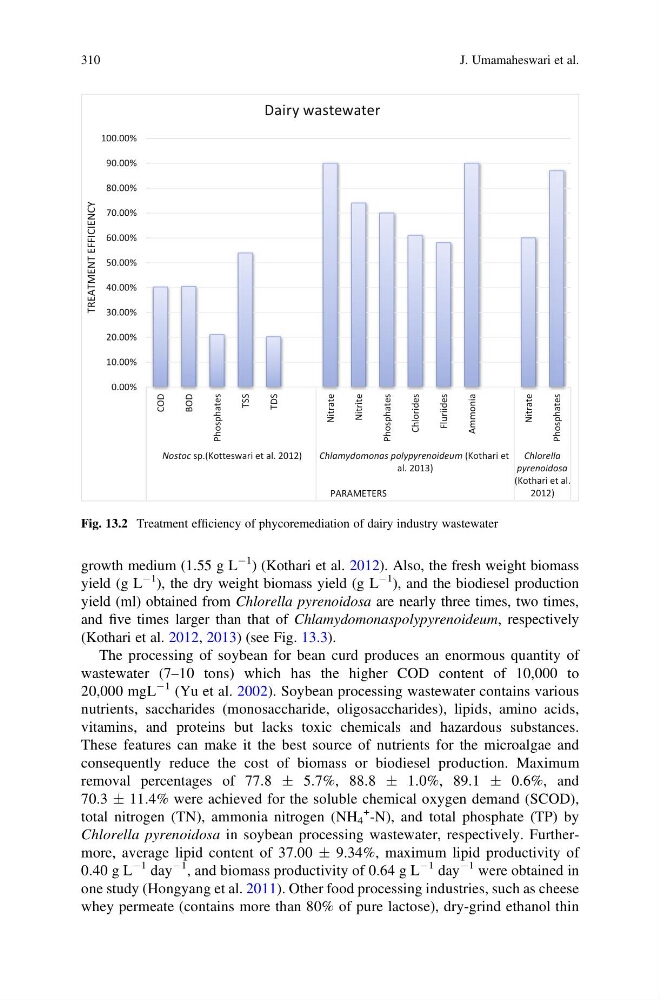
Fig. 13.2 Treatment efficiency of phycoremediation of dairy industry wastewater
310
J. Umamaheswari et al.
À1 ) (Kothari et al. 2012). Also, the fresh weight biomass
yield (g L
À1 ), the dry weight biomass yield (g L
À1 ), and the biodiesel production
yield (ml) obtained from Chlorella pyrenoidosa are nearly three times, two times,
and five times larger than that of Chlamydomonaspolypyrenoideum, respectively
(Kothari et al. 2012, 2013) (see Fig. 13.3).
The processing of soybean for bean curd produces an enormous quantity of
wastewater (7–10 tons) which has the higher COD content of 10,000 to
20,000 mgL
À1 (Yu et al. 2002). Soybean processing wastewater contains various
nutrients, saccharides (monosaccharide, oligosaccharides), lipids, amino acids,
vitamins, and proteins but lacks toxic chemicals and hazardous substances.
These features can make it the best source of nutrients for the microalgae and
consequently reduce the cost of biomass or biodiesel production. Maximum
removal percentages of 77.8 Æ 5.7%, 88.8 Æ 1.0%, 89.1 Æ 0.6%, and
70.3 Æ 11.4% were achieved for the soluble chemical oxygen demand (SCOD),
total nitrogen (TN), ammonia nitrogen (NH 4
+ -N), and total phosphate (TP) by
Chlorella pyrenoidosa in soybean processing wastewater, respectively. Furthermore, average lipid content of 37.00 Æ 9.34%, maximum lipid productivity of
0.40 g L
À1 day
À1 , and biomass productivity of 0.64 g L
À1 day
À1 were obtained in
one study (Hongyang et al. 2011). Other food processing industries, such as cheese
whey permeate (contains more than 80% of pure lactose), dry-grind ethanol thin
0.00%
10.00%
20.00%
30.00%
40.00%
50.00%
60.00%
70.00%
80.00%
90.00%
100.00%
COD
BOD
Phosphates
TSS
TDS
Nitrate
Nitrite
Phosphates
Chlorides
Fluriides
Ammonia
Nitrate
Phosphates
Nostoc sp.(Kotteswari et al. 2012)
Chlamydomonas polypyrenoideum (Kothari et
al. 2013)
Chlorella
pyrenoidosa
(Kothari et al.
2012)
TREATMENT EFFICIENCY
PARAMETERS
Dairy wastewater
Fig. 13.2 Treatment efficiency of phycoremediation of dairy industry wastewater
310
J. Umamaheswari et al.