

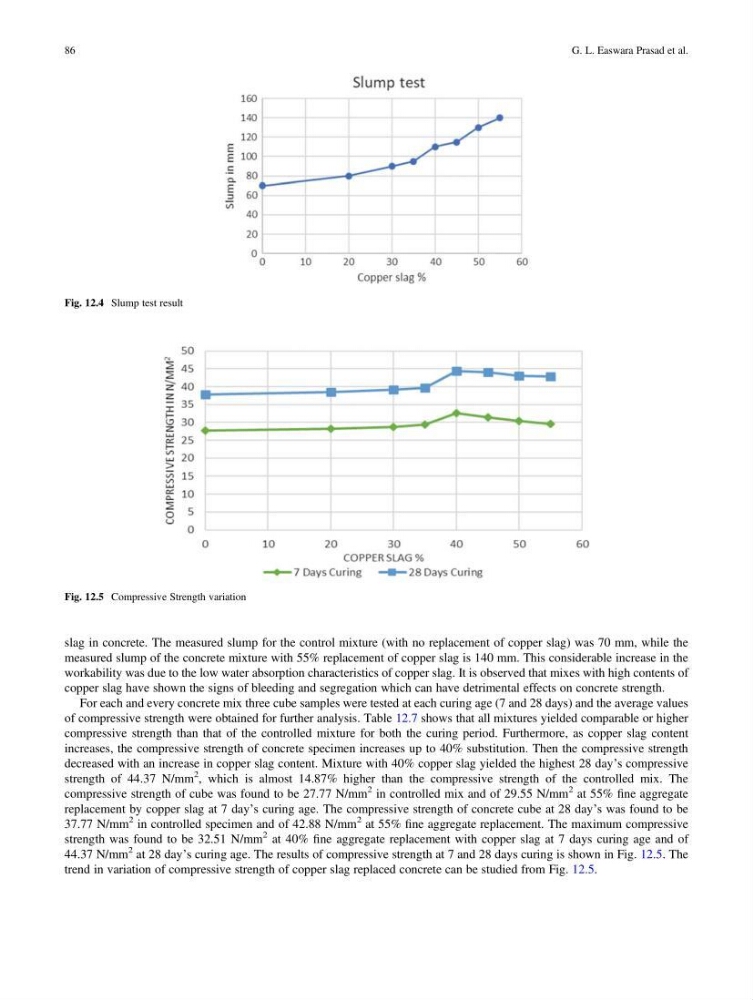
slag in concrete. The measured slump for the control mixture (with no replacement of copper slag) was 70 mm, while the
measured slump of the concrete mixture with 55% replacement of copper slag is 140 mm. This considerable increase in the
workability was due to the low water absorption characteristics of copper slag. It is observed that mixes with high contents of
copper slag have shown the signs of bleeding and segregation which can have detrimental effects on concrete strength.
For each and every concrete mix three cube samples were tested at each curing age (7 and 28 days) and the average values
of compressive strength were obtained for further analysis. Table 12.7 shows that all mixtures yielded comparable or higher
compressive strength than that of the controlled mixture for both the curing period. Furthermore, as copper slag content
increases, the compressive strength of concrete specimen increases up to 40% substitution. Then the compressive strength
decreased with an increase in copper slag content. Mixture with 40% copper slag yielded the highest 28 day’s compressive
strength of 44.37 N/mm
2 , which is almost 14.87% higher than the compressive strength of the controlled mix. The
compressive strength of cube was found to be 27.77 N/mm
2 in controlled mix and of 29.55 N/mm
2 at 55% fine aggregate
replacement by copper slag at 7 day’s curing age. The compressive strength of concrete cube at 28 day’s was found to be
37.77 N/mm
2 in controlled specimen and of 42.88 N/mm
2 at 55% fine aggregate replacement. The maximum compressive
strength was found to be 32.51 N/mm
2 at 40% fine aggregate replacement with copper slag at 7 days curing age and of
44.37 N/mm
2 at 28 day’s curing age. The results of compressive strength at 7 and 28 days curing is shown in Fig. 12.5. The
trend in variation of compressive strength of copper slag replaced concrete can be studied from Fig. 12.5.
Fig. 12.5 Compressive Strength variation
Fig. 12.4 Slump test result
86
G. L. Easwara Prasad et al.
measured slump of the concrete mixture with 55% replacement of copper slag is 140 mm. This considerable increase in the
workability was due to the low water absorption characteristics of copper slag. It is observed that mixes with high contents of
copper slag have shown the signs of bleeding and segregation which can have detrimental effects on concrete strength.
For each and every concrete mix three cube samples were tested at each curing age (7 and 28 days) and the average values
of compressive strength were obtained for further analysis. Table 12.7 shows that all mixtures yielded comparable or higher
compressive strength than that of the controlled mixture for both the curing period. Furthermore, as copper slag content
increases, the compressive strength of concrete specimen increases up to 40% substitution. Then the compressive strength
decreased with an increase in copper slag content. Mixture with 40% copper slag yielded the highest 28 day’s compressive
strength of 44.37 N/mm
2 , which is almost 14.87% higher than the compressive strength of the controlled mix. The
compressive strength of cube was found to be 27.77 N/mm
2 in controlled mix and of 29.55 N/mm
2 at 55% fine aggregate
replacement by copper slag at 7 day’s curing age. The compressive strength of concrete cube at 28 day’s was found to be
37.77 N/mm
2 in controlled specimen and of 42.88 N/mm
2 at 55% fine aggregate replacement. The maximum compressive
strength was found to be 32.51 N/mm
2 at 40% fine aggregate replacement with copper slag at 7 days curing age and of
44.37 N/mm
2 at 28 day’s curing age. The results of compressive strength at 7 and 28 days curing is shown in Fig. 12.5. The
trend in variation of compressive strength of copper slag replaced concrete can be studied from Fig. 12.5.
Fig. 12.5 Compressive Strength variation
Fig. 12.4 Slump test result
86
G. L. Easwara Prasad et al.