

11.3 Results and Discussion
11.3.1 Microstructure and Mapping Analyses of the Compositions Produced by “Sintering
and Sinter + Forging Process
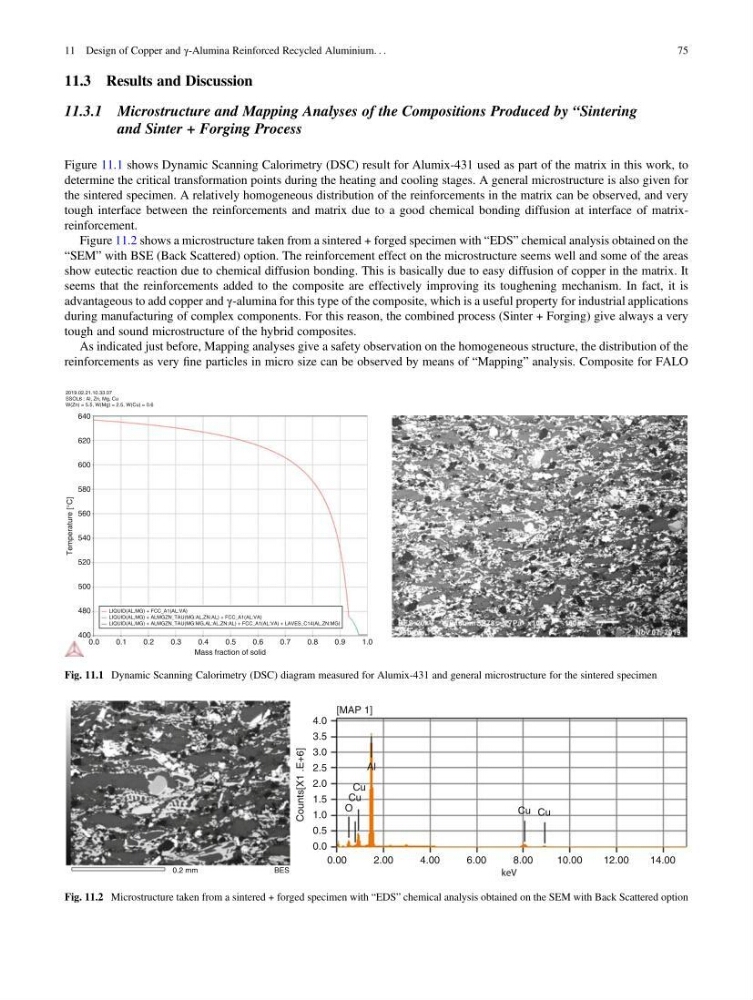
Figure 11.1 shows Dynamic Scanning Calorimetry (DSC) result for Alumix-431 used as part of the matrix in this work, to
determine the critical transformation points during the heating and cooling stages. A general microstructure is also given for
the sintered specimen. A relatively homogeneous distribution of the reinforcements in the matrix can be observed, and very
tough interface between the reinforcements and matrix due to a good chemical bonding diffusion at interface of matrixreinforcement.
Figure 11.2 shows a microstructure taken from a sintered + forged specimen with “EDS” chemical analysis obtained on the
“SEM” with BSE (Back Scattered) option. The reinforcement effect on the microstructure seems well and some of the areas
show eutectic reaction due to chemical diffusion bonding. This is basically due to easy diffusion of copper in the matrix. It
seems that the reinforcements added to the composite are effectively improving its toughening mechanism. In fact, it is
advantageous to add copper and γ-alumina for this type of the composite, which is a useful property for industrial applications
during manufacturing of complex components. For this reason, the combined process (Sinter + Forging) give always a very
tough and sound microstructure of the hybrid composites.
As indicated just before, Mapping analyses give a safety observation on the homogeneous structure, the distribution of the
reinforcements as very fine particles in micro size can be observed by means of “Mapping” analysis. Composite for FALO
0.0
0.1
0.2
LIQUID(AL,MG) + FCC_A1(AL:VA)
2019.02.21.10.33.07
SSOL6 : Al, Zn, Mg, Cu
W(Zn) = 5.5, W(Mg) = 2.5, W(Cu) = 0.6
LIQUID(AL,MG) + ALMGZN_TAU(MG:AL,ZN:AL) + FCC_A1(AL:VA)
LIQUID(AL,MG) + ALMGZN_TAU(MG:MG,AL:AL,ZN:AL) + FCC_A1(AL:VA) + LAVES_C14(AL,ZN:MG)
0.3
0.4
0.5
Mass fraction of solid
Temperature [°C]
0.6
0.7
0.8
0.9
1.0
400
480
500
520
540
560
580
600
620
640
Fig. 11.1 Dynamic Scanning Calorimetry (DSC) diagram measured for Alumix-431 and general microstructure for the sintered specimen
0.00
BES
0.2 mm
Counts[X1 .E+6]
2.00
4.00
Al
[MAP 1]
Cu
Cu
O
Cu Cu
6.00
8.00
10.00
12.00
14.00
keV
0.0
0.5
1.0
1.5
2.0
2.5
3.0
3.5
4.0
Fig. 11.2 Microstructure taken from a sintered + forged specimen with “EDS” chemical analysis obtained on the SEM with Back Scattered option
11 Design of Copper and γ-Alumina Reinforced Recycled Aluminium. . .
75
11.3.1 Microstructure and Mapping Analyses of the Compositions Produced by “Sintering
and Sinter + Forging Process
Figure 11.1 shows Dynamic Scanning Calorimetry (DSC) result for Alumix-431 used as part of the matrix in this work, to
determine the critical transformation points during the heating and cooling stages. A general microstructure is also given for
the sintered specimen. A relatively homogeneous distribution of the reinforcements in the matrix can be observed, and very
tough interface between the reinforcements and matrix due to a good chemical bonding diffusion at interface of matrixreinforcement.
Figure 11.2 shows a microstructure taken from a sintered + forged specimen with “EDS” chemical analysis obtained on the
“SEM” with BSE (Back Scattered) option. The reinforcement effect on the microstructure seems well and some of the areas
show eutectic reaction due to chemical diffusion bonding. This is basically due to easy diffusion of copper in the matrix. It
seems that the reinforcements added to the composite are effectively improving its toughening mechanism. In fact, it is
advantageous to add copper and γ-alumina for this type of the composite, which is a useful property for industrial applications
during manufacturing of complex components. For this reason, the combined process (Sinter + Forging) give always a very
tough and sound microstructure of the hybrid composites.
As indicated just before, Mapping analyses give a safety observation on the homogeneous structure, the distribution of the
reinforcements as very fine particles in micro size can be observed by means of “Mapping” analysis. Composite for FALO
0.0
0.1
0.2
LIQUID(AL,MG) + FCC_A1(AL:VA)
2019.02.21.10.33.07
SSOL6 : Al, Zn, Mg, Cu
W(Zn) = 5.5, W(Mg) = 2.5, W(Cu) = 0.6
LIQUID(AL,MG) + ALMGZN_TAU(MG:AL,ZN:AL) + FCC_A1(AL:VA)
LIQUID(AL,MG) + ALMGZN_TAU(MG:MG,AL:AL,ZN:AL) + FCC_A1(AL:VA) + LAVES_C14(AL,ZN:MG)
0.3
0.4
0.5
Mass fraction of solid
Temperature [°C]
0.6
0.7
0.8
0.9
1.0
400
480
500
520
540
560
580
600
620
640
Fig. 11.1 Dynamic Scanning Calorimetry (DSC) diagram measured for Alumix-431 and general microstructure for the sintered specimen
0.00
BES
0.2 mm
Counts[X1 .E+6]
2.00
4.00
Al
[MAP 1]
Cu
Cu
O
Cu Cu
6.00
8.00
10.00
12.00
14.00
keV
0.0
0.5
1.0
1.5
2.0
2.5
3.0
3.5
4.0
Fig. 11.2 Microstructure taken from a sintered + forged specimen with “EDS” chemical analysis obtained on the SEM with Back Scattered option
11 Design of Copper and γ-Alumina Reinforced Recycled Aluminium. . .
75