

14.4 Experimental Validation
499
The FE model is shown in Fig. 14.17. The solid hexahedron element with a size
of 10 mm × 10 mm × 10 mm is used to model the UHPCC and beam element is used
for rebar. The rebar is modeled as the ideal elastic-plastic material for simplification
with an elastic modulus of 206 GPa and yield stress of 600 MPa. The blast load
is modelled by the Load_Blast function available in LS-DYNA, which is based
on empirical models proposed in TM5-855-1 US army handbook (Baylot et al.
1984). Although this function was developed based on a spherical charge shape,
the predicted reflected overpressure was compared with experimental recorded one
and reasonable agreement was observed (Li et al. 2015).
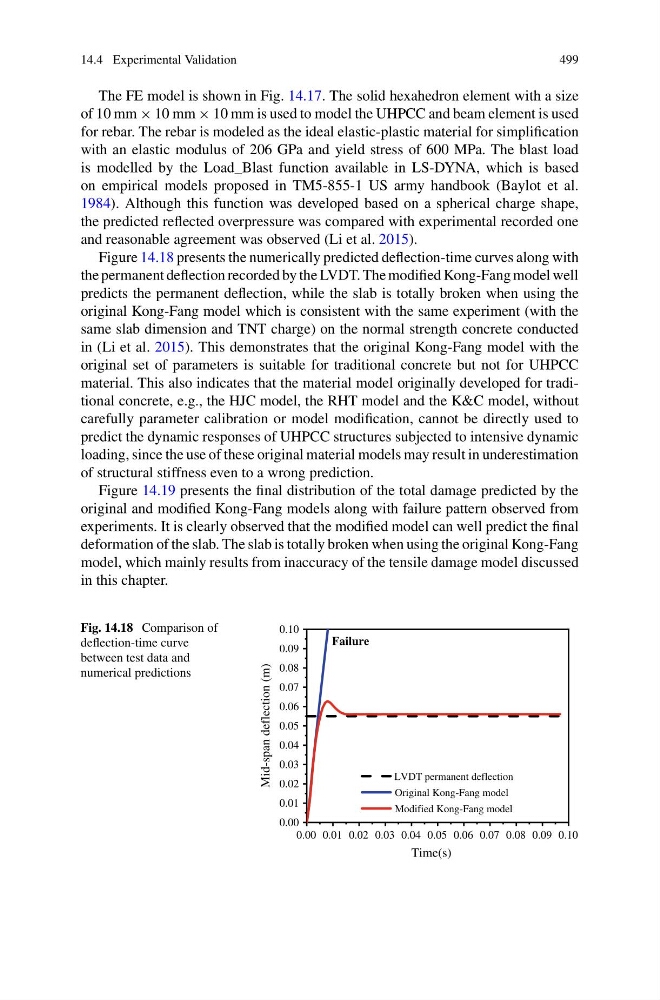
Figure 14.18 presents the numerically predicted deflection-time curves along with
the permanent deflection recorded by the LVDT. The modified Kong-Fang model well
predicts the permanent deflection, while the slab is totally broken when using the
original Kong-Fang model which is consistent with the same experiment (with the
same slab dimension and TNT charge) on the normal strength concrete conducted
in (Li et al. 2015). This demonstrates that the original Kong-Fang model with the
original set of parameters is suitable for traditional concrete but not for UHPCC
material. This also indicates that the material model originally developed for traditional concrete, e.g., the HJC model, the RHT model and the K&C model, without
carefully parameter calibration or model modification, cannot be directly used to
predict the dynamic responses of UHPCC structures subjected to intensive dynamic
loading, since the use of these original material models may result in underestimation
of structural stiffness even to a wrong prediction.
Figure 14.19 presents the final distribution of the total damage predicted by the
original and modified Kong-Fang models along with failure pattern observed from
experiments. It is clearly observed that the modified model can well predict the final
deformation of the slab. The slab is totally broken when using the original Kong-Fang
model, which mainly results from inaccuracy of the tensile damage model discussed
in this chapter.
Fig. 14.18 Comparison of
deflection-time curve
between test data and
numerical predictions
0.00 0.01 0.02 0.03 0.04 0.05 0.06 0.07 0.08 0.09 0.10
0.00
0.01
0.02
0.03
0.04
0.05
0.06
0.07
0.08
0.09
0.10
Mid-span deflection (m)
Time(s)
LVDT permanent deflection
Original Kong-Fang model
Modified Kong-Fang model
Failure
499
The FE model is shown in Fig. 14.17. The solid hexahedron element with a size
of 10 mm × 10 mm × 10 mm is used to model the UHPCC and beam element is used
for rebar. The rebar is modeled as the ideal elastic-plastic material for simplification
with an elastic modulus of 206 GPa and yield stress of 600 MPa. The blast load
is modelled by the Load_Blast function available in LS-DYNA, which is based
on empirical models proposed in TM5-855-1 US army handbook (Baylot et al.
1984). Although this function was developed based on a spherical charge shape,
the predicted reflected overpressure was compared with experimental recorded one
and reasonable agreement was observed (Li et al. 2015).
Figure 14.18 presents the numerically predicted deflection-time curves along with
the permanent deflection recorded by the LVDT. The modified Kong-Fang model well
predicts the permanent deflection, while the slab is totally broken when using the
original Kong-Fang model which is consistent with the same experiment (with the
same slab dimension and TNT charge) on the normal strength concrete conducted
in (Li et al. 2015). This demonstrates that the original Kong-Fang model with the
original set of parameters is suitable for traditional concrete but not for UHPCC
material. This also indicates that the material model originally developed for traditional concrete, e.g., the HJC model, the RHT model and the K&C model, without
carefully parameter calibration or model modification, cannot be directly used to
predict the dynamic responses of UHPCC structures subjected to intensive dynamic
loading, since the use of these original material models may result in underestimation
of structural stiffness even to a wrong prediction.
Figure 14.19 presents the final distribution of the total damage predicted by the
original and modified Kong-Fang models along with failure pattern observed from
experiments. It is clearly observed that the modified model can well predict the final
deformation of the slab. The slab is totally broken when using the original Kong-Fang
model, which mainly results from inaccuracy of the tensile damage model discussed
in this chapter.
Fig. 14.18 Comparison of
deflection-time curve
between test data and
numerical predictions
0.00 0.01 0.02 0.03 0.04 0.05 0.06 0.07 0.08 0.09 0.10
0.00
0.01
0.02
0.03
0.04
0.05
0.06
0.07
0.08
0.09
0.10
Mid-span deflection (m)
Time(s)
LVDT permanent deflection
Original Kong-Fang model
Modified Kong-Fang model
Failure