

494
14 Constitutive Modelling of UHPCC Material Under Impact …
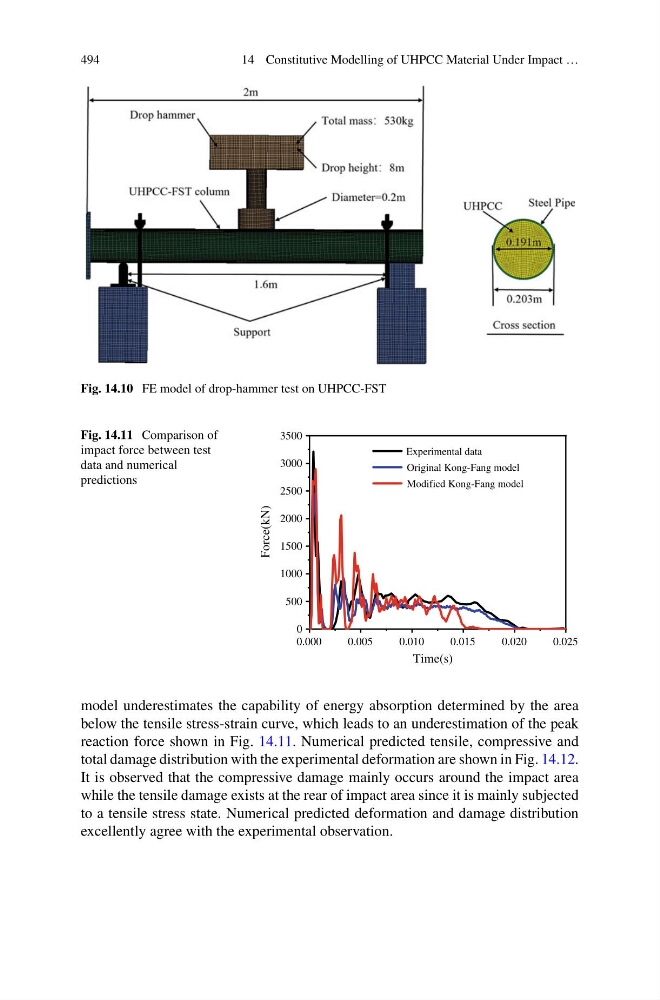
Fig. 14.10 FE model of drop-hammer test on UHPCC-FST
Fig. 14.11 Comparison of
impact force between test
data and numerical
predictions
0.000
0.005
0.010
0.015
0.020
0.025
0
500
1000
1500
2000
2500
3000
3500
Force(kN)
Time(s)
Experimental data
Original Kong-Fang model
Modified Kong-Fang model
model underestimates the capability of energy absorption determined by the area
below the tensile stress-strain curve, which leads to an underestimation of the peak
reaction force shown in Fig. 14.11. Numerical predicted tensile, compressive and
total damage distribution with the experimental deformation are shown in Fig. 14.12.
It is observed that the compressive damage mainly occurs around the impact area
while the tensile damage exists at the rear of impact area since it is mainly subjected
to a tensile stress state. Numerical predicted deformation and damage distribution
excellently agree with the experimental observation.
14 Constitutive Modelling of UHPCC Material Under Impact …
Fig. 14.10 FE model of drop-hammer test on UHPCC-FST
Fig. 14.11 Comparison of
impact force between test
data and numerical
predictions
0.000
0.005
0.010
0.015
0.020
0.025
0
500
1000
1500
2000
2500
3000
3500
Force(kN)
Time(s)
Experimental data
Original Kong-Fang model
Modified Kong-Fang model
model underestimates the capability of energy absorption determined by the area
below the tensile stress-strain curve, which leads to an underestimation of the peak
reaction force shown in Fig. 14.11. Numerical predicted tensile, compressive and
total damage distribution with the experimental deformation are shown in Fig. 14.12.
It is observed that the compressive damage mainly occurs around the impact area
while the tensile damage exists at the rear of impact area since it is mainly subjected
to a tensile stress state. Numerical predicted deformation and damage distribution
excellently agree with the experimental observation.