

5.3 Corundum Aggregated UHPCC Target
133
0
50
100
150
200
250
300
350
400
450
102.5 MPa
(258.3)
(253.4)
125.2 MPa
110.7 MPa
(372.5)
(237.4)
(178.7)
(250.2)
Crater area (cm
2
)
UHP-BASFRC
UHP-CASFRC
0
50
100
150
200
250
300
350
400
450
110.7 MPa
(352.4)
125.2 MPa
(244.5)
4-1 4-3
1-1 1-2 5-1 5-2
4-2 4-4
7-1 7-2
(296.7)
(199.7)
Crater area (cm
2
)
UHP-BASFRC
UHP-CASFRC
(a)
(b)
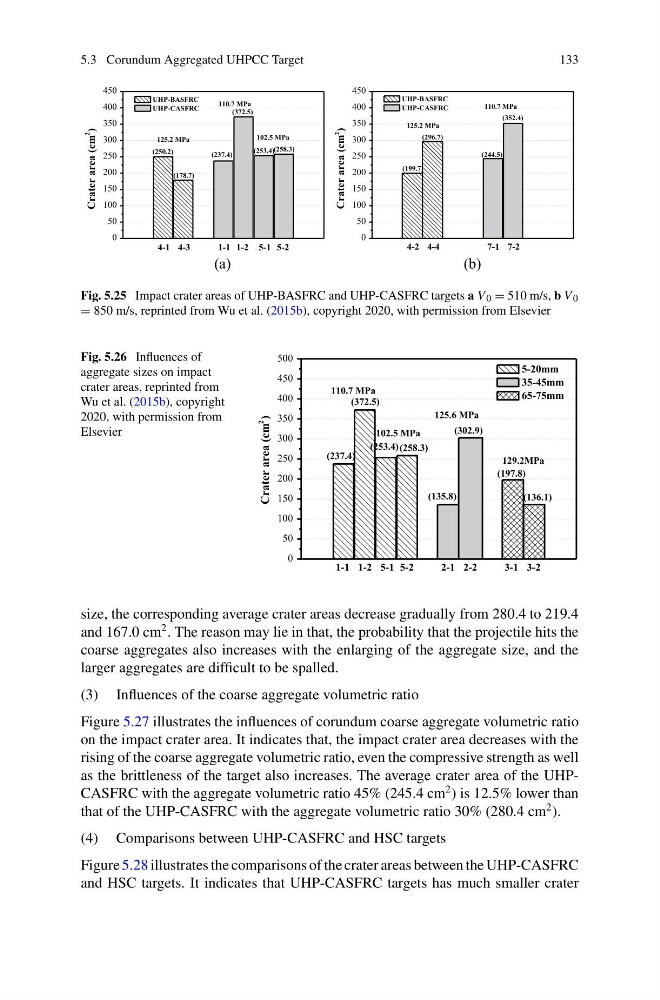
Fig. 5.25 Impact crater areas of UHP-BASFRC and UHP-CASFRC targets a V 0 = 510 m/s, b V 0
= 850 m/s, reprinted from Wu et al. (2015b), copyright 2020, with permission from Elsevier
Fig. 5.26 Influences of
aggregate sizes on impact
crater areas, reprinted from
Wu et al. (2015b), copyright
2020, with permission from
Elsevier
0
50
100
150
200
250
300
350
400
450
500
102.5 MPa
(136.1)
(372.5)
129.2MPa
(302.9)
(135.8)
110.7 MPa
125.6 MPa
(197.8)
(258.3)
(253.4)
(237.4)
Crater area (cm
2
)
5-20mm
35-45mm
65-75mm
1-1 1-2 5-1 5-2
2-1 2-2
3-1 3-2
size, the corresponding average crater areas decrease gradually from 280.4 to 219.4
and 167.0 cm
2 . The reason may lie in that, the probability that the projectile hits the
coarse aggregates also increases with the enlarging of the aggregate size, and the
larger aggregates are difficult to be spalled.
(3) Influences of the coarse aggregate volumetric ratio
Figure 5.27 illustrates the influences of corundum coarse aggregate volumetric ratio
on the impact crater area. It indicates that, the impact crater area decreases with the
rising of the coarse aggregate volumetric ratio, even the compressive strength as well
as the brittleness of the target also increases. The average crater area of the UHPCASFRC with the aggregate volumetric ratio 45% (245.4 cm
2 ) is 12.5% lower than
that of the UHP-CASFRC with the aggregate volumetric ratio 30% (280.4 cm
2 ).
(4) Comparisons between UHP-CASFRC and HSC targets
Figure 5.28 illustrates the comparisons of the crater areas between the UHP-CASFRC
and HSC targets. It indicates that UHP-CASFRC targets has much smaller crater
133
0
50
100
150
200
250
300
350
400
450
102.5 MPa
(258.3)
(253.4)
125.2 MPa
110.7 MPa
(372.5)
(237.4)
(178.7)
(250.2)
Crater area (cm
2
)
UHP-BASFRC
UHP-CASFRC
0
50
100
150
200
250
300
350
400
450
110.7 MPa
(352.4)
125.2 MPa
(244.5)
4-1 4-3
1-1 1-2 5-1 5-2
4-2 4-4
7-1 7-2
(296.7)
(199.7)
Crater area (cm
2
)
UHP-BASFRC
UHP-CASFRC
(a)
(b)
Fig. 5.25 Impact crater areas of UHP-BASFRC and UHP-CASFRC targets a V 0 = 510 m/s, b V 0
= 850 m/s, reprinted from Wu et al. (2015b), copyright 2020, with permission from Elsevier
Fig. 5.26 Influences of
aggregate sizes on impact
crater areas, reprinted from
Wu et al. (2015b), copyright
2020, with permission from
Elsevier
0
50
100
150
200
250
300
350
400
450
500
102.5 MPa
(136.1)
(372.5)
129.2MPa
(302.9)
(135.8)
110.7 MPa
125.6 MPa
(197.8)
(258.3)
(253.4)
(237.4)
Crater area (cm
2
)
5-20mm
35-45mm
65-75mm
1-1 1-2 5-1 5-2
2-1 2-2
3-1 3-2
size, the corresponding average crater areas decrease gradually from 280.4 to 219.4
and 167.0 cm
2 . The reason may lie in that, the probability that the projectile hits the
coarse aggregates also increases with the enlarging of the aggregate size, and the
larger aggregates are difficult to be spalled.
(3) Influences of the coarse aggregate volumetric ratio
Figure 5.27 illustrates the influences of corundum coarse aggregate volumetric ratio
on the impact crater area. It indicates that, the impact crater area decreases with the
rising of the coarse aggregate volumetric ratio, even the compressive strength as well
as the brittleness of the target also increases. The average crater area of the UHPCASFRC with the aggregate volumetric ratio 45% (245.4 cm
2 ) is 12.5% lower than
that of the UHP-CASFRC with the aggregate volumetric ratio 30% (280.4 cm
2 ).
(4) Comparisons between UHP-CASFRC and HSC targets
Figure 5.28 illustrates the comparisons of the crater areas between the UHP-CASFRC
and HSC targets. It indicates that UHP-CASFRC targets has much smaller crater