

370
9 Topologic Optimization of Vibrations of Size-Dependent Beams
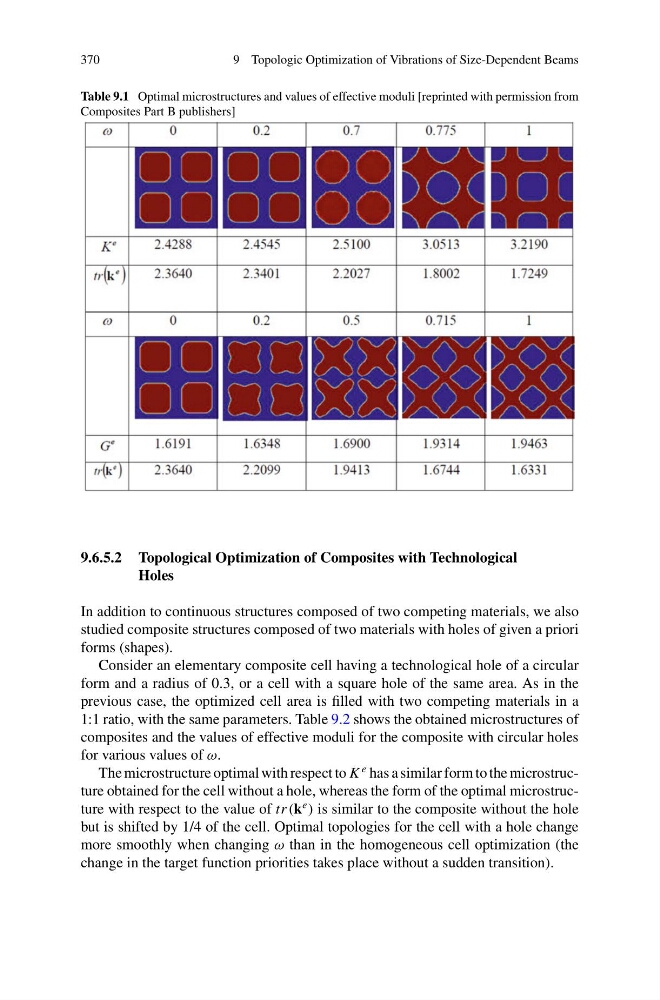
Table 9.1 Optimal microstructures and values of effective moduli [reprinted with permission from
Composites Part B publishers]
9.6.5.2 Topological Optimization of Composites with Technological
Holes
In addition to continuous structures composed of two competing materials, we also
studied composite structures composed of two materials with holes of given a priori
forms (shapes).
Consider an elementary composite cell having a technological hole of a circular
form and a radius of 0.3, or a cell with a square hole of the same area. As in the
previous case, the optimized cell area is filled with two competing materials in a
1:1 ratio, with the same parameters. Table 9.2 shows the obtained microstructures of
composites and the values of effective moduli for the composite with circular holes
for various values of ω.
The microstructure optimal with respect to K
e has a similar form to the microstructure obtained for the cell without a hole, whereas the form of the optimal microstructure with respect to the value of tr(k
e
) is similar to the composite without the hole
but is shifted by 1/4 of the cell. Optimal topologies for the cell with a hole change
more smoothly when changing ω than in the homogeneous cell optimization (the
change in the target function priorities takes place without a sudden transition).
9 Topologic Optimization of Vibrations of Size-Dependent Beams
Table 9.1 Optimal microstructures and values of effective moduli [reprinted with permission from
Composites Part B publishers]
9.6.5.2 Topological Optimization of Composites with Technological
Holes
In addition to continuous structures composed of two competing materials, we also
studied composite structures composed of two materials with holes of given a priori
forms (shapes).
Consider an elementary composite cell having a technological hole of a circular
form and a radius of 0.3, or a cell with a square hole of the same area. As in the
previous case, the optimized cell area is filled with two competing materials in a
1:1 ratio, with the same parameters. Table 9.2 shows the obtained microstructures of
composites and the values of effective moduli for the composite with circular holes
for various values of ω.
The microstructure optimal with respect to K
e has a similar form to the microstructure obtained for the cell without a hole, whereas the form of the optimal microstructure with respect to the value of tr(k
e
) is similar to the composite without the hole
but is shifted by 1/4 of the cell. Optimal topologies for the cell with a hole change
more smoothly when changing ω than in the homogeneous cell optimization (the
change in the target function priorities takes place without a sudden transition).