

Selection of Optimum Castor–Rapeseed Emulsified Fuel …
293
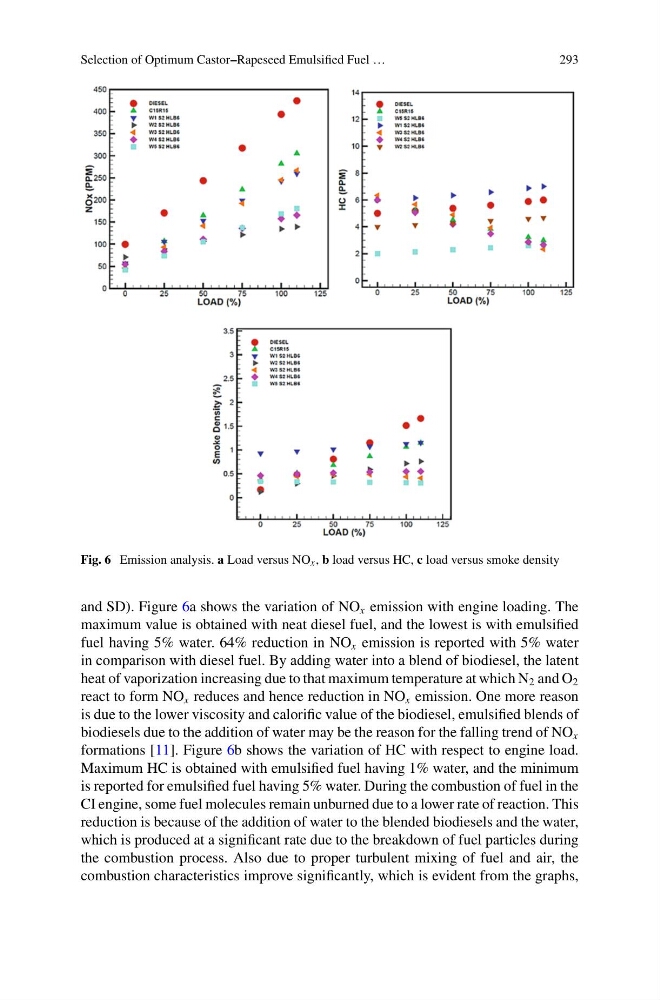
Fig. 6 Emission analysis. a Load versus NO x , b load versus HC, c load versus smoke density
and SD). Figure 6a shows the variation of NO x emission with engine loading. The
maximum value is obtained with neat diesel fuel, and the lowest is with emulsified
fuel having 5% water. 64% reduction in NO x emission is reported with 5% water
in comparison with diesel fuel. By adding water into a blend of biodiesel, the latent
heat of vaporization increasing due to that maximum temperature at which N 2 and O 2
react to form NO x reduces and hence reduction in NO x emission. One more reason
is due to the lower viscosity and calorific value of the biodiesel, emulsified blends of
biodiesels due to the addition of water may be the reason for the falling trend of NO x
formations [11]. Figure 6b shows the variation of HC with respect to engine load.
Maximum HC is obtained with emulsified fuel having 1% water, and the minimum
is reported for emulsified fuel having 5% water. During the combustion of fuel in the
CI engine, some fuel molecules remain unburned due to a lower rate of reaction. This
reduction is because of the addition of water to the blended biodiesels and the water,
which is produced at a significant rate due to the breakdown of fuel particles during
the combustion process. Also due to proper turbulent mixing of fuel and air, the
combustion characteristics improve significantly, which is evident from the graphs,
293
Fig. 6 Emission analysis. a Load versus NO x , b load versus HC, c load versus smoke density
and SD). Figure 6a shows the variation of NO x emission with engine loading. The
maximum value is obtained with neat diesel fuel, and the lowest is with emulsified
fuel having 5% water. 64% reduction in NO x emission is reported with 5% water
in comparison with diesel fuel. By adding water into a blend of biodiesel, the latent
heat of vaporization increasing due to that maximum temperature at which N 2 and O 2
react to form NO x reduces and hence reduction in NO x emission. One more reason
is due to the lower viscosity and calorific value of the biodiesel, emulsified blends of
biodiesels due to the addition of water may be the reason for the falling trend of NO x
formations [11]. Figure 6b shows the variation of HC with respect to engine load.
Maximum HC is obtained with emulsified fuel having 1% water, and the minimum
is reported for emulsified fuel having 5% water. During the combustion of fuel in the
CI engine, some fuel molecules remain unburned due to a lower rate of reaction. This
reduction is because of the addition of water to the blended biodiesels and the water,
which is produced at a significant rate due to the breakdown of fuel particles during
the combustion process. Also due to proper turbulent mixing of fuel and air, the
combustion characteristics improve significantly, which is evident from the graphs,