

Selection of Optimum Castor–Rapeseed Emulsified Fuel …
291
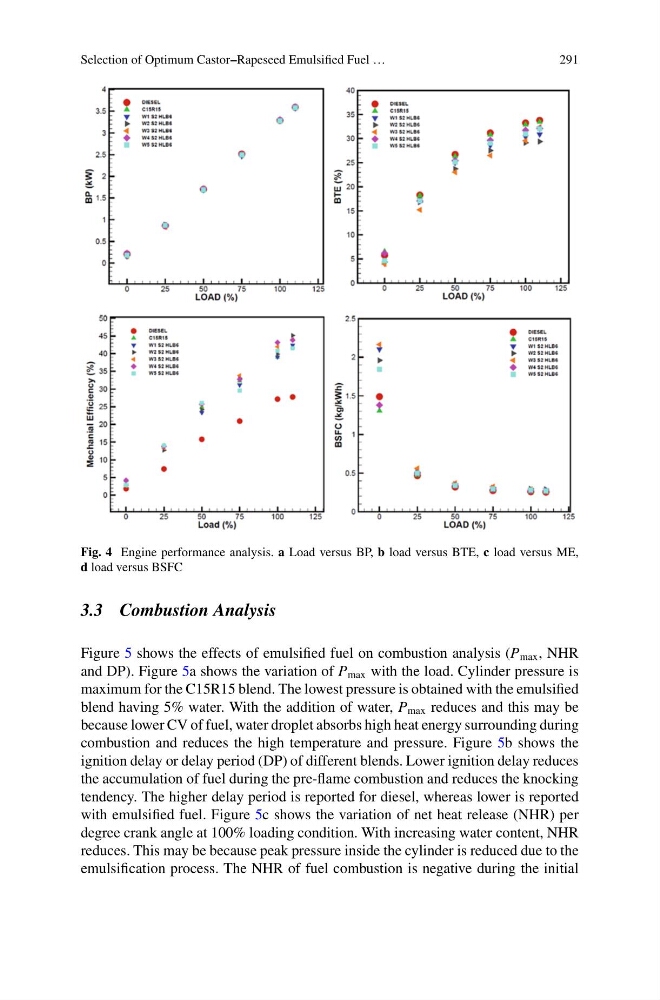
Fig. 4 Engine performance analysis. a Load versus BP, b load versus BTE, c load versus ME,
d load versus BSFC
3.3 Combustion Analysis
Figure 5 shows the effects of emulsified fuel on combustion analysis (P max , NHR
and DP). Figure 5a shows the variation of P max with the load. Cylinder pressure is
maximum for the C15R15 blend. The lowest pressure is obtained with the emulsified
blend having 5% water. With the addition of water, P max reduces and this may be
because lower CV of fuel, water droplet absorbs high heat energy surrounding during
combustion and reduces the high temperature and pressure. Figure 5b shows the
ignition delay or delay period (DP) of different blends. Lower ignition delay reduces
the accumulation of fuel during the pre-flame combustion and reduces the knocking
tendency. The higher delay period is reported for diesel, whereas lower is reported
with emulsified fuel. Figure 5c shows the variation of net heat release (NHR) per
degree crank angle at 100% loading condition. With increasing water content, NHR
reduces. This may be because peak pressure inside the cylinder is reduced due to the
emulsification process. The NHR of fuel combustion is negative during the initial
291
Fig. 4 Engine performance analysis. a Load versus BP, b load versus BTE, c load versus ME,
d load versus BSFC
3.3 Combustion Analysis
Figure 5 shows the effects of emulsified fuel on combustion analysis (P max , NHR
and DP). Figure 5a shows the variation of P max with the load. Cylinder pressure is
maximum for the C15R15 blend. The lowest pressure is obtained with the emulsified
blend having 5% water. With the addition of water, P max reduces and this may be
because lower CV of fuel, water droplet absorbs high heat energy surrounding during
combustion and reduces the high temperature and pressure. Figure 5b shows the
ignition delay or delay period (DP) of different blends. Lower ignition delay reduces
the accumulation of fuel during the pre-flame combustion and reduces the knocking
tendency. The higher delay period is reported for diesel, whereas lower is reported
with emulsified fuel. Figure 5c shows the variation of net heat release (NHR) per
degree crank angle at 100% loading condition. With increasing water content, NHR
reduces. This may be because peak pressure inside the cylinder is reduced due to the
emulsification process. The NHR of fuel combustion is negative during the initial