

290
S. Chourasia et al.
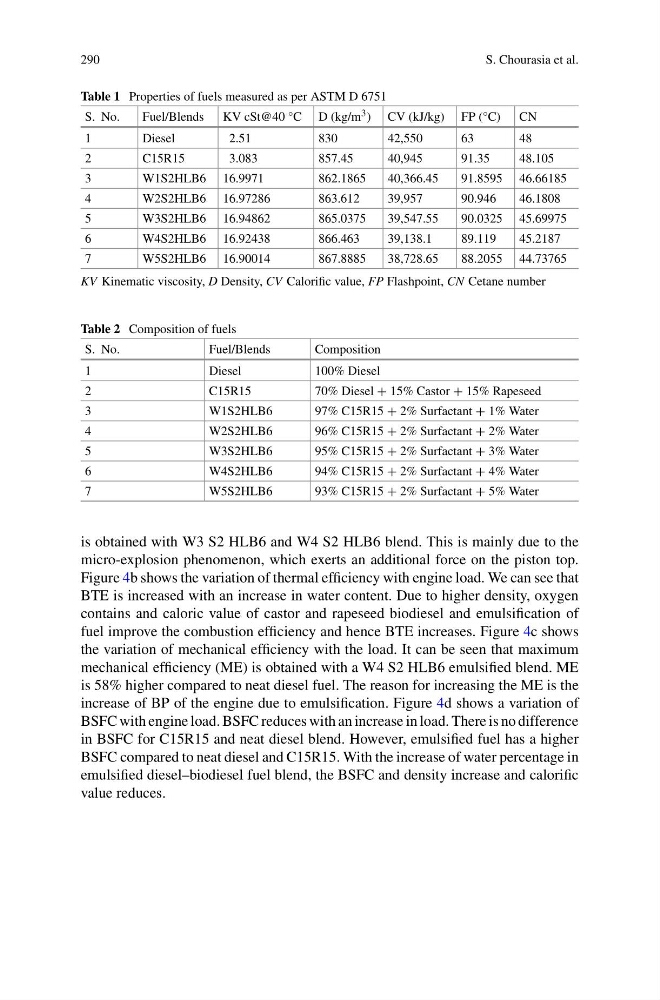
Table 1 Properties of fuels measured as per ASTM D 6751
S. No.
Fuel/Blends KV cSt@40 °C D (kg/m 3 ) CV (kJ/kg) FP (°C) CN
1
Diesel
2.51
830
42,550
63
48
2
C15R15
3.083
857.45
40,945
91.35
48.105
3
W1S2HLB6 16.9971
862.1865
40,366.45
91.8595 46.66185
4
W2S2HLB6 16.97286
863.612
39,957
90.946
46.1808
5
W3S2HLB6 16.94862
865.0375
39,547.55
90.0325 45.69975
6
W4S2HLB6 16.92438
866.463
39,138.1
89.119
45.2187
7
W5S2HLB6 16.90014
867.8885
38,728.65
88.2055 44.73765
KV Kinematic viscosity, D Density, CV Calorific value, FP Flashpoint, CN Cetane number
Table 2 Composition of fuels
S. No.
Fuel/Blends
Composition
1
Diesel
100% Diesel
2
C15R15
70% Diesel + 15% Castor + 15% Rapeseed
3
W1S2HLB6
97% C15R15 + 2% Surfactant + 1% Water
4
W2S2HLB6
96% C15R15 + 2% Surfactant + 2% Water
5
W3S2HLB6
95% C15R15 + 2% Surfactant + 3% Water
6
W4S2HLB6
94% C15R15 + 2% Surfactant + 4% Water
7
W5S2HLB6
93% C15R15 + 2% Surfactant + 5% Water
is obtained with W3 S2 HLB6 and W4 S2 HLB6 blend. This is mainly due to the
micro-explosion phenomenon, which exerts an additional force on the piston top.
Figure 4b shows the variation of thermal efficiency with engine load. We can see that
BTE is increased with an increase in water content. Due to higher density, oxygen
contains and caloric value of castor and rapeseed biodiesel and emulsification of
fuel improve the combustion efficiency and hence BTE increases. Figure 4c shows
the variation of mechanical efficiency with the load. It can be seen that maximum
mechanical efficiency (ME) is obtained with a W4 S2 HLB6 emulsified blend. ME
is 58% higher compared to neat diesel fuel. The reason for increasing the ME is the
increase of BP of the engine due to emulsification. Figure 4d shows a variation of
BSFC with engine load. BSFC reduces with an increase in load. There is no difference
in BSFC for C15R15 and neat diesel blend. However, emulsified fuel has a higher
BSFC compared to neat diesel and C15R15. With the increase of water percentage in
emulsified diesel–biodiesel fuel blend, the BSFC and density increase and calorific
value reduces.
S. Chourasia et al.
Table 1 Properties of fuels measured as per ASTM D 6751
S. No.
Fuel/Blends KV cSt@40 °C D (kg/m 3 ) CV (kJ/kg) FP (°C) CN
1
Diesel
2.51
830
42,550
63
48
2
C15R15
3.083
857.45
40,945
91.35
48.105
3
W1S2HLB6 16.9971
862.1865
40,366.45
91.8595 46.66185
4
W2S2HLB6 16.97286
863.612
39,957
90.946
46.1808
5
W3S2HLB6 16.94862
865.0375
39,547.55
90.0325 45.69975
6
W4S2HLB6 16.92438
866.463
39,138.1
89.119
45.2187
7
W5S2HLB6 16.90014
867.8885
38,728.65
88.2055 44.73765
KV Kinematic viscosity, D Density, CV Calorific value, FP Flashpoint, CN Cetane number
Table 2 Composition of fuels
S. No.
Fuel/Blends
Composition
1
Diesel
100% Diesel
2
C15R15
70% Diesel + 15% Castor + 15% Rapeseed
3
W1S2HLB6
97% C15R15 + 2% Surfactant + 1% Water
4
W2S2HLB6
96% C15R15 + 2% Surfactant + 2% Water
5
W3S2HLB6
95% C15R15 + 2% Surfactant + 3% Water
6
W4S2HLB6
94% C15R15 + 2% Surfactant + 4% Water
7
W5S2HLB6
93% C15R15 + 2% Surfactant + 5% Water
is obtained with W3 S2 HLB6 and W4 S2 HLB6 blend. This is mainly due to the
micro-explosion phenomenon, which exerts an additional force on the piston top.
Figure 4b shows the variation of thermal efficiency with engine load. We can see that
BTE is increased with an increase in water content. Due to higher density, oxygen
contains and caloric value of castor and rapeseed biodiesel and emulsification of
fuel improve the combustion efficiency and hence BTE increases. Figure 4c shows
the variation of mechanical efficiency with the load. It can be seen that maximum
mechanical efficiency (ME) is obtained with a W4 S2 HLB6 emulsified blend. ME
is 58% higher compared to neat diesel fuel. The reason for increasing the ME is the
increase of BP of the engine due to emulsification. Figure 4d shows a variation of
BSFC with engine load. BSFC reduces with an increase in load. There is no difference
in BSFC for C15R15 and neat diesel blend. However, emulsified fuel has a higher
BSFC compared to neat diesel and C15R15. With the increase of water percentage in
emulsified diesel–biodiesel fuel blend, the BSFC and density increase and calorific
value reduces.