

212
N. Patel et al.
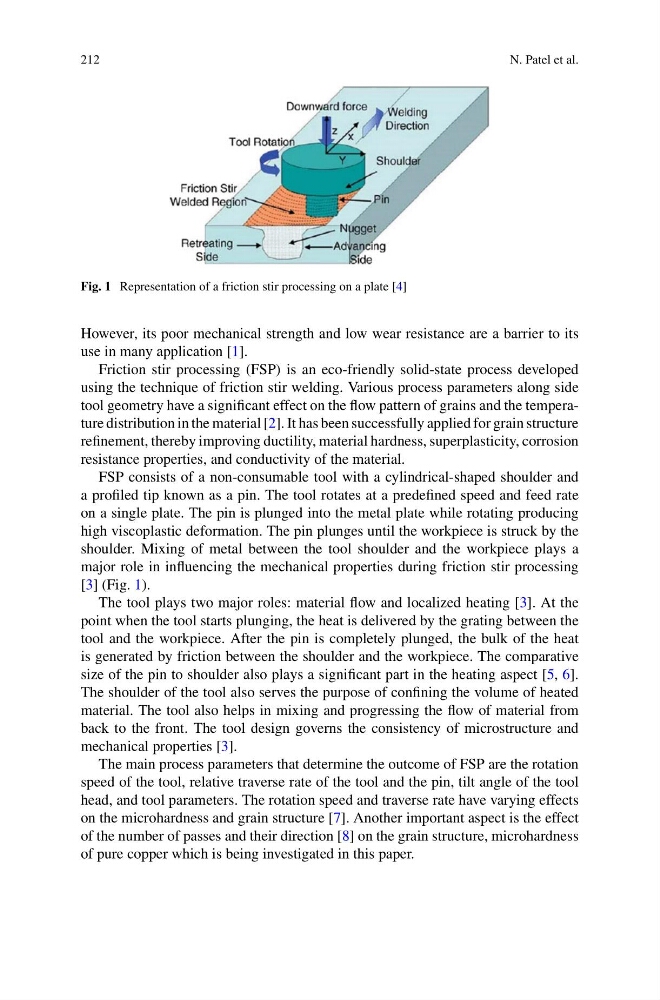
Fig. 1 Representation of a friction stir processing on a plate [4]
However, its poor mechanical strength and low wear resistance are a barrier to its
use in many application [1].
Friction stir processing (FSP) is an eco-friendly solid-state process developed
using the technique of friction stir welding. Various process parameters along side
tool geometry have a significant effect on the flow pattern of grains and the temperature distribution in the material [2]. It has been successfully applied for grain structure
refinement, thereby improving ductility, material hardness, superplasticity, corrosion
resistance properties, and conductivity of the material.
FSP consists of a non-consumable tool with a cylindrical-shaped shoulder and
a profiled tip known as a pin. The tool rotates at a predefined speed and feed rate
on a single plate. The pin is plunged into the metal plate while rotating producing
high viscoplastic deformation. The pin plunges until the workpiece is struck by the
shoulder. Mixing of metal between the tool shoulder and the workpiece plays a
major role in influencing the mechanical properties during friction stir processing
[3] (Fig. 1).
The tool plays two major roles: material flow and localized heating [3]. At the
point when the tool starts plunging, the heat is delivered by the grating between the
tool and the workpiece. After the pin is completely plunged, the bulk of the heat
is generated by friction between the shoulder and the workpiece. The comparative
size of the pin to shoulder also plays a significant part in the heating aspect [5, 6].
The shoulder of the tool also serves the purpose of confining the volume of heated
material. The tool also helps in mixing and progressing the flow of material from
back to the front. The tool design governs the consistency of microstructure and
mechanical properties [3].
The main process parameters that determine the outcome of FSP are the rotation
speed of the tool, relative traverse rate of the tool and the pin, tilt angle of the tool
head, and tool parameters. The rotation speed and traverse rate have varying effects
on the microhardness and grain structure [7]. Another important aspect is the effect
of the number of passes and their direction [8] on the grain structure, microhardness
of pure copper which is being investigated in this paper.
N. Patel et al.
Fig. 1 Representation of a friction stir processing on a plate [4]
However, its poor mechanical strength and low wear resistance are a barrier to its
use in many application [1].
Friction stir processing (FSP) is an eco-friendly solid-state process developed
using the technique of friction stir welding. Various process parameters along side
tool geometry have a significant effect on the flow pattern of grains and the temperature distribution in the material [2]. It has been successfully applied for grain structure
refinement, thereby improving ductility, material hardness, superplasticity, corrosion
resistance properties, and conductivity of the material.
FSP consists of a non-consumable tool with a cylindrical-shaped shoulder and
a profiled tip known as a pin. The tool rotates at a predefined speed and feed rate
on a single plate. The pin is plunged into the metal plate while rotating producing
high viscoplastic deformation. The pin plunges until the workpiece is struck by the
shoulder. Mixing of metal between the tool shoulder and the workpiece plays a
major role in influencing the mechanical properties during friction stir processing
[3] (Fig. 1).
The tool plays two major roles: material flow and localized heating [3]. At the
point when the tool starts plunging, the heat is delivered by the grating between the
tool and the workpiece. After the pin is completely plunged, the bulk of the heat
is generated by friction between the shoulder and the workpiece. The comparative
size of the pin to shoulder also plays a significant part in the heating aspect [5, 6].
The shoulder of the tool also serves the purpose of confining the volume of heated
material. The tool also helps in mixing and progressing the flow of material from
back to the front. The tool design governs the consistency of microstructure and
mechanical properties [3].
The main process parameters that determine the outcome of FSP are the rotation
speed of the tool, relative traverse rate of the tool and the pin, tilt angle of the tool
head, and tool parameters. The rotation speed and traverse rate have varying effects
on the microhardness and grain structure [7]. Another important aspect is the effect
of the number of passes and their direction [8] on the grain structure, microhardness
of pure copper which is being investigated in this paper.