

114
K. Badheka and V. J. Badheka
C1
C2
C3
C4
C5
C6
C7
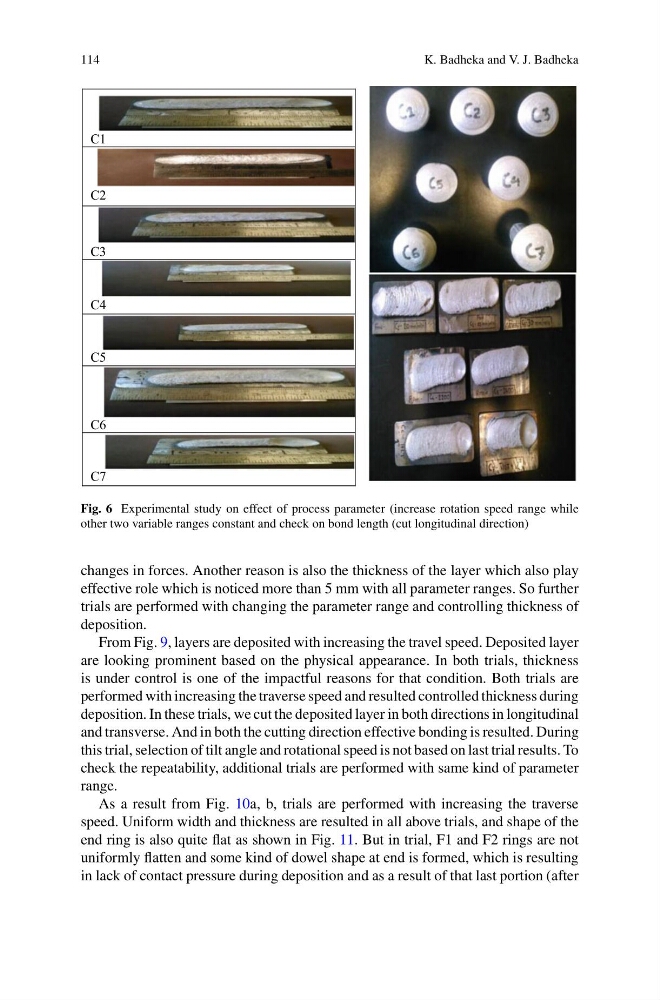
Fig. 6 Experimental study on effect of process parameter (increase rotation speed range while
other two variable ranges constant and check on bond length (cut longitudinal direction)
changes in forces. Another reason is also the thickness of the layer which also play
effective role which is noticed more than 5 mm with all parameter ranges. So further
trials are performed with changing the parameter range and controlling thickness of
deposition.
From Fig. 9, layers are deposited with increasing the travel speed. Deposited layer
are looking prominent based on the physical appearance. In both trials, thickness
is under control is one of the impactful reasons for that condition. Both trials are
performed with increasing the traverse speed and resulted controlled thickness during
deposition. In these trials, we cut the deposited layer in both directions in longitudinal
and transverse. And in both the cutting direction effective bonding is resulted. During
this trial, selection of tilt angle and rotational speed is not based on last trial results. To
check the repeatability, additional trials are performed with same kind of parameter
range.
As a result from Fig. 10a, b, trials are performed with increasing the traverse
speed. Uniform width and thickness are resulted in all above trials, and shape of the
end ring is also quite flat as shown in Fig. 11. But in trial, F1 and F2 rings are not
uniformly flatten and some kind of dowel shape at end is formed, which is resulting
in lack of contact pressure during deposition and as a result of that last portion (after
K. Badheka and V. J. Badheka
C1
C2
C3
C4
C5
C6
C7
Fig. 6 Experimental study on effect of process parameter (increase rotation speed range while
other two variable ranges constant and check on bond length (cut longitudinal direction)
changes in forces. Another reason is also the thickness of the layer which also play
effective role which is noticed more than 5 mm with all parameter ranges. So further
trials are performed with changing the parameter range and controlling thickness of
deposition.
From Fig. 9, layers are deposited with increasing the travel speed. Deposited layer
are looking prominent based on the physical appearance. In both trials, thickness
is under control is one of the impactful reasons for that condition. Both trials are
performed with increasing the traverse speed and resulted controlled thickness during
deposition. In these trials, we cut the deposited layer in both directions in longitudinal
and transverse. And in both the cutting direction effective bonding is resulted. During
this trial, selection of tilt angle and rotational speed is not based on last trial results. To
check the repeatability, additional trials are performed with same kind of parameter
range.
As a result from Fig. 10a, b, trials are performed with increasing the traverse
speed. Uniform width and thickness are resulted in all above trials, and shape of the
end ring is also quite flat as shown in Fig. 11. But in trial, F1 and F2 rings are not
uniformly flatten and some kind of dowel shape at end is formed, which is resulting
in lack of contact pressure during deposition and as a result of that last portion (after