

axially. The effect is purely nonlinear, and thus negligible at low levels of pipe
vibrations. The pipe equation (4.112) in turn shows that motions of the fluid change
the stiffness and damping of the pipe, and thus affect pipe vibrations.
Approximate solutions to (4.112)–(4.113) can be obtained by multiple scales
perturbation analysis. The requirement for eliminating secular terms results in the
following set of frequency equations, governing stationary values of the modal
beam amplitude b and mean fluid speed A:
1
4
p
2
#
2
i X
4
¼ x
2
i f i x i þ
ffiffiffi
b
p
k ii A
2 þ
1
2
g ii A
2
À x i ðX À x i Þ
2
!
b
2
;
ð4:114Þ
2a j A
jÀ1
þ A
À
Á
A ¼ bx
2
i k ii b
2
:
ð4:115Þ
It appears from (4.115) that pipe vibrations b may induce fluid motions with
non-zero mean speed A. For turbulent flow (j = 2) (4.115) shows the mean fluid
speed to be directly proportional to pipe amplitude, A ¼ b
ffiffiffiffiffiffiffiffiffiffiffiffi ffi
bx 2
i k ii
p
=
ffiffiffiffiffiffiffiffiffiffiffiffiffiffi ffi
2a 2 þ 1
p
.
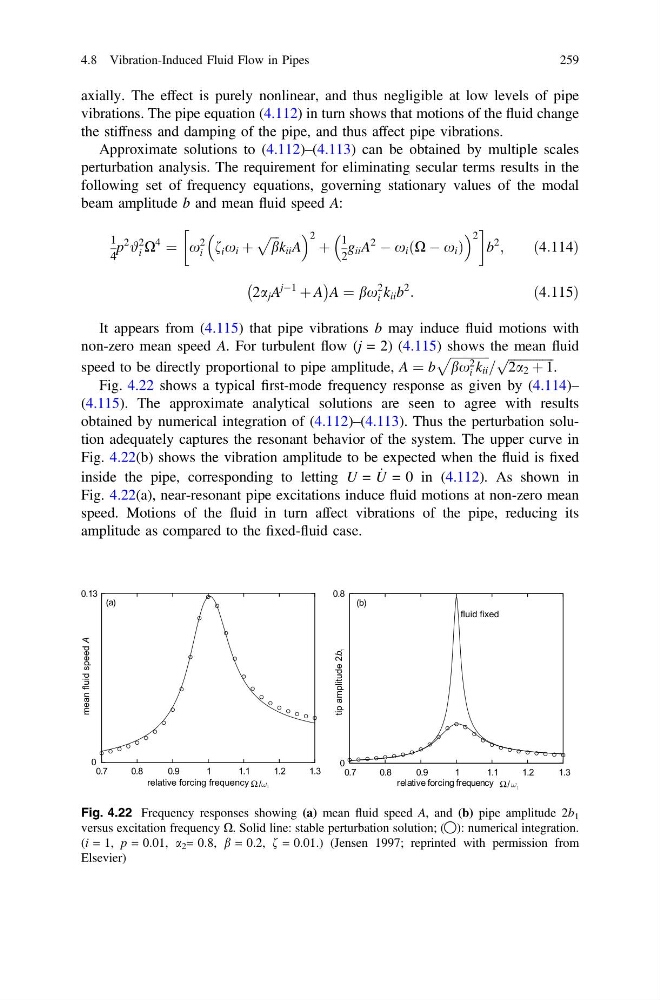
Fig. 4.22 shows a typical first-mode frequency response as given by (4.114)–
(4.115). The approximate analytical solutions are seen to agree with results
obtained by numerical integration of (4.112)–(4.113). Thus the perturbation solution adequately captures the resonant behavior of the system. The upper curve in
Fig. 4.22(b) shows the vibration amplitude to be expected when the fluid is fixed
inside the pipe, corresponding to letting U = _
U = 0 in (4.112). As shown in
Fig. 4.22(a), near-resonant pipe excitations induce fluid motions at non-zero mean
speed. Motions of the fluid in turn affect vibrations of the pipe, reducing its
amplitude as compared to the fixed-fluid case.
0
0.13
0.7
0.8
0.9
1
1.1
1.2
1.3
mean fluid speed
A
(a)
relative forcing frequency Ω /
0
0.8
0.7
0.8
0.9
1
1.1
1.2
1.3
tip amplitude 2b
1
(b)
fluid fixed
relative forcing frequency Ω/
Fig. 4.22 Frequency responses showing (a) mean fluid speed A, and (b) pipe amplitude 2b 1
versus excitation frequency X. Solid line: stable perturbation solution; ( ⃝): numerical integration.
(i = 1, p = 0.01, a 2 = 0.8, b = 0.2, f = 0.01.) (Jensen 1997; reprinted with permission from
Elsevier)
4.8 Vibration-Induced Fluid Flow in Pipes
259
vibrations. The pipe equation (4.112) in turn shows that motions of the fluid change
the stiffness and damping of the pipe, and thus affect pipe vibrations.
Approximate solutions to (4.112)–(4.113) can be obtained by multiple scales
perturbation analysis. The requirement for eliminating secular terms results in the
following set of frequency equations, governing stationary values of the modal
beam amplitude b and mean fluid speed A:
1
4
p
2
#
2
i X
4
¼ x
2
i f i x i þ
ffiffiffi
b
p
k ii A
2 þ
1
2
g ii A
2
À x i ðX À x i Þ
2
!
b
2
;
ð4:114Þ
2a j A
jÀ1
þ A
À
Á
A ¼ bx
2
i k ii b
2
:
ð4:115Þ
It appears from (4.115) that pipe vibrations b may induce fluid motions with
non-zero mean speed A. For turbulent flow (j = 2) (4.115) shows the mean fluid
speed to be directly proportional to pipe amplitude, A ¼ b
ffiffiffiffiffiffiffiffiffiffiffiffi ffi
bx 2
i k ii
p
=
ffiffiffiffiffiffiffiffiffiffiffiffiffiffi ffi
2a 2 þ 1
p
.
Fig. 4.22 shows a typical first-mode frequency response as given by (4.114)–
(4.115). The approximate analytical solutions are seen to agree with results
obtained by numerical integration of (4.112)–(4.113). Thus the perturbation solution adequately captures the resonant behavior of the system. The upper curve in
Fig. 4.22(b) shows the vibration amplitude to be expected when the fluid is fixed
inside the pipe, corresponding to letting U = _
U = 0 in (4.112). As shown in
Fig. 4.22(a), near-resonant pipe excitations induce fluid motions at non-zero mean
speed. Motions of the fluid in turn affect vibrations of the pipe, reducing its
amplitude as compared to the fixed-fluid case.
0
0.13
0.7
0.8
0.9
1
1.1
1.2
1.3
mean fluid speed
A
(a)
relative forcing frequency Ω /
0
0.8
0.7
0.8
0.9
1
1.1
1.2
1.3
tip amplitude 2b
1
(b)
fluid fixed
relative forcing frequency Ω/
Fig. 4.22 Frequency responses showing (a) mean fluid speed A, and (b) pipe amplitude 2b 1
versus excitation frequency X. Solid line: stable perturbation solution; ( ⃝): numerical integration.
(i = 1, p = 0.01, a 2 = 0.8, b = 0.2, f = 0.01.) (Jensen 1997; reprinted with permission from
Elsevier)
4.8 Vibration-Induced Fluid Flow in Pipes
259