

7 Flight Mystery and Aerodynamic Principles
575
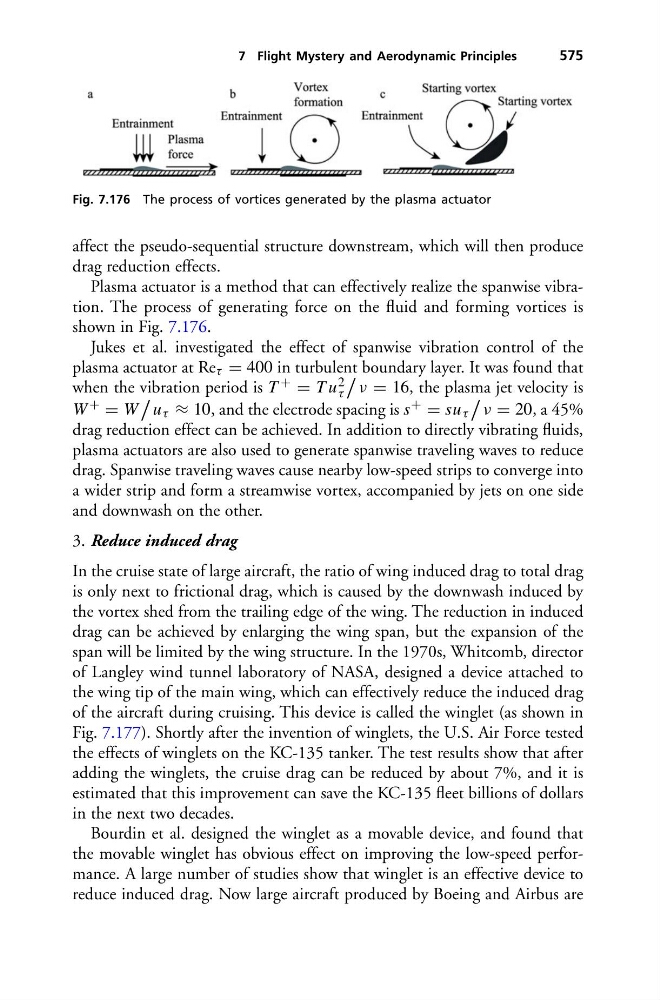
Fig. 7.176 The process of vortices generated by the plasma actuator
affect the pseudo-sequential structure downstream, which will then produce
drag reduction effects.
Plasma actuator is a method that can effectively realize the spanwise vibration. The process of generating force on the fluid and forming vortices is
shown in Fig. 7.176.
Jukes et al. investigated the effect of spanwise vibration control of the
plasma actuator at Re τ = 400 in turbulent boundary layer. It was found that
when the vibration period is T + = T u 2
τ
ν = 16, the plasma jet velocity is
W + = W
u τ ≈ 10, and the electrode spacing is s + = su τ
ν = 20, a 45%
drag reduction effect can be achieved. In addition to directly vibrating fluids,
plasma actuators are also used to generate spanwise traveling waves to reduce
drag. Spanwise traveling waves cause nearby low-speed strips to converge into
a wider strip and form a streamwise vortex, accompanied by jets on one side
and downwash on the other.
3. Reduce induced drag
In the cruise state of large aircraft, the ratio of wing induced drag to total drag
is only next to frictional drag, which is caused by the downwash induced by
the vortex shed from the trailing edge of the wing. The reduction in induced
drag can be achieved by enlarging the wing span, but the expansion of the
span will be limited by the wing structure. In the 1970s, Whitcomb, director
of Langley wind tunnel laboratory of NASA, designed a device attached to
the wing tip of the main wing, which can effectively reduce the induced drag
of the aircraft during cruising. This device is called the winglet (as shown in
Fig. 7.177). Shortly after the invention of winglets, the U.S. Air Force tested
the effects of winglets on the KC-135 tanker. The test results show that after
adding the winglets, the cruise drag can be reduced by about 7%, and it is
estimated that this improvement can save the KC-135 fleet billions of dollars
in the next two decades.
Bourdin et al. designed the winglet as a movable device, and found that
the movable winglet has obvious effect on improving the low-speed performance. A large number of studies show that winglet is an effective device to
reduce induced drag. Now large aircraft produced by Boeing and Airbus are
575
Fig. 7.176 The process of vortices generated by the plasma actuator
affect the pseudo-sequential structure downstream, which will then produce
drag reduction effects.
Plasma actuator is a method that can effectively realize the spanwise vibration. The process of generating force on the fluid and forming vortices is
shown in Fig. 7.176.
Jukes et al. investigated the effect of spanwise vibration control of the
plasma actuator at Re τ = 400 in turbulent boundary layer. It was found that
when the vibration period is T + = T u 2
τ
ν = 16, the plasma jet velocity is
W + = W
u τ ≈ 10, and the electrode spacing is s + = su τ
ν = 20, a 45%
drag reduction effect can be achieved. In addition to directly vibrating fluids,
plasma actuators are also used to generate spanwise traveling waves to reduce
drag. Spanwise traveling waves cause nearby low-speed strips to converge into
a wider strip and form a streamwise vortex, accompanied by jets on one side
and downwash on the other.
3. Reduce induced drag
In the cruise state of large aircraft, the ratio of wing induced drag to total drag
is only next to frictional drag, which is caused by the downwash induced by
the vortex shed from the trailing edge of the wing. The reduction in induced
drag can be achieved by enlarging the wing span, but the expansion of the
span will be limited by the wing structure. In the 1970s, Whitcomb, director
of Langley wind tunnel laboratory of NASA, designed a device attached to
the wing tip of the main wing, which can effectively reduce the induced drag
of the aircraft during cruising. This device is called the winglet (as shown in
Fig. 7.177). Shortly after the invention of winglets, the U.S. Air Force tested
the effects of winglets on the KC-135 tanker. The test results show that after
adding the winglets, the cruise drag can be reduced by about 7%, and it is
estimated that this improvement can save the KC-135 fleet billions of dollars
in the next two decades.
Bourdin et al. designed the winglet as a movable device, and found that
the movable winglet has obvious effect on improving the low-speed performance. A large number of studies show that winglet is an effective device to
reduce induced drag. Now large aircraft produced by Boeing and Airbus are