

7 Flight Mystery and Aerodynamic Principles
573
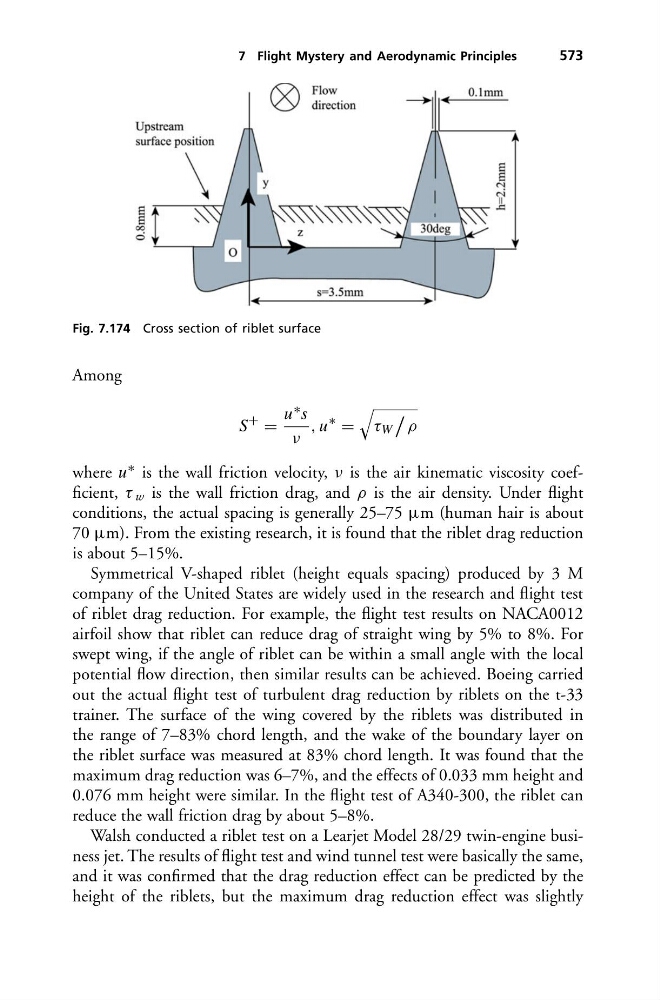
Fig. 7.174 Cross section of riblet surface
Among
S
+
=
u ∗ s
ν
, u
∗
=
τ W
ρ
where u ∗ is the wall friction velocity, ν is the air kinematic viscosity coefficient, τ w is the wall friction drag, and ρ is the air density. Under flight
conditions, the actual spacing is generally 25–75 μm (human hair is about
70 μm). From the existing research, it is found that the riblet drag reduction
is about 5–15%.
Symmetrical V-shaped riblet (height equals spacing) produced by 3 M
company of the United States are widely used in the research and flight test
of riblet drag reduction. For example, the flight test results on NACA0012
airfoil show that riblet can reduce drag of straight wing by 5% to 8%. For
swept wing, if the angle of riblet can be within a small angle with the local
potential flow direction, then similar results can be achieved. Boeing carried
out the actual flight test of turbulent drag reduction by riblets on the t-33
trainer. The surface of the wing covered by the riblets was distributed in
the range of 7–83% chord length, and the wake of the boundary layer on
the riblet surface was measured at 83% chord length. It was found that the
maximum drag reduction was 6–7%, and the effects of 0.033 mm height and
0.076 mm height were similar. In the flight test of A340-300, the riblet can
reduce the wall friction drag by about 5–8%.
Walsh conducted a riblet test on a Learjet Model 28/29 twin-engine business jet. The results of flight test and wind tunnel test were basically the same,
and it was confirmed that the drag reduction effect can be predicted by the
height of the riblets, but the maximum drag reduction effect was slightly
573
Fig. 7.174 Cross section of riblet surface
Among
S
+
=
u ∗ s
ν
, u
∗
=
τ W
ρ
where u ∗ is the wall friction velocity, ν is the air kinematic viscosity coefficient, τ w is the wall friction drag, and ρ is the air density. Under flight
conditions, the actual spacing is generally 25–75 μm (human hair is about
70 μm). From the existing research, it is found that the riblet drag reduction
is about 5–15%.
Symmetrical V-shaped riblet (height equals spacing) produced by 3 M
company of the United States are widely used in the research and flight test
of riblet drag reduction. For example, the flight test results on NACA0012
airfoil show that riblet can reduce drag of straight wing by 5% to 8%. For
swept wing, if the angle of riblet can be within a small angle with the local
potential flow direction, then similar results can be achieved. Boeing carried
out the actual flight test of turbulent drag reduction by riblets on the t-33
trainer. The surface of the wing covered by the riblets was distributed in
the range of 7–83% chord length, and the wake of the boundary layer on
the riblet surface was measured at 83% chord length. It was found that the
maximum drag reduction was 6–7%, and the effects of 0.033 mm height and
0.076 mm height were similar. In the flight test of A340-300, the riblet can
reduce the wall friction drag by about 5–8%.
Walsh conducted a riblet test on a Learjet Model 28/29 twin-engine business jet. The results of flight test and wind tunnel test were basically the same,
and it was confirmed that the drag reduction effect can be predicted by the
height of the riblets, but the maximum drag reduction effect was slightly