

2 Aerodynamics
169
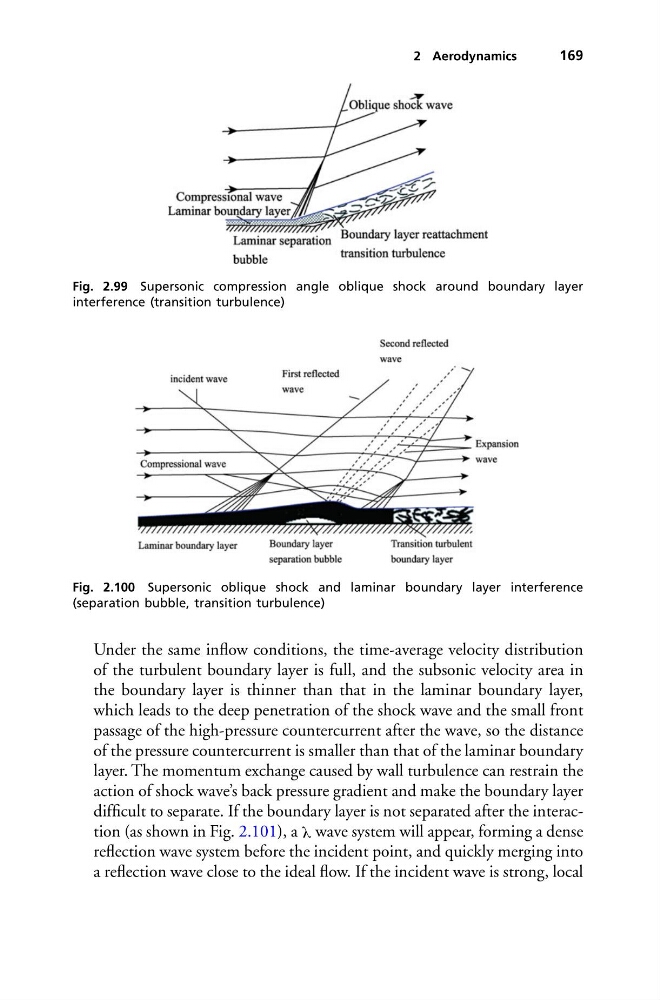
Fig. 2.99 Supersonic compression angle oblique shock around boundary layer
interference (transition turbulence)
Fig. 2.100 Supersonic oblique shock and laminar boundary layer interference
(separation bubble, transition turbulence)
Under the same inflow conditions, the time-average velocity distribution
of the turbulent boundary layer is full, and the subsonic velocity area in
the boundary layer is thinner than that in the laminar boundary layer,
which leads to the deep penetration of the shock wave and the small front
passage of the high-pressure countercurrent after the wave, so the distance
of the pressure countercurrent is smaller than that of the laminar boundary
layer. The momentum exchange caused by wall turbulence can restrain the
action of shock wave’s back pressure gradient and make the boundary layer
difficult to separate. If the boundary layer is not separated after the interaction (as shown in Fig. 2.101), a λ wave system will appear, forming a dense
reflection wave system before the incident point, and quickly merging into
a reflection wave close to the ideal flow. If the incident wave is strong, local
169
Fig. 2.99 Supersonic compression angle oblique shock around boundary layer
interference (transition turbulence)
Fig. 2.100 Supersonic oblique shock and laminar boundary layer interference
(separation bubble, transition turbulence)
Under the same inflow conditions, the time-average velocity distribution
of the turbulent boundary layer is full, and the subsonic velocity area in
the boundary layer is thinner than that in the laminar boundary layer,
which leads to the deep penetration of the shock wave and the small front
passage of the high-pressure countercurrent after the wave, so the distance
of the pressure countercurrent is smaller than that of the laminar boundary
layer. The momentum exchange caused by wall turbulence can restrain the
action of shock wave’s back pressure gradient and make the boundary layer
difficult to separate. If the boundary layer is not separated after the interaction (as shown in Fig. 2.101), a λ wave system will appear, forming a dense
reflection wave system before the incident point, and quickly merging into
a reflection wave close to the ideal flow. If the incident wave is strong, local