

170
P. Liu
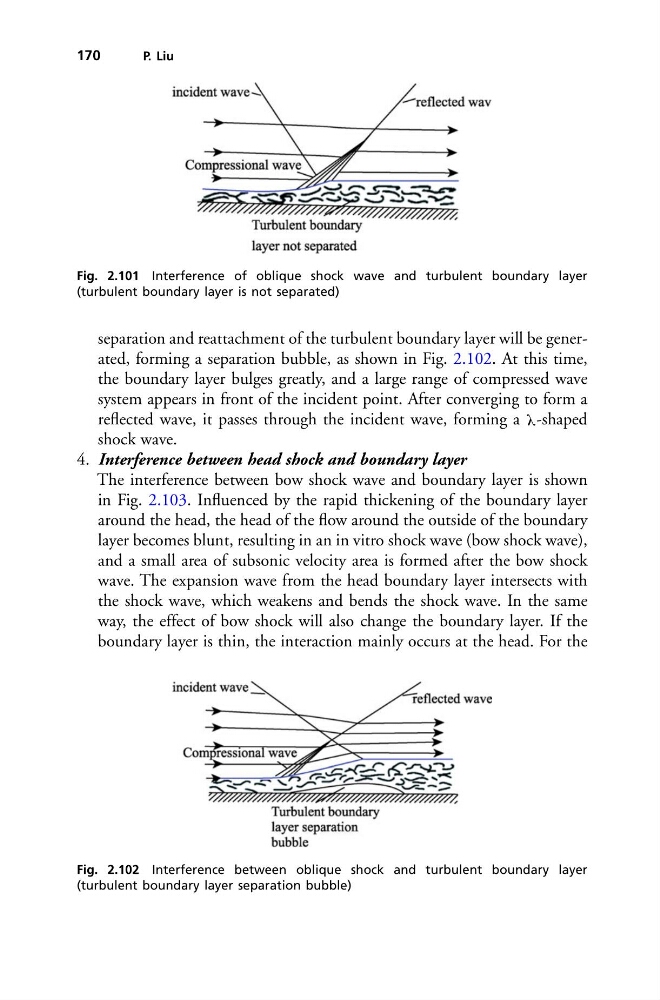
Fig. 2.101 Interference of oblique shock wave and turbulent boundary layer
(turbulent boundary layer is not separated)
separation and reattachment of the turbulent boundary layer will be generated, forming a separation bubble, as shown in Fig. 2.102. At this time,
the boundary layer bulges greatly, and a large range of compressed wave
system appears in front of the incident point. After converging to form a
reflected wave, it passes through the incident wave, forming a λ-shaped
shock wave.
4. Interference between head shock and boundary layer
The interference between bow shock wave and boundary layer is shown
in Fig. 2.103. Influenced by the rapid thickening of the boundary layer
around the head, the head of the flow around the outside of the boundary
layer becomes blunt, resulting in an in vitro shock wave (bow shock wave),
and a small area of subsonic velocity area is formed after the bow shock
wave. The expansion wave from the head boundary layer intersects with
the shock wave, which weakens and bends the shock wave. In the same
way, the effect of bow shock will also change the boundary layer. If the
boundary layer is thin, the interaction mainly occurs at the head. For the
Fig. 2.102 Interference between oblique shock and turbulent boundary layer
(turbulent boundary layer separation bubble)
P. Liu
Fig. 2.101 Interference of oblique shock wave and turbulent boundary layer
(turbulent boundary layer is not separated)
separation and reattachment of the turbulent boundary layer will be generated, forming a separation bubble, as shown in Fig. 2.102. At this time,
the boundary layer bulges greatly, and a large range of compressed wave
system appears in front of the incident point. After converging to form a
reflected wave, it passes through the incident wave, forming a λ-shaped
shock wave.
4. Interference between head shock and boundary layer
The interference between bow shock wave and boundary layer is shown
in Fig. 2.103. Influenced by the rapid thickening of the boundary layer
around the head, the head of the flow around the outside of the boundary
layer becomes blunt, resulting in an in vitro shock wave (bow shock wave),
and a small area of subsonic velocity area is formed after the bow shock
wave. The expansion wave from the head boundary layer intersects with
the shock wave, which weakens and bends the shock wave. In the same
way, the effect of bow shock will also change the boundary layer. If the
boundary layer is thin, the interaction mainly occurs at the head. For the
Fig. 2.102 Interference between oblique shock and turbulent boundary layer
(turbulent boundary layer separation bubble)