

10.5.6 Humidity
Humidity in surroundings plays a significant role for biological or non-biological
components of the environment. Moreover the strong corrosion effect was observed
by the moisture on the materials especially on metals. To have a desirable atmosphere, the ambient humidity has to monitor, detect, and control temperature ranging
from low to high. In general, the principal mechanisms of all the humidity sensors
may be classified as ionic conduction, electronic conduction, solid electrolyte and
capacitive type, chemisorption, physisorption, and capillary condensation processes
(Farahani et al. 2014). Few examples of such type of sensing mechanism for
different nanomaterials are shown in Table 10.3. The layer-by-layer nano-assembled
ultrathin poly(anilinesulfonic acid) film was reported for the sensing of humidity
with high-sensitive and rapid response (Nohria et al. 2006). Similarly, deposited
nanoblend of sulfonated polystyrene with poly(4-vinylpyridine) on interdigitated
gold electrodes was used for the successful sensing of humidity within the range
40–90% only (Li et al. 2018b). The humidity sensing performances including
resistance versus relative humidity, humidity hysteresis, response–recover time,
and long-term stability have been investigated using composite material made of
nanocrystal barium titanate and polymer material quaternary acrylic resin (Wang
et al. 2002). The fast and sensitive response to relative humidity in the air up to 90%
was studied on a layer of single tin dioxide nanowire at 30
C (Kuang et al. 2007).
Porous vanadium pentoxide micro-/nanotubes were synthesized via a modified
chemical vapor deposition process, and a possible growth mechanism was proposed.
8
7
6
5
4
3
2
1
0.5 1.0 1.5 2.0 2.5 3.0 3.5
4.5 5.0 5.5 6.0 6.5 7.0
4.0
Ozone concentration (ppm)
Response (S)
y = 1.08067 x + 0.59474
R = 0.999
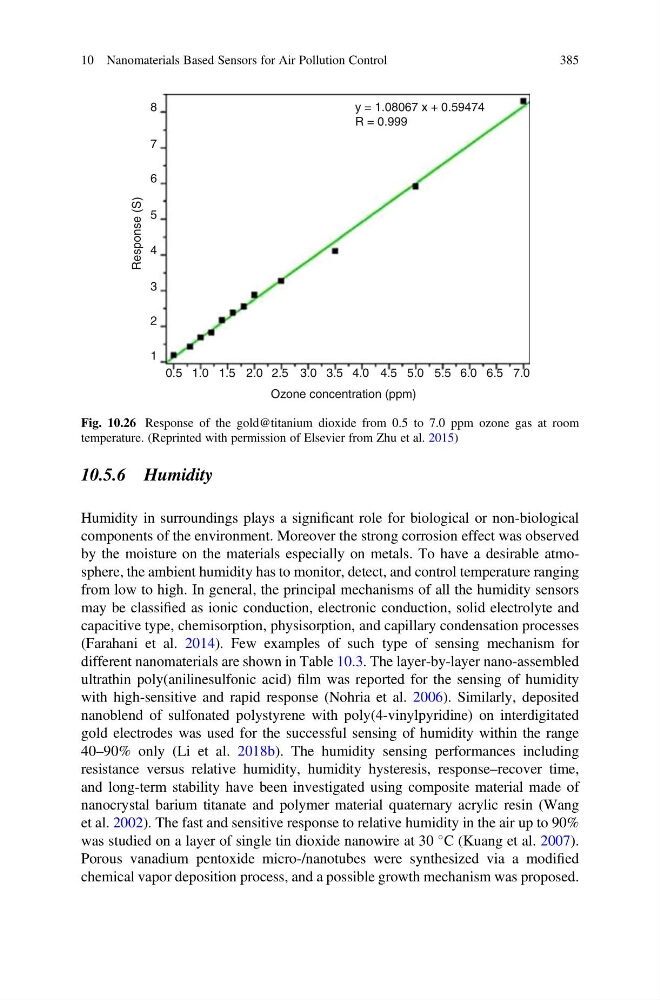
Fig. 10.26 Response of the gold@titanium dioxide from 0.5 to 7.0 ppm ozone gas at room
temperature. (Reprinted with permission of Elsevier from Zhu et al. 2015)
10 Nanomaterials Based Sensors for Air Pollution Control
385
Humidity in surroundings plays a significant role for biological or non-biological
components of the environment. Moreover the strong corrosion effect was observed
by the moisture on the materials especially on metals. To have a desirable atmosphere, the ambient humidity has to monitor, detect, and control temperature ranging
from low to high. In general, the principal mechanisms of all the humidity sensors
may be classified as ionic conduction, electronic conduction, solid electrolyte and
capacitive type, chemisorption, physisorption, and capillary condensation processes
(Farahani et al. 2014). Few examples of such type of sensing mechanism for
different nanomaterials are shown in Table 10.3. The layer-by-layer nano-assembled
ultrathin poly(anilinesulfonic acid) film was reported for the sensing of humidity
with high-sensitive and rapid response (Nohria et al. 2006). Similarly, deposited
nanoblend of sulfonated polystyrene with poly(4-vinylpyridine) on interdigitated
gold electrodes was used for the successful sensing of humidity within the range
40–90% only (Li et al. 2018b). The humidity sensing performances including
resistance versus relative humidity, humidity hysteresis, response–recover time,
and long-term stability have been investigated using composite material made of
nanocrystal barium titanate and polymer material quaternary acrylic resin (Wang
et al. 2002). The fast and sensitive response to relative humidity in the air up to 90%
was studied on a layer of single tin dioxide nanowire at 30
C (Kuang et al. 2007).
Porous vanadium pentoxide micro-/nanotubes were synthesized via a modified
chemical vapor deposition process, and a possible growth mechanism was proposed.
8
7
6
5
4
3
2
1
0.5 1.0 1.5 2.0 2.5 3.0 3.5
4.5 5.0 5.5 6.0 6.5 7.0
4.0
Ozone concentration (ppm)
Response (S)
y = 1.08067 x + 0.59474
R = 0.999
Fig. 10.26 Response of the gold@titanium dioxide from 0.5 to 7.0 ppm ozone gas at room
temperature. (Reprinted with permission of Elsevier from Zhu et al. 2015)
10 Nanomaterials Based Sensors for Air Pollution Control
385