

A fast response and recovery has been recorded for humidity sensing by a single
porous vanadium pentoxide micro-/nanotube due to having large surface area in their
tubular structure with a porous wall (Yin et al. 2012). The quartz crystal
microbalance-type humidity of sensor-based polyacrylic acid–poly(vinyl alcohol)
nanofiber composite membranes was found to have two times higher sensitivity than
that of the corresponding flat films at 95% room humidity (Wang et al. 2010). An
electrochemical humidity sensor was fabricated by nanosized silicon dioxide with
poly(2-acrylamido-2-methylpropane sulfonate) matrix, and it was also explained
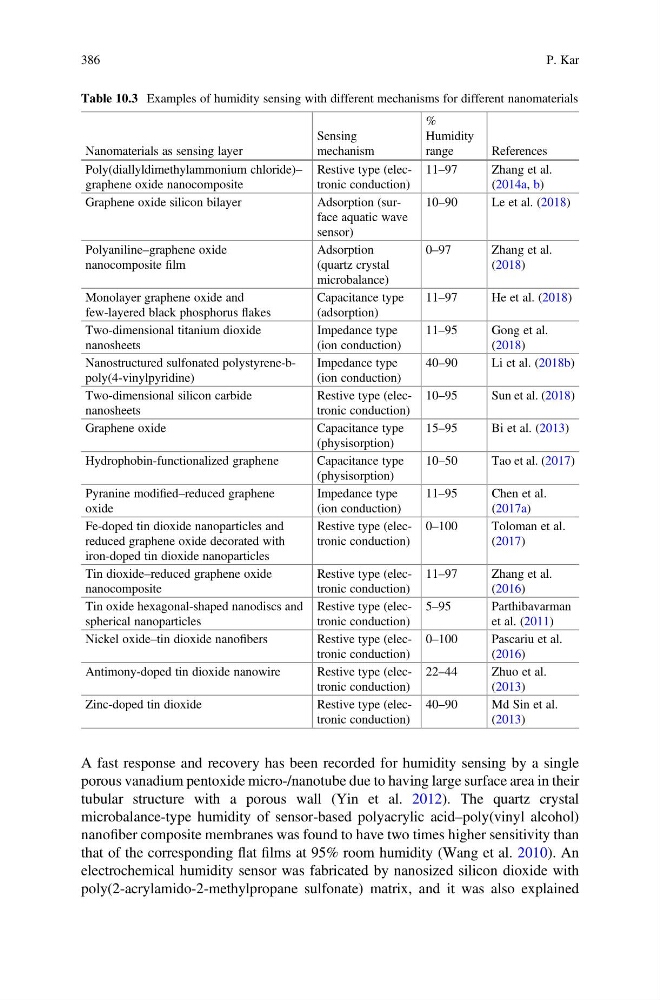
Table 10.3 Examples of humidity sensing with different mechanisms for different nanomaterials
Nanomaterials as sensing layer
Sensing
mechanism
%
Humidity
range
References
Poly(diallyldimethylammonium chloride)–
graphene oxide nanocomposite
Restive type (electronic conduction)
11–97
Zhang et al.
(2014a, b)
Graphene oxide silicon bilayer
Adsorption (surface aquatic wave
sensor)
10–90
Le et al. (2018)
Polyaniline–graphene oxide
nanocomposite film
Adsorption
(quartz crystal
microbalance)
0–97
Zhang et al.
(2018)
Monolayer graphene oxide and
few-layered black phosphorus flakes
Capacitance type
(adsorption)
11–97
He et al. (2018)
Two-dimensional titanium dioxide
nanosheets
Impedance type
(ion conduction)
11–95
Gong et al.
(2018)
Nanostructured sulfonated polystyrene-bpoly(4-vinylpyridine)
Impedance type
(ion conduction)
40–90
Li et al. (2018b)
Two-dimensional silicon carbide
nanosheets
Restive type (electronic conduction)
10–95
Sun et al. (2018)
Graphene oxide
Capacitance type
(physisorption)
15–95
Bi et al. (2013)
Hydrophobin-functionalized graphene
Capacitance type
(physisorption)
10–50
Tao et al. (2017)
Pyranine modified–reduced graphene
oxide
Impedance type
(ion conduction)
11–95
Chen et al.
(2017a)
Fe-doped tin dioxide nanoparticles and
reduced graphene oxide decorated with
iron-doped tin dioxide nanoparticles
Restive type (electronic conduction)
0–100
Toloman et al.
(2017)
Tin dioxide–reduced graphene oxide
nanocomposite
Restive type (electronic conduction)
11–97
Zhang et al.
(2016)
Tin oxide hexagonal-shaped nanodiscs and
spherical nanoparticles
Restive type (electronic conduction)
5–95
Parthibavarman
et al. (2011)
Nickel oxide–tin dioxide nanofibers
Restive type (electronic conduction)
0–100
Pascariu et al.
(2016)
Antimony-doped tin dioxide nanowire
Restive type (electronic conduction)
22–44
Zhuo et al.
(2013)
Zinc-doped tin dioxide
Restive type (electronic conduction)
40–90
Md Sin et al.
(2013)
386
P. Kar
porous vanadium pentoxide micro-/nanotube due to having large surface area in their
tubular structure with a porous wall (Yin et al. 2012). The quartz crystal
microbalance-type humidity of sensor-based polyacrylic acid–poly(vinyl alcohol)
nanofiber composite membranes was found to have two times higher sensitivity than
that of the corresponding flat films at 95% room humidity (Wang et al. 2010). An
electrochemical humidity sensor was fabricated by nanosized silicon dioxide with
poly(2-acrylamido-2-methylpropane sulfonate) matrix, and it was also explained
Table 10.3 Examples of humidity sensing with different mechanisms for different nanomaterials
Nanomaterials as sensing layer
Sensing
mechanism
%
Humidity
range
References
Poly(diallyldimethylammonium chloride)–
graphene oxide nanocomposite
Restive type (electronic conduction)
11–97
Zhang et al.
(2014a, b)
Graphene oxide silicon bilayer
Adsorption (surface aquatic wave
sensor)
10–90
Le et al. (2018)
Polyaniline–graphene oxide
nanocomposite film
Adsorption
(quartz crystal
microbalance)
0–97
Zhang et al.
(2018)
Monolayer graphene oxide and
few-layered black phosphorus flakes
Capacitance type
(adsorption)
11–97
He et al. (2018)
Two-dimensional titanium dioxide
nanosheets
Impedance type
(ion conduction)
11–95
Gong et al.
(2018)
Nanostructured sulfonated polystyrene-bpoly(4-vinylpyridine)
Impedance type
(ion conduction)
40–90
Li et al. (2018b)
Two-dimensional silicon carbide
nanosheets
Restive type (electronic conduction)
10–95
Sun et al. (2018)
Graphene oxide
Capacitance type
(physisorption)
15–95
Bi et al. (2013)
Hydrophobin-functionalized graphene
Capacitance type
(physisorption)
10–50
Tao et al. (2017)
Pyranine modified–reduced graphene
oxide
Impedance type
(ion conduction)
11–95
Chen et al.
(2017a)
Fe-doped tin dioxide nanoparticles and
reduced graphene oxide decorated with
iron-doped tin dioxide nanoparticles
Restive type (electronic conduction)
0–100
Toloman et al.
(2017)
Tin dioxide–reduced graphene oxide
nanocomposite
Restive type (electronic conduction)
11–97
Zhang et al.
(2016)
Tin oxide hexagonal-shaped nanodiscs and
spherical nanoparticles
Restive type (electronic conduction)
5–95
Parthibavarman
et al. (2011)
Nickel oxide–tin dioxide nanofibers
Restive type (electronic conduction)
0–100
Pascariu et al.
(2016)
Antimony-doped tin dioxide nanowire
Restive type (electronic conduction)
22–44
Zhuo et al.
(2013)
Zinc-doped tin dioxide
Restive type (electronic conduction)
40–90
Md Sin et al.
(2013)
386
P. Kar