

3. Only plane deformation is treated, and dilatation is assumed isotropic in the plane of flow.
4. The material dissolving or precipitating makes
up much of the rock and is uniformly available
throughout the volume of interest.
5. Distortion of elements takes place as though
the material were an isotropic incompressible
viscous fluid: distortion and dilatation are additive parts of the rate of deformation, but otherwise not directly coupled.
With these assumptions, expressions for the
rate of deformation are:
(11.76)
Here twice D is the rate of dilatation, referring to
the rate of change in the area of an element in the
plane of flow.
In the case of pressure solution, the rate of
dilatation, twice D, is associated with dissolution,
transport, and precipitation of the soluble, volumetrically dominant, mineral in the rock. A
further assumption, point 4, is that there is no
porosity within the material to act as a sink, nor
can porosity be created by dissolution. Thus, dissolution or precipitation must be balanced by
transport that at the scale of interest is by diffusion along intergranular fluid films. Then:
(11.77)
2D ϭ Ϫ
Ѩ J x
Ѩx
ϩ
Ѩ J y
Ѩy V 0
D xy ϭ
1
2
xy
D yy ϭ
1
4
( xx Ϫ yy ) ϩ D
D xx ϭ
1
4
( xx Ϫ yy ) ϩ D
J x and J y are the components of the macroscopic
mass flux vector per unit depth and V 0 is the
specific volume per unit mass of the soluble
mineral.
Mass flux is related to the gradient of the bulk
chemical potential of the dissolving or precipitating solid phase in the intergranular film, , or:
(11.78)
Here is the diffusivity of the mineral component
in aqueous fluid, f is an effective film porosity, is
the film tortuosity, c 0 is the mean concentration of
the solid component in the aqueous film, RЈ is the
gas constant, and TЈ is the absolute temperature.
If the kinetics of dissolution and precipitation are
rapid, relative to transport, the mean chemical
potential in an element of the rock may be written
(Kamb, 1959a):
(11.79)
Combining (11.77), (11.78), and (11.79) we have:
(11.80)
The dimensions of are
Combining (11.78) through (11.80) and (11.76)
yields the desired constitutive relations for the
plane flow, including the diffusional transport of
the soluble mineral component. An inhomogeneous distribution of pressure or mean stress in
a viscous medium deforming in plane flow has
been used to assess dissolution, diffusion, and precipitation within it (Stephansson, 1974), where
the divergence of the gradient in mean stress is
used as a measure of dilatation. However, as we
have learned, the Airy stress function, , in such
a material satisfies the biharmonic equation, so
that:
(11.81)
Ѩ 2
Ѩx 2 ϩ
Ѩ 2
Ѩy 2 ( xx ϩ yy ) ϭ
Ѩ 2
Ѩx 2 ϩ
Ѩ 2
Ѩy 2
Ѩ 2
Ѩx 2 ϩ
Ѩ 2
Ѩy 2 ϭ 0
[ ] ϭ M Ϫ1 L 3 T.
where Х
f
c 0 V 2
0
4RЈTЈ
D ϭ
Ѩ 2
Ѩx 2 ϩ
Ѩ 2
Ѩy 2 ( xx ϩ yy )
Х 0 Ϫ
1
2 ( xx ϩ yy )V 0
where M Х
f
c 0
RЈTЈ
J x ϭ ϪM
Ѩ
Ѩx
, J y ϭ ϪM
Ѩ
Ѩy
442
RHEOLOGICAL BEHAVIOR
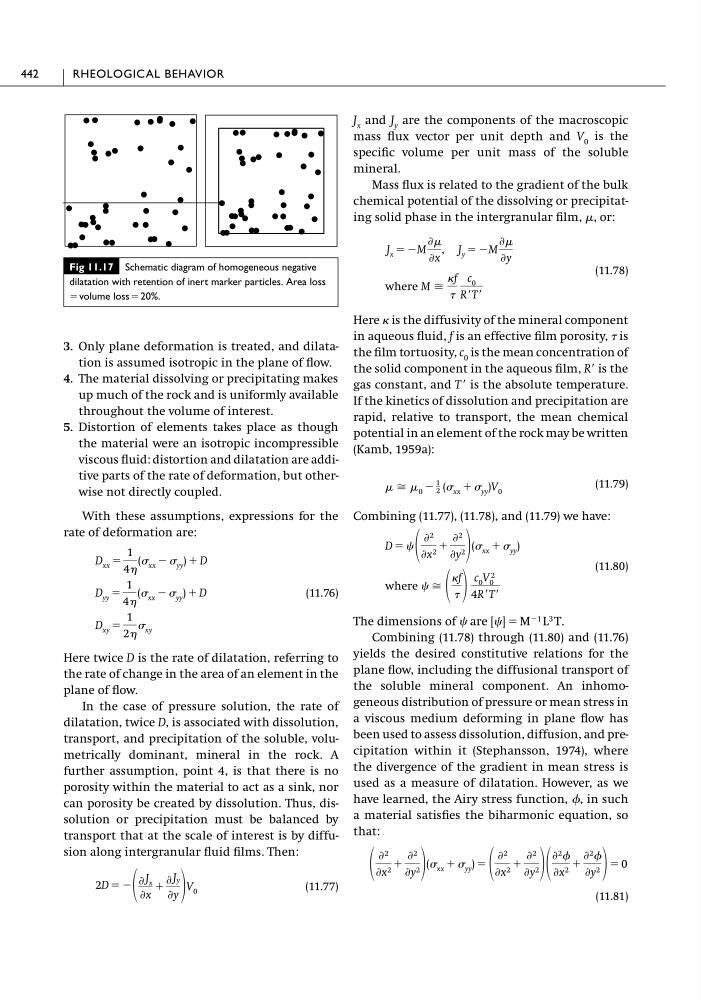
Fig 11.17 Schematic diagram of homogeneous negative
dilatation with retention of inert marker particles. Area loss
ϭ volume lossϭ 20%.
4. The material dissolving or precipitating makes
up much of the rock and is uniformly available
throughout the volume of interest.
5. Distortion of elements takes place as though
the material were an isotropic incompressible
viscous fluid: distortion and dilatation are additive parts of the rate of deformation, but otherwise not directly coupled.
With these assumptions, expressions for the
rate of deformation are:
(11.76)
Here twice D is the rate of dilatation, referring to
the rate of change in the area of an element in the
plane of flow.
In the case of pressure solution, the rate of
dilatation, twice D, is associated with dissolution,
transport, and precipitation of the soluble, volumetrically dominant, mineral in the rock. A
further assumption, point 4, is that there is no
porosity within the material to act as a sink, nor
can porosity be created by dissolution. Thus, dissolution or precipitation must be balanced by
transport that at the scale of interest is by diffusion along intergranular fluid films. Then:
(11.77)
2D ϭ Ϫ
Ѩ J x
Ѩx
ϩ
Ѩ J y
Ѩy V 0
D xy ϭ
1
2
xy
D yy ϭ
1
4
( xx Ϫ yy ) ϩ D
D xx ϭ
1
4
( xx Ϫ yy ) ϩ D
J x and J y are the components of the macroscopic
mass flux vector per unit depth and V 0 is the
specific volume per unit mass of the soluble
mineral.
Mass flux is related to the gradient of the bulk
chemical potential of the dissolving or precipitating solid phase in the intergranular film, , or:
(11.78)
Here is the diffusivity of the mineral component
in aqueous fluid, f is an effective film porosity, is
the film tortuosity, c 0 is the mean concentration of
the solid component in the aqueous film, RЈ is the
gas constant, and TЈ is the absolute temperature.
If the kinetics of dissolution and precipitation are
rapid, relative to transport, the mean chemical
potential in an element of the rock may be written
(Kamb, 1959a):
(11.79)
Combining (11.77), (11.78), and (11.79) we have:
(11.80)
The dimensions of are
Combining (11.78) through (11.80) and (11.76)
yields the desired constitutive relations for the
plane flow, including the diffusional transport of
the soluble mineral component. An inhomogeneous distribution of pressure or mean stress in
a viscous medium deforming in plane flow has
been used to assess dissolution, diffusion, and precipitation within it (Stephansson, 1974), where
the divergence of the gradient in mean stress is
used as a measure of dilatation. However, as we
have learned, the Airy stress function, , in such
a material satisfies the biharmonic equation, so
that:
(11.81)
Ѩ 2
Ѩx 2 ϩ
Ѩ 2
Ѩy 2 ( xx ϩ yy ) ϭ
Ѩ 2
Ѩx 2 ϩ
Ѩ 2
Ѩy 2
Ѩ 2
Ѩx 2 ϩ
Ѩ 2
Ѩy 2 ϭ 0
[ ] ϭ M Ϫ1 L 3 T.
where Х
f
c 0 V 2
0
4RЈTЈ
D ϭ
Ѩ 2
Ѩx 2 ϩ
Ѩ 2
Ѩy 2 ( xx ϩ yy )
Х 0 Ϫ
1
2 ( xx ϩ yy )V 0
where M Х
f
c 0
RЈTЈ
J x ϭ ϪM
Ѩ
Ѩx
, J y ϭ ϪM
Ѩ
Ѩy
442
RHEOLOGICAL BEHAVIOR
Fig 11.17 Schematic diagram of homogeneous negative
dilatation with retention of inert marker particles. Area loss
ϭ volume lossϭ 20%.