

on one surface and compressive on the other. The
splay fractures extend no more than a few meters
from the fault surfaces and near their ends strike
from 15 to 60Њ counterclockwise from the trend of
the faults.
Where two echelon fault segments are
arranged with a left step (looking toward the tip,
the next segment is to the left), splay fractures
emanating from both segments may link to the
adjacent segment and some may open to form
rhomb-shaped cavities up to 10 cm wide (Fig.
9.37d). These extensional steps range from a few
centimeters to approximately 1 m in width
(normal distance between the segments) and are
up to 2 m in length (overlap of the segments). The
slip on fault segments may be transferred to adjacent segments in a succession along strike by this
linkage mechanism such that faults more than
100 m in trace length are formed. The length of
faults apparently increased not by shear fracture
propagation, but rather by the end-to-end linkage
of echelon segments through opening splay fractures in extensional steps. At some locations near
the contact with the younger Mono Creek Granite,
right steps display well-developed ductile fabrics
with a foliation oriented oblique to the fault segments and these also may serve to transfer slip
(Bürgmann and Pollard, 1992, 1994).
The next stage in the development of faults in
the Lake Edison Granodiorite (Fig. 9.36c) involved
the side-to-side linkage of parallel and adjacent
faults with oblique fractures (Martel et al., 1988;
Martel and Pollard, 1989). These fault zones typically are 0.5 to 3 m in width, reflecting the spacing
inherited from the original joint set. The most
prominent and earliest formed fractures within
the zone strike at an acute counterclockwise
angle to the two bounding surfaces of the zone
and do not cross-cut those boundaries (Fig. 9.37e).
Left-lateral offset of older structures is localized
on the former faults that bound these zones and
can be as great as 10 m. In contrast to the
mylonitic textures found in the faults (Fig. 9.37c),
the same epidote, chlorite, and quartz assemblage
in the boundary faults is characterized by cataclastic textures. The fault zones can be up to 1 km
in length and are composed of segments a few
tens of meters in length joined end-to-end at steps
and bends. This segmentation reflects the geometry of the earlier formed joint set and its domains.
The granitic rock outside the two bounding surfaces of the fault zone is fractured near the steps
and bends, but elsewhere the fracturing is strictly
confined to the zone. Many of the internal fractures show evidence only for opening but some
also are sheared. Right-lateral deformation was
accommodated on kink bands (Davies and
Pollard, 1986). The final stage identified in the
development of the faults is the side-to-side
linkage of adjacent fault zones and faults with
oblique fractures to form a compound fault zone
(Fig. 9.37f) about 10 m in width and several kilometers long (Martel, 1990). These zones offset
older structures by as much as 100 m in a leftlateral sense.
The second example considers fault development in porous sandstone (Aydin, 1978; Aydin and
Johnson, 1978). These faults were identified,
mapped, and described from outcrops of Entrada
and Navajo Sandstones in the San Rafael Desert of
380
BRITTLE BEHAVIOR
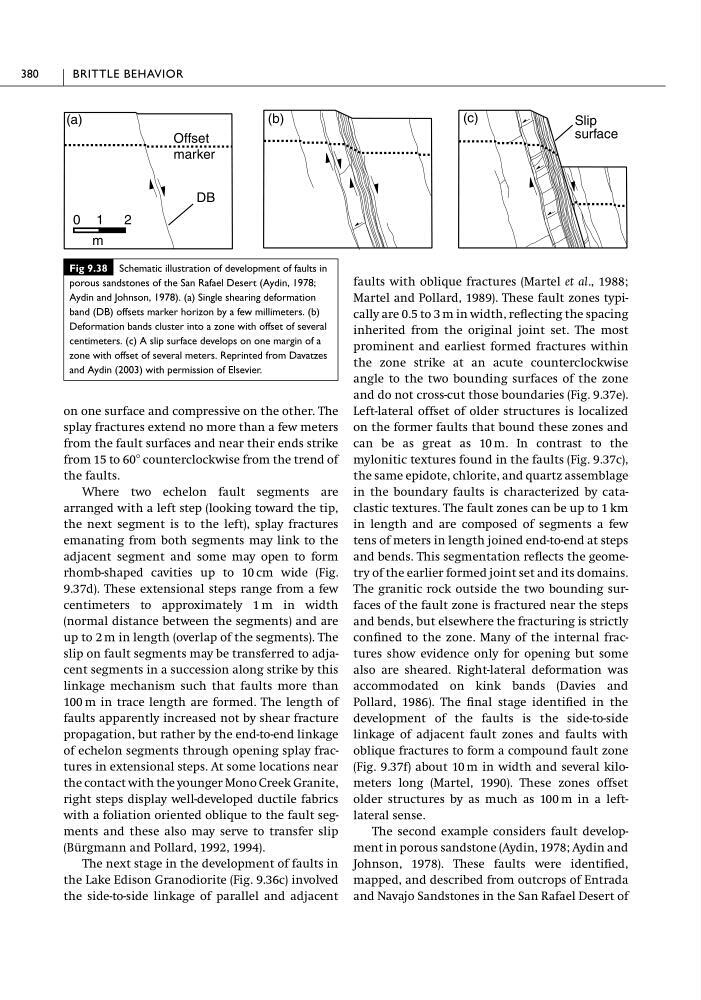
Fig 9.38 Schematic illustration of development of faults in
porous sandstones of the San Rafael Desert (Aydin, 1978;
Aydin and Johnson, 1978). (a) Single shearing deformation
band (DB) offsets marker horizon by a few millimeters. (b)
Deformation bands cluster into a zone with offset of several
centimeters. (c) A slip surface develops on one margin of a
zone with offset of several meters. Reprinted from Davatzes
and Aydin (2003) with permission of Elsevier.
DB
0 1
2
m
Offset
marker
Slip
surface
(a)
(b)
(c)
splay fractures extend no more than a few meters
from the fault surfaces and near their ends strike
from 15 to 60Њ counterclockwise from the trend of
the faults.
Where two echelon fault segments are
arranged with a left step (looking toward the tip,
the next segment is to the left), splay fractures
emanating from both segments may link to the
adjacent segment and some may open to form
rhomb-shaped cavities up to 10 cm wide (Fig.
9.37d). These extensional steps range from a few
centimeters to approximately 1 m in width
(normal distance between the segments) and are
up to 2 m in length (overlap of the segments). The
slip on fault segments may be transferred to adjacent segments in a succession along strike by this
linkage mechanism such that faults more than
100 m in trace length are formed. The length of
faults apparently increased not by shear fracture
propagation, but rather by the end-to-end linkage
of echelon segments through opening splay fractures in extensional steps. At some locations near
the contact with the younger Mono Creek Granite,
right steps display well-developed ductile fabrics
with a foliation oriented oblique to the fault segments and these also may serve to transfer slip
(Bürgmann and Pollard, 1992, 1994).
The next stage in the development of faults in
the Lake Edison Granodiorite (Fig. 9.36c) involved
the side-to-side linkage of parallel and adjacent
faults with oblique fractures (Martel et al., 1988;
Martel and Pollard, 1989). These fault zones typically are 0.5 to 3 m in width, reflecting the spacing
inherited from the original joint set. The most
prominent and earliest formed fractures within
the zone strike at an acute counterclockwise
angle to the two bounding surfaces of the zone
and do not cross-cut those boundaries (Fig. 9.37e).
Left-lateral offset of older structures is localized
on the former faults that bound these zones and
can be as great as 10 m. In contrast to the
mylonitic textures found in the faults (Fig. 9.37c),
the same epidote, chlorite, and quartz assemblage
in the boundary faults is characterized by cataclastic textures. The fault zones can be up to 1 km
in length and are composed of segments a few
tens of meters in length joined end-to-end at steps
and bends. This segmentation reflects the geometry of the earlier formed joint set and its domains.
The granitic rock outside the two bounding surfaces of the fault zone is fractured near the steps
and bends, but elsewhere the fracturing is strictly
confined to the zone. Many of the internal fractures show evidence only for opening but some
also are sheared. Right-lateral deformation was
accommodated on kink bands (Davies and
Pollard, 1986). The final stage identified in the
development of the faults is the side-to-side
linkage of adjacent fault zones and faults with
oblique fractures to form a compound fault zone
(Fig. 9.37f) about 10 m in width and several kilometers long (Martel, 1990). These zones offset
older structures by as much as 100 m in a leftlateral sense.
The second example considers fault development in porous sandstone (Aydin, 1978; Aydin and
Johnson, 1978). These faults were identified,
mapped, and described from outcrops of Entrada
and Navajo Sandstones in the San Rafael Desert of
380
BRITTLE BEHAVIOR
Fig 9.38 Schematic illustration of development of faults in
porous sandstones of the San Rafael Desert (Aydin, 1978;
Aydin and Johnson, 1978). (a) Single shearing deformation
band (DB) offsets marker horizon by a few millimeters. (b)
Deformation bands cluster into a zone with offset of several
centimeters. (c) A slip surface develops on one margin of a
zone with offset of several meters. Reprinted from Davatzes
and Aydin (2003) with permission of Elsevier.
DB
0 1
2
m
Offset
marker
Slip
surface
(a)
(b)
(c)