

propagates along a pre-existing joint, separating
particles with a shearing displacement discontinuity that were separated originally with an
opening displacement discontinuity.
Apparently, the slip events that propagated
along the former joints were unable to nucleate a
shear fracture in the unbroken granite when the
slip reached the tip of a joint segment. Instead, an
opening fracture, called a splay fracture, nucleated on one side of the sheared joint near the tip
and propagated in an oblique direction counterclockwise from the trace of the fault (Fig. 9.36b).
These splay fractures are explained using the
stress distribution near the tip of a mode II fracture (Fig. 9.31b). The normal stress, xx , acting parallel to the fracture is greatest in magnitude on
the fracture surface where ϭϮ and is tensile
9.5 FRACTURE PROPAGATION AND FAULT GROWTH
379
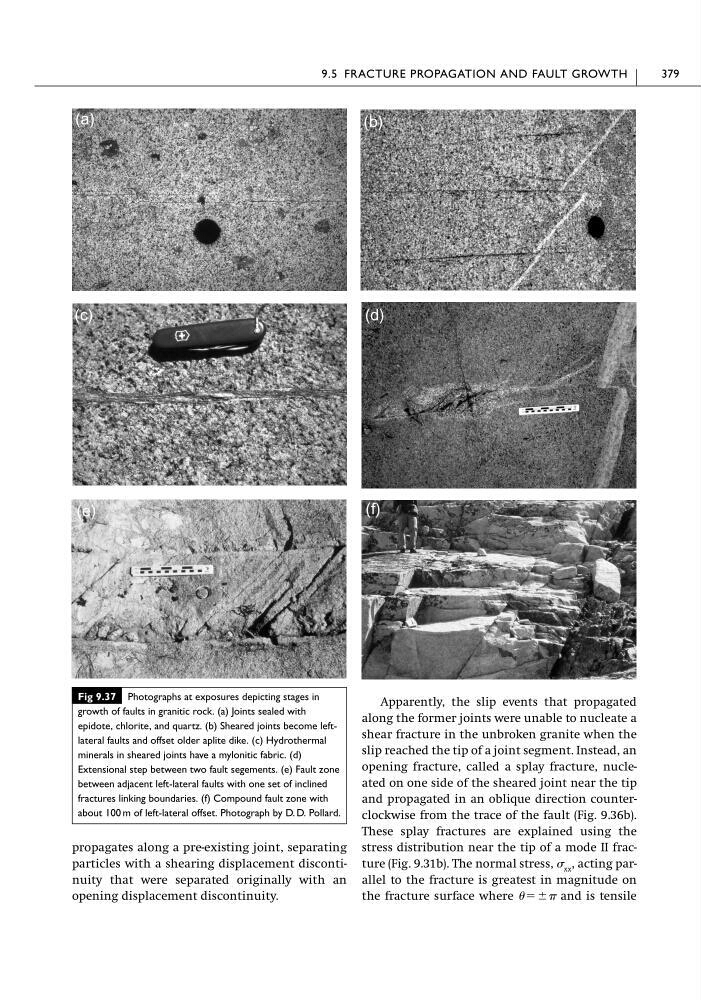
Fig 9.37 Photographs at exposures depicting stages in
growth of faults in granitic rock. (a) Joints sealed with
epidote, chlorite, and quartz. (b) Sheared joints become leftlateral faults and offset older aplite dike. (c) Hydrothermal
minerals in sheared joints have a mylonitic fabric. (d)
Extensional step between two fault segements. (e) Fault zone
between adjacent left-lateral faults with one set of inclined
fractures linking boundaries. (f) Compound fault zone with
about 100 m of left-lateral offset. Photograph by D. D. Pollard.
(a)
(c)
(d)
(e)
(f)
(b)
particles with a shearing displacement discontinuity that were separated originally with an
opening displacement discontinuity.
Apparently, the slip events that propagated
along the former joints were unable to nucleate a
shear fracture in the unbroken granite when the
slip reached the tip of a joint segment. Instead, an
opening fracture, called a splay fracture, nucleated on one side of the sheared joint near the tip
and propagated in an oblique direction counterclockwise from the trace of the fault (Fig. 9.36b).
These splay fractures are explained using the
stress distribution near the tip of a mode II fracture (Fig. 9.31b). The normal stress, xx , acting parallel to the fracture is greatest in magnitude on
the fracture surface where ϭϮ and is tensile
9.5 FRACTURE PROPAGATION AND FAULT GROWTH
379
Fig 9.37 Photographs at exposures depicting stages in
growth of faults in granitic rock. (a) Joints sealed with
epidote, chlorite, and quartz. (b) Sheared joints become leftlateral faults and offset older aplite dike. (c) Hydrothermal
minerals in sheared joints have a mylonitic fabric. (d)
Extensional step between two fault segements. (e) Fault zone
between adjacent left-lateral faults with one set of inclined
fractures linking boundaries. (f) Compound fault zone with
about 100 m of left-lateral offset. Photograph by D. D. Pollard.
(a)
(c)
(d)
(e)
(f)
(b)