

southeastern Utah (Aydin, 1977). There are three
structural elements found in the exposures: individual shearing deformation bands, zones of
these bands, and slip surfaces (Fig. 9.38). The
spatial relationships among these elements
provide the evidence necessary to interpret their
9.5 FRACTURE PROPAGATION AND FAULT GROWTH
381
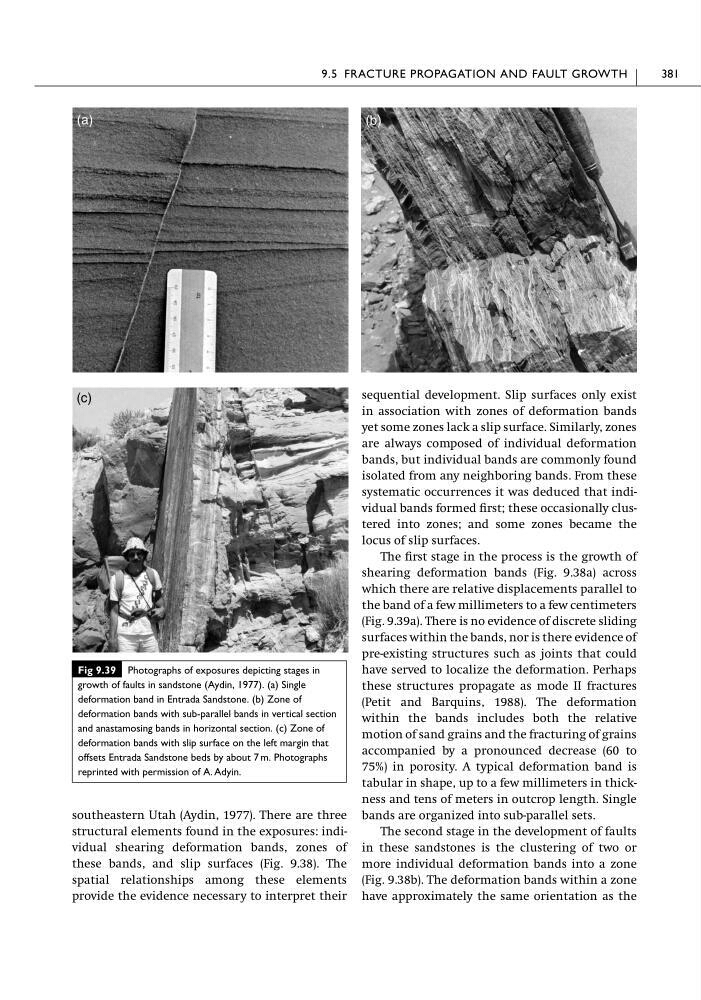
Fig 9.39 Photographs of exposures depicting stages in
growth of faults in sandstone (Aydin, 1977). (a) Single
deformation band in Entrada Sandstone. (b) Zone of
deformation bands with sub-parallel bands in vertical section
and anastamosing bands in horizontal section. (c) Zone of
deformation bands with slip surface on the left margin that
offsets Entrada Sandstone beds by about 7 m. Photographs
reprinted with permission of A. Adyin.
(a)
(b)
(c)
sequential development. Slip surfaces only exist
in association with zones of deformation bands
yet some zones lack a slip surface. Similarly, zones
are always composed of individual deformation
bands, but individual bands are commonly found
isolated from any neighboring bands. From these
systematic occurrences it was deduced that individual bands formed first; these occasionally clustered into zones; and some zones became the
locus of slip surfaces.
The first stage in the process is the growth of
shearing deformation bands (Fig. 9.38a) across
which there are relative displacements parallel to
the band of a few millimeters to a few centimeters
(Fig. 9.39a). There is no evidence of discrete sliding
surfaces within the bands, nor is there evidence of
pre-existing structures such as joints that could
have served to localize the deformation. Perhaps
these structures propagate as mode II fractures
(Petit and Barquins, 1988). The deformation
within the bands includes both the relative
motion of sand grains and the fracturing of grains
accompanied by a pronounced decrease (60 to
75%) in porosity. A typical deformation band is
tabular in shape, up to a few millimeters in thickness and tens of meters in outcrop length. Single
bands are organized into sub-parallel sets.
The second stage in the development of faults
in these sandstones is the clustering of two or
more individual deformation bands into a zone
(Fig. 9.38b). The deformation bands within a zone
have approximately the same orientation as the
structural elements found in the exposures: individual shearing deformation bands, zones of
these bands, and slip surfaces (Fig. 9.38). The
spatial relationships among these elements
provide the evidence necessary to interpret their
9.5 FRACTURE PROPAGATION AND FAULT GROWTH
381
Fig 9.39 Photographs of exposures depicting stages in
growth of faults in sandstone (Aydin, 1977). (a) Single
deformation band in Entrada Sandstone. (b) Zone of
deformation bands with sub-parallel bands in vertical section
and anastamosing bands in horizontal section. (c) Zone of
deformation bands with slip surface on the left margin that
offsets Entrada Sandstone beds by about 7 m. Photographs
reprinted with permission of A. Adyin.
(a)
(b)
(c)
sequential development. Slip surfaces only exist
in association with zones of deformation bands
yet some zones lack a slip surface. Similarly, zones
are always composed of individual deformation
bands, but individual bands are commonly found
isolated from any neighboring bands. From these
systematic occurrences it was deduced that individual bands formed first; these occasionally clustered into zones; and some zones became the
locus of slip surfaces.
The first stage in the process is the growth of
shearing deformation bands (Fig. 9.38a) across
which there are relative displacements parallel to
the band of a few millimeters to a few centimeters
(Fig. 9.39a). There is no evidence of discrete sliding
surfaces within the bands, nor is there evidence of
pre-existing structures such as joints that could
have served to localize the deformation. Perhaps
these structures propagate as mode II fractures
(Petit and Barquins, 1988). The deformation
within the bands includes both the relative
motion of sand grains and the fracturing of grains
accompanied by a pronounced decrease (60 to
75%) in porosity. A typical deformation band is
tabular in shape, up to a few millimeters in thickness and tens of meters in outcrop length. Single
bands are organized into sub-parallel sets.
The second stage in the development of faults
in these sandstones is the clustering of two or
more individual deformation bands into a zone
(Fig. 9.38b). The deformation bands within a zone
have approximately the same orientation as the