

sliding surfaces that may be more relevant to the
processes of jointing or faulting in the Earth than
the triaxial experiment, the relevant material
heterogeneities (sedimentary bedding, lithologic
contacts, other joints or faults, etc.) that may play
crucial roles in these processes typically are not
included at laboratory scales. The challenge for
the structural geologist is to understand these
complex processes when direct laboratory simulations are not possible.
9.2 Strength of laboratory samples
Rock samples tested in the laboratory under conditions that promote brittle behavior cannot be
loaded to arbitrary values of stress, but are
limited to values less than the strength of the
sample. Because the strength of certain engineering materials, like steel, is greater than that of
many rocks, it is possible to construct a laboratory
9.2 STRENGTH OF LABORATORY SAMPLES
337
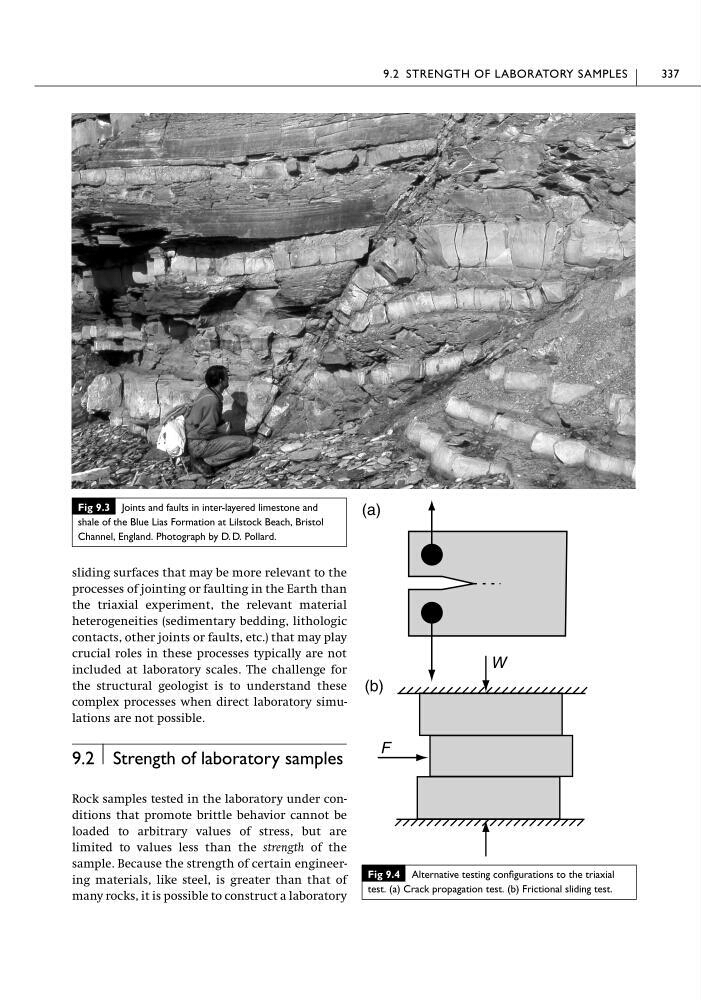
Fig 9.3 Joints and faults in inter-layered limestone and
shale of the Blue Lias Formation at Lilstock Beach, Bristol
Channel, England. Photograph by D. D. Pollard.
Fig 9.4 Alternative testing configurations to the triaxial
test. (a) Crack propagation test. (b) Frictional sliding test.
(a)
(b)
F
W
processes of jointing or faulting in the Earth than
the triaxial experiment, the relevant material
heterogeneities (sedimentary bedding, lithologic
contacts, other joints or faults, etc.) that may play
crucial roles in these processes typically are not
included at laboratory scales. The challenge for
the structural geologist is to understand these
complex processes when direct laboratory simulations are not possible.
9.2 Strength of laboratory samples
Rock samples tested in the laboratory under conditions that promote brittle behavior cannot be
loaded to arbitrary values of stress, but are
limited to values less than the strength of the
sample. Because the strength of certain engineering materials, like steel, is greater than that of
many rocks, it is possible to construct a laboratory
9.2 STRENGTH OF LABORATORY SAMPLES
337
Fig 9.3 Joints and faults in inter-layered limestone and
shale of the Blue Lias Formation at Lilstock Beach, Bristol
Channel, England. Photograph by D. D. Pollard.
Fig 9.4 Alternative testing configurations to the triaxial
test. (a) Crack propagation test. (b) Frictional sliding test.
(a)
(b)
F
W