

interpretation of fault and fracture geometries
and provide input for a more effective production
strategy. Using models to clarify the geometry of
faults in hydrocarbon reservoirs is a timely
example of an application of modern structural
geology to a problem of economic importance to
society.
1.4 Anticracks in southern France
Mapping, describing, and analyzing geologic
structures can help one appreciate new and beautiful facets of the natural world. One of the great
scientists of the early twentieth century, Henri
Poincaré, said it this way:
The scientist does not study nature because it is useful to
do so. He studies it because he takes pleasure in it; and
he takes pleasure in it because it is beautiful. If nature
were not beautiful, it would not be worth knowing and
life would not be worth living . . . It is because simplicity
and vastness are both beautiful that we seek by preference simple facts and vast facts; that we take delight,
now in following the giant courses of the stars, now in
scrutinizing with a microscope that prodigious small16
MOTIVATIONS AND OPPORTUNITIES
N
1 km
1 km
NW
SE
0
100 m
Computed slip from model 2
Computed slip from model 1
(a)
(b)
(c)
Slip
A
B
C
A
C
B
A
C
B
Interpreted slip from 3D seismic data
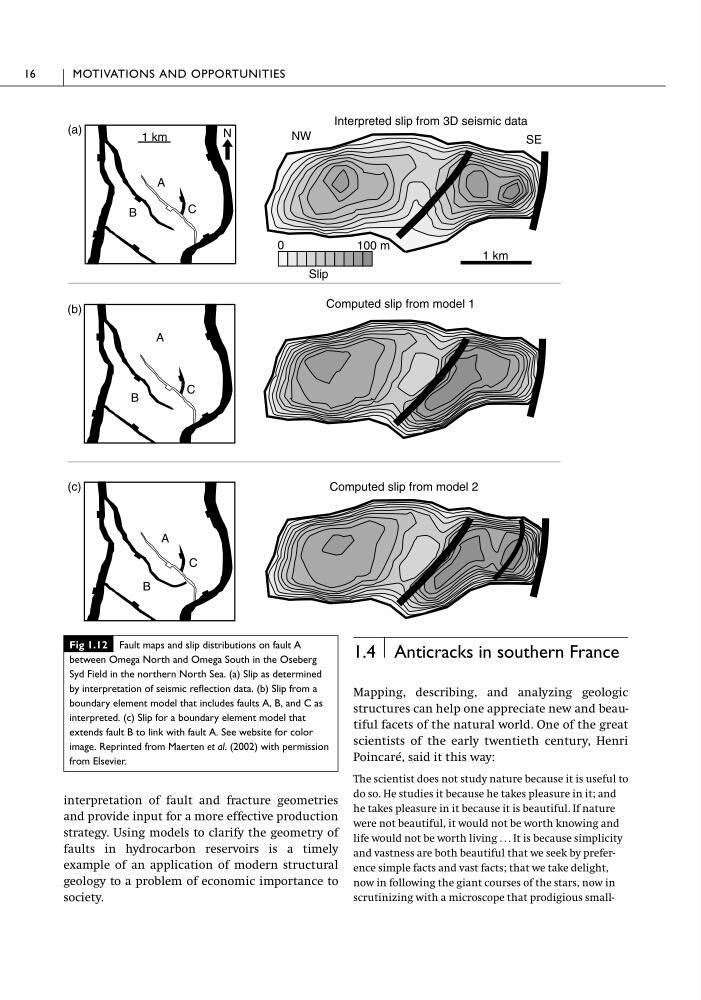
Fig 1.12 Fault maps and slip distributions on fault A
between Omega North and Omega South in the Oseberg
Syd Field in the northern North Sea. (a) Slip as determined
by interpretation of seismic reflection data. (b) Slip from a
boundary element model that includes faults A, B, and C as
interpreted. (c) Slip for a boundary element model that
extends fault B to link with fault A. See website for color
image. Reprinted from Maerten et al. (2002) with permission
from Elsevier.
and provide input for a more effective production
strategy. Using models to clarify the geometry of
faults in hydrocarbon reservoirs is a timely
example of an application of modern structural
geology to a problem of economic importance to
society.
1.4 Anticracks in southern France
Mapping, describing, and analyzing geologic
structures can help one appreciate new and beautiful facets of the natural world. One of the great
scientists of the early twentieth century, Henri
Poincaré, said it this way:
The scientist does not study nature because it is useful to
do so. He studies it because he takes pleasure in it; and
he takes pleasure in it because it is beautiful. If nature
were not beautiful, it would not be worth knowing and
life would not be worth living . . . It is because simplicity
and vastness are both beautiful that we seek by preference simple facts and vast facts; that we take delight,
now in following the giant courses of the stars, now in
scrutinizing with a microscope that prodigious small16
MOTIVATIONS AND OPPORTUNITIES
N
1 km
1 km
NW
SE
0
100 m
Computed slip from model 2
Computed slip from model 1
(a)
(b)
(c)
Slip
A
B
C
A
C
B
A
C
B
Interpreted slip from 3D seismic data
Fig 1.12 Fault maps and slip distributions on fault A
between Omega North and Omega South in the Oseberg
Syd Field in the northern North Sea. (a) Slip as determined
by interpretation of seismic reflection data. (b) Slip from a
boundary element model that includes faults A, B, and C as
interpreted. (c) Slip for a boundary element model that
extends fault B to link with fault A. See website for color
image. Reprinted from Maerten et al. (2002) with permission
from Elsevier.