

this basis vector. This stress component is found by
resolving the traction vector t(e x� ) acting on this
plane onto the Ox� axis. In other words the normal
stress is the scalar product of the traction vector
and the basis vector e x� . The traction vector components are found from Cauchy’s Formula, (6.40), by
noting that the normal to the plane of interest is e x� :
(6.87)
Using these components of the traction vector
and the components of e x� from (6.86), the normal
stress is:
t z (e x� ) � � xz m xx� � � yz m yx� � � zz m zx�
t y (e x� ) � � xy m xx� � � yy m yx� � � zy m zx�
t x (e x� ) � � xx m xx� � � yx m yx� � � zx m zx�
(6.88)
The shear stress component acting on this plane
and in a direction parallel to the y�-axis is found by
resolving the traction vector t(e x� ) onto the Oy�-axis.
In other words it is the scalar product of the traction vector and the unit normal vector e y� . The traction vector components are given in (6.87) and the
components of e y� are given in (6.86) so the shear
stress is:
(6.89)
Resolving the traction vector t(e x� ) onto the Oz�axis determines the other shear stress component
acting on this plane.
Following a similar procedure for planes with
normal vectors e y� and e z� the other four transformation equations are (Jaeger and Cook, 1979,
pp. 24–6):
(6.90)
(6.91)
(6.92)
(6.93)
� � zx (m zz� m xx� � m zx� m xz� )
� � yz (m yz� m zx� � m yx� m zz� )
� � xy (m xz� m yx� � m xx� m yz� )
� z�x� � � xx m xz� m xx� � � yy m yz� m yx� � � zz m zz� m zx�
� � zx (m zy� m xz� � m zz� m xy� )
� � yz (m yy� m zz� � m yz� m zy� )
� � xy (m xy� m yz� � m xz� m yy� )
� y�z� � � xx m xy� m xz� � � yy m yy� m yz� � � zz m zy� m zz�
� 2� xy m xz� m yz� � 2� yz m yz� m zz� � 2� zx m zz� m xz�
� z�z� � � xx m
2
xz�
� � yy m
2
yz�
� � zz m
2
zz�
� 2� xy m xy� m yy� � 2� yz m yy� m zy� � 2� zx m zy� m xy�
� y�y� � � xx m
2
xy�
� � yy m
2
yy�
� � zz m
2
zy�
� � zx (m zy� m xx� � m xy� m zx� )
� � yz (m yy� m zx� � m zy� m yx� )
� � xy (m xy� m yx� � m yy� m xx� )
� � zz m zx� m zy�
� � xx m xx� m xy� � � yy m yx� m yy�
� x�y� � t(e x� ) · e y�
� 2� zx m zx� m xx�
� 2� yz m yx� m zx�
� � xx m 2
xx� � � yy m 2
yx� � � zz m 2
zx� � 2� xy m xx� m yx�
� x�x� � t(e x� ) · e x�
6.2 CONCEPT AND ANALYSIS OF STRESS
225
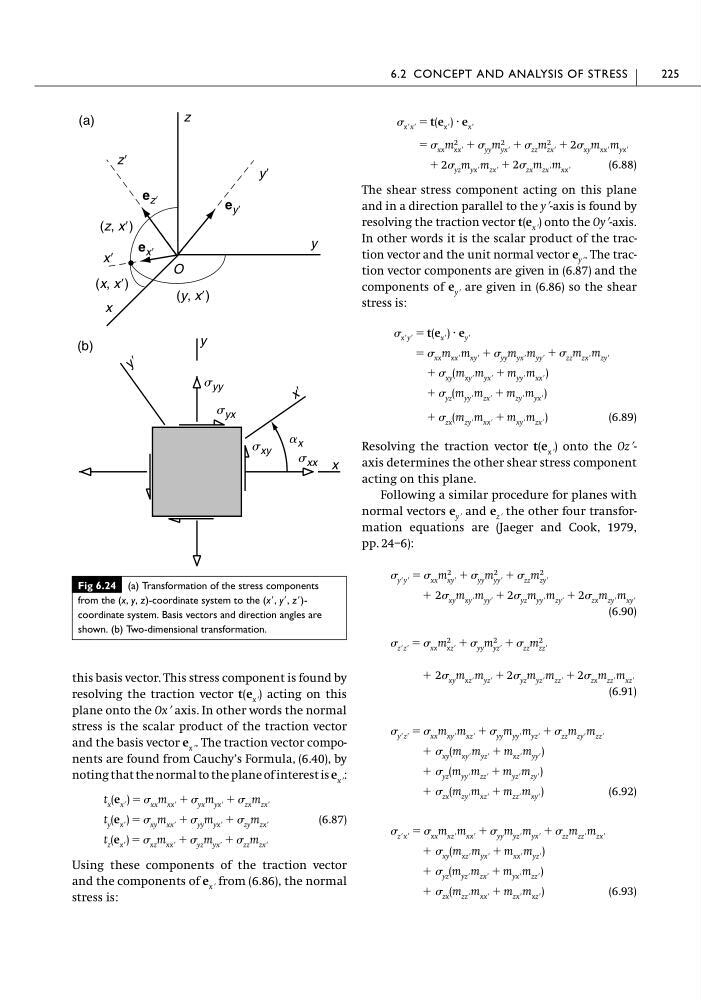
Fig 6.24 (a) Transformation of the stress components
from the (x, y, z)-coordinate system to the (x�, y�, z�)coordinate system. Basis vectors and direction angles are
shown. (b) Two-dimensional transformation.
(b)
x �
y �
a x
x
y
y�
z�
x�
x
y
z
(a)
(x, x�)
(z, x�)
(y, x�)
O
e x�
e y�
e z�
s xx
s xy
s yx
s yy
resolving the traction vector t(e x� ) acting on this
plane onto the Ox� axis. In other words the normal
stress is the scalar product of the traction vector
and the basis vector e x� . The traction vector components are found from Cauchy’s Formula, (6.40), by
noting that the normal to the plane of interest is e x� :
(6.87)
Using these components of the traction vector
and the components of e x� from (6.86), the normal
stress is:
t z (e x� ) � � xz m xx� � � yz m yx� � � zz m zx�
t y (e x� ) � � xy m xx� � � yy m yx� � � zy m zx�
t x (e x� ) � � xx m xx� � � yx m yx� � � zx m zx�
(6.88)
The shear stress component acting on this plane
and in a direction parallel to the y�-axis is found by
resolving the traction vector t(e x� ) onto the Oy�-axis.
In other words it is the scalar product of the traction vector and the unit normal vector e y� . The traction vector components are given in (6.87) and the
components of e y� are given in (6.86) so the shear
stress is:
(6.89)
Resolving the traction vector t(e x� ) onto the Oz�axis determines the other shear stress component
acting on this plane.
Following a similar procedure for planes with
normal vectors e y� and e z� the other four transformation equations are (Jaeger and Cook, 1979,
pp. 24–6):
(6.90)
(6.91)
(6.92)
(6.93)
� � zx (m zz� m xx� � m zx� m xz� )
� � yz (m yz� m zx� � m yx� m zz� )
� � xy (m xz� m yx� � m xx� m yz� )
� z�x� � � xx m xz� m xx� � � yy m yz� m yx� � � zz m zz� m zx�
� � zx (m zy� m xz� � m zz� m xy� )
� � yz (m yy� m zz� � m yz� m zy� )
� � xy (m xy� m yz� � m xz� m yy� )
� y�z� � � xx m xy� m xz� � � yy m yy� m yz� � � zz m zy� m zz�
� 2� xy m xz� m yz� � 2� yz m yz� m zz� � 2� zx m zz� m xz�
� z�z� � � xx m
2
xz�
� � yy m
2
yz�
� � zz m
2
zz�
� 2� xy m xy� m yy� � 2� yz m yy� m zy� � 2� zx m zy� m xy�
� y�y� � � xx m
2
xy�
� � yy m
2
yy�
� � zz m
2
zy�
� � zx (m zy� m xx� � m xy� m zx� )
� � yz (m yy� m zx� � m zy� m yx� )
� � xy (m xy� m yx� � m yy� m xx� )
� � zz m zx� m zy�
� � xx m xx� m xy� � � yy m yx� m yy�
� x�y� � t(e x� ) · e y�
� 2� zx m zx� m xx�
� 2� yz m yx� m zx�
� � xx m 2
xx� � � yy m 2
yx� � � zz m 2
zx� � 2� xy m xx� m yx�
� x�x� � t(e x� ) · e x�
6.2 CONCEPT AND ANALYSIS OF STRESS
225
Fig 6.24 (a) Transformation of the stress components
from the (x, y, z)-coordinate system to the (x�, y�, z�)coordinate system. Basis vectors and direction angles are
shown. (b) Two-dimensional transformation.
(b)
x �
y �
a x
x
y
y�
z�
x�
x
y
z
(a)
(x, x�)
(z, x�)
(y, x�)
O
e x�
e y�
e z�
s xx
s xy
s yx
s yy