

We infer that a magma chamber at depth
below West Peak fed the igneous dikes making up
the radial map pattern. The magma pressure
acting in this chamber was apparently sufficient
to fracture the host rock adjacent to the chamber
(or at least to open pre-existing fractures) so the
magma could invade these fractures and form the
dikes. In Fig. 6.12b we show a schematic drawing
of one-quarter of a vertical cylindrical magma
chamber in a horizontal cross section below the
current surface and an example of a potential dike
path extending outward from the chamber wall.
Other idealized chamber shapes are spherical
(Anderson, 1936; Mogi, 1958) or sill-like (Johnson
and Pollard, 1973; Pollard and Johnson, 1973;
Fialko et al., 2001). The magma pressure pushes
outward on the chamber wall and induces a local
stress field in the surrounding host rock. We use
these geological structures to introduce the
concept of stress and the physical quantity called
the stress tensor.
6.2.1 The stress tensor
Consider a small cubical element, A, with one side
oriented tangential to the wall of the magma
chamber (shown in map view, Fig. 6.12b). A traction of magnitude t(a) pushes on side a of this
element with the same force per unit area as the
magma pressure, p. The pressure in the chamber
also induces a traction of magnitude t(b) that pulls
against side b and thereby contributes to the
stretching of the circumference of the chamber as
it expands due to the magma pressure. Cauchy’s
relationship (6.9) states that the tractions acting
on opposite sides of this element are equal in magnitude and oppositely directed in the limit as the
element shrinks toward a point:
(6.29)
Thus, the magma pressure induces a pair of tractions of magnitude t(a) pushing inward and a pair
of tractions of magnitude t(b) pulling outward
on element A. The former pair compresses the
element in the radial direction and is used to
define a component of compressive stress. The latter
pair extends the element in a circumferential
direction and is used to define a component of
tensile stress. If the outward-directed pair of tractions is great enough, the rock will pull apart
(fracture) along a line oriented perpendicular to
these tractions and the magma may invade this
fracture to initiate dike formation.
Along the potential dike path (Fig. 6.12b) a
cubical element B has inward directed tractions
acting parallel to the path and outward-directed
tractions acting perpendicular to the path. The
directions and magnitudes of these tractions
change with the distance from the magma
chamber. One special feature of the elements
along the potential dike path as drawn in Fig.
6.12b is that the tractions act only normal to the
element sides. Thus, the compressive and tensile
stresses are referred to as normal stress components.
t(c) ϭ Ϫt(a)andt(d) ϭ Ϫt(b)
208
FORCE, TRACTION, AND STRESS
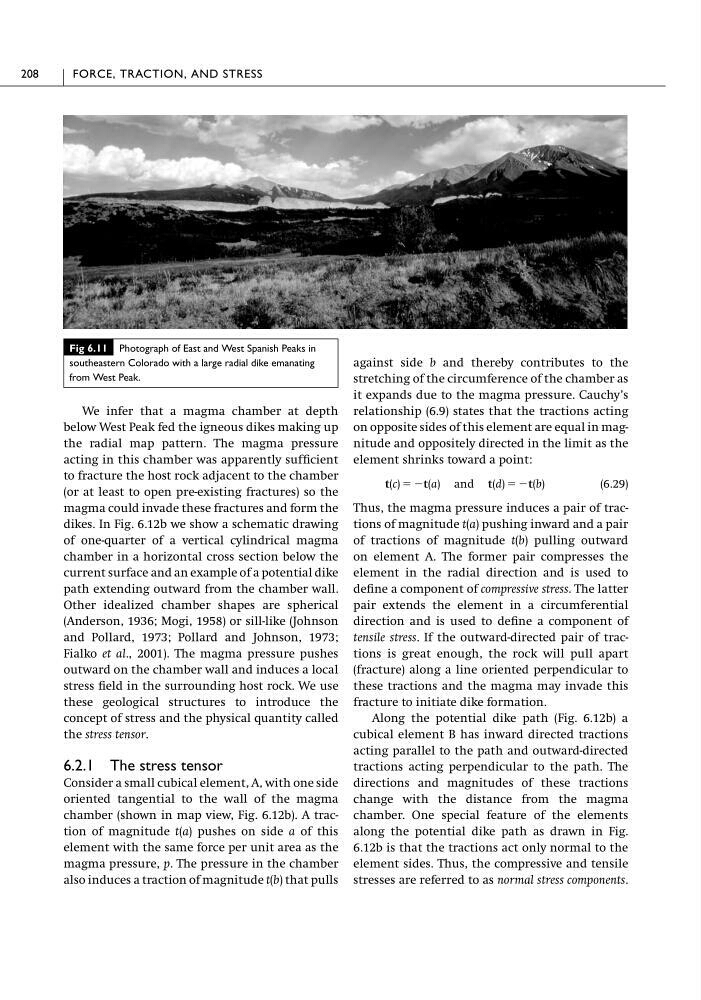
Fig 6.11 Photograph of East and West Spanish Peaks in
southeastern Colorado with a large radial dike emanating
from West Peak.
below West Peak fed the igneous dikes making up
the radial map pattern. The magma pressure
acting in this chamber was apparently sufficient
to fracture the host rock adjacent to the chamber
(or at least to open pre-existing fractures) so the
magma could invade these fractures and form the
dikes. In Fig. 6.12b we show a schematic drawing
of one-quarter of a vertical cylindrical magma
chamber in a horizontal cross section below the
current surface and an example of a potential dike
path extending outward from the chamber wall.
Other idealized chamber shapes are spherical
(Anderson, 1936; Mogi, 1958) or sill-like (Johnson
and Pollard, 1973; Pollard and Johnson, 1973;
Fialko et al., 2001). The magma pressure pushes
outward on the chamber wall and induces a local
stress field in the surrounding host rock. We use
these geological structures to introduce the
concept of stress and the physical quantity called
the stress tensor.
6.2.1 The stress tensor
Consider a small cubical element, A, with one side
oriented tangential to the wall of the magma
chamber (shown in map view, Fig. 6.12b). A traction of magnitude t(a) pushes on side a of this
element with the same force per unit area as the
magma pressure, p. The pressure in the chamber
also induces a traction of magnitude t(b) that pulls
against side b and thereby contributes to the
stretching of the circumference of the chamber as
it expands due to the magma pressure. Cauchy’s
relationship (6.9) states that the tractions acting
on opposite sides of this element are equal in magnitude and oppositely directed in the limit as the
element shrinks toward a point:
(6.29)
Thus, the magma pressure induces a pair of tractions of magnitude t(a) pushing inward and a pair
of tractions of magnitude t(b) pulling outward
on element A. The former pair compresses the
element in the radial direction and is used to
define a component of compressive stress. The latter
pair extends the element in a circumferential
direction and is used to define a component of
tensile stress. If the outward-directed pair of tractions is great enough, the rock will pull apart
(fracture) along a line oriented perpendicular to
these tractions and the magma may invade this
fracture to initiate dike formation.
Along the potential dike path (Fig. 6.12b) a
cubical element B has inward directed tractions
acting parallel to the path and outward-directed
tractions acting perpendicular to the path. The
directions and magnitudes of these tractions
change with the distance from the magma
chamber. One special feature of the elements
along the potential dike path as drawn in Fig.
6.12b is that the tractions act only normal to the
element sides. Thus, the compressive and tensile
stresses are referred to as normal stress components.
t(c) ϭ Ϫt(a)andt(d) ϭ Ϫt(b)
208
FORCE, TRACTION, AND STRESS
Fig 6.11 Photograph of East and West Spanish Peaks in
southeastern Colorado with a large radial dike emanating
from West Peak.